



photo courtesy worthynews.com
- Saudi Arabia has resumed crude exports from its Red Sea coast after repairs to the East-West Pipeline.
- The pipeline gives Saudi Arabia a major alternative to shipping crude through the Strait of Hormuz.
- The route can carry as much as 7 million barrels per day.
- The return of Yanbu exports gives Riyadh greater flexibility amid continuing disruptions to Gulf tanker traffic.
- Oil prices eased from earlier gains after news that the export route had returned to service.
by Emmitt Barry, Worthy News Washington D.C. Bureau Chief
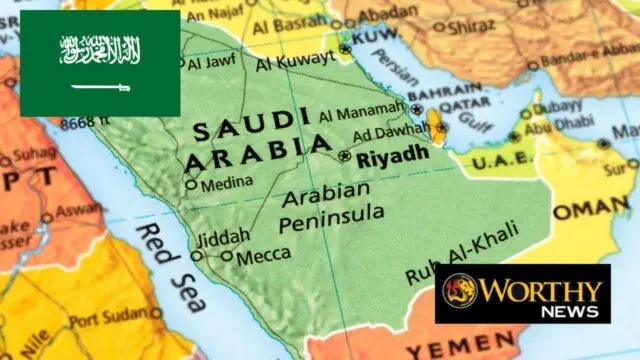
(Worthy News) – Saudi Arabia has resumed oil exports through its strategic East-West Pipeline after repairing damage from drone attacks earlier this month, restoring a critical route that allows Saudi crude to bypass the Strait of Hormuz.
Saudi Aramco began loading crude onto vessels at the Red Sea port of Yanbu on Sunday, according to people familiar with the matter cited by The Wall Street Journal. The pipeline is currently moving roughly 3.5 million barrels per day, with some of that oil supplying Saudi refineries.
The 750-mile pipeline stretches from Saudi Arabia’s oil-producing region near the Persian Gulf across the kingdom to Yanbu. It has the capacity to transport as much as 7 million barrels per day, making it one of the world’s most strategically important alternatives to tanker traffic through Hormuz. Before the September attack, approximately 4 million barrels per day — roughly 4% of global oil supply — had been moving through the system.
It’s a fair question which we now owe an answer. Based on how these things have usually played out, we’re likely looking at around a week before flows meet a sufficient level. What people haven’t bothered to look into is that the East-West “Petroline” actually consists of two physical pipelines. One exclusively handles 5 Mbpd of crude while the other handles 2 Mbpd of NGL (Natural Gas Liquids) OR backup crude. In the meantime, there are storage tanks on shore in Yanbu and Al Muajjiz which one can export crude oil out of. Just as an example, Libyans manage to replace ruptured pipelines deep under the sand in under a week while they’re being fired upon in a civil war.
— TankerTrackers.com, Inc. (@TankerTrackers) September 12, 2026
Drone strikes blamed on Iran-backed forces in Iraq damaged the pipeline earlier this month, temporarily cutting off the Red Sea export route at a time when the ongoing Iran conflict has sharply disrupted tanker traffic through Hormuz.
Saudi Arabia has simultaneously increased shipments through its Gulf facilities. According to ship-tracking data cited by the Journal, loadings at Ras Tanura recently climbed to about 6.5 million barrels per day, compared with roughly 1.5 million barrels daily in early September.
The return of the East-West Pipeline could ease pressure on global energy markets by giving Riyadh greater flexibility to move crude through both the Persian Gulf and Red Sea. Oil prices pared earlier gains following news that exports had resumed, although Brent crude remained above $105 a barrel Monday.
The post Saudi Arabia Resumes Red Sea Oil Exports, Restoring Key Route Around Strait of Hormuz appeared first on Worthy Christian News.