



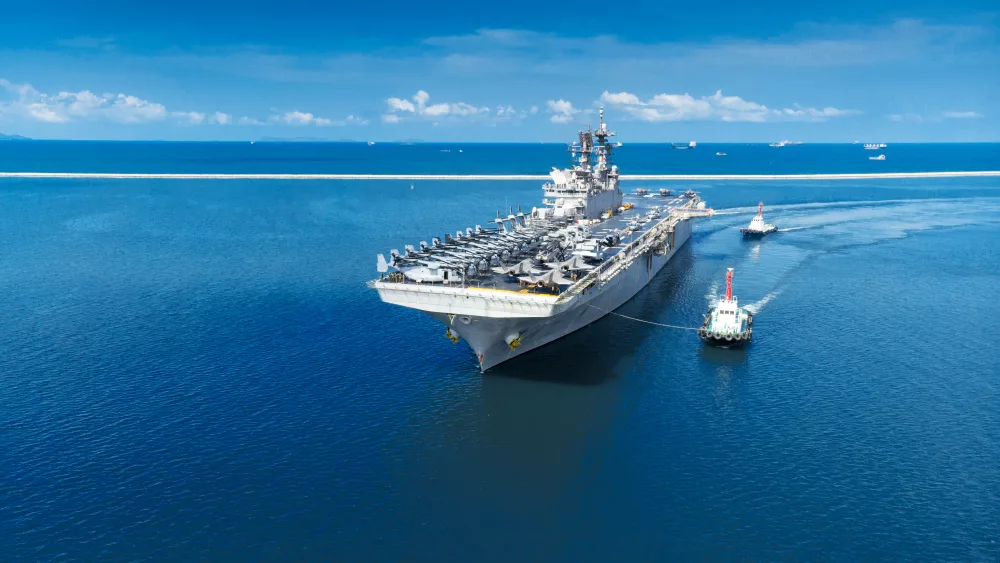
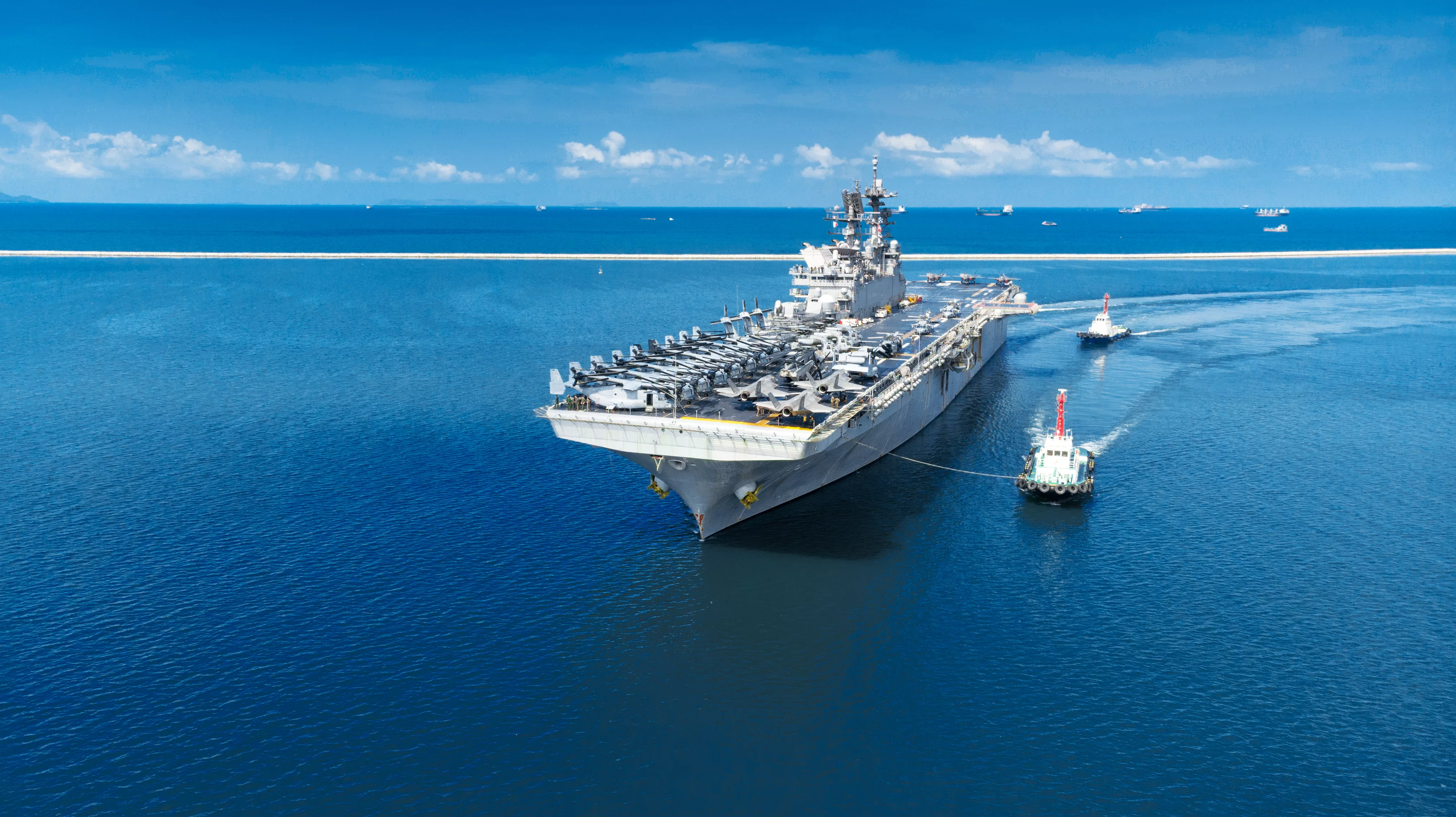
Nuclear aircraft carrier / Envato Market
- USS Theodore Roosevelt departed San Diego on Sept. 27 for an extended deployment expected to take the carrier to the Middle East.
- The aircraft carrier is the flagship of Carrier Strike Group 9 and will operate with Carrier Air Wing 11.
- Navy leaders have told families to prepare for an approximately eight-month deployment.
- Roosevelt is expected eventually to relieve USS George Washington as the Navy sustains carrier forces in the region.
SAN DIEGO — The aircraft carrier USS Theodore Roosevelt has departed California for an extended deployment expected to take the ship and thousands of sailors into the Middle East as the U.S. Navy maintains a major presence in the region.
The nuclear-powered carrier left San Diego on Sunday, Sept. 27, beginning a deployment that Navy leaders have warned could last approximately eight months.
Theodore Roosevelt, CVN-71, serves as the flagship of Carrier Strike Group 9 and is deploying with Carrier Air Wing 11.
Unlike many carrier departures, the ship reportedly left without the traditional ceremony of sailors manning the rails, underscoring what USNI News described as a relatively quiet departure for what could become one of the Navy’s most demanding current assignments.
The strike group is expected to cross the Pacific before eventually moving into the U.S. Central Command area of responsibility.
There, Theodore Roosevelt is expected to relieve the Japan-based USS George Washington, which has been operating with U.S. forces in the Middle East.
The deployment comes as the Navy continues sustaining multiple carrier strike groups and other warships in and around the Arabian Sea, Persian Gulf and nearby waters amid the continuing conflict with Iran and threats from Iran-backed Houthi forces.
That operational tempo has placed unusual strain on both ships and their crews.
Master Chief Petty Officer of the Navy John Perryman previously told reporters that Roosevelt sailors and their families were being advised to prepare in advance for a deployment approaching eight months rather than being surprised by extensions after the ship was already at sea.
Navy leaders have acknowledged the toll unexpectedly extended deployments can place on sailors and their families.
The USS Abraham Lincoln recently completed an extraordinarily long deployment in the region, spending more than eight months in Middle Eastern waters without a relief port call before beginning its return toward the United States.
As Roosevelt begins its mission, the Navy already has substantial forces in the region.
Two carrier strike groups have recently been operating in the Middle East along with the Boxer Amphibious Ready Group and additional destroyers, cruisers and support ships positioned across the Arabian Sea, Indian Ocean, Red Sea and eastern Mediterranean.
Theodore Roosevelt itself has extensive experience operating in the Indo-Pacific and Middle East.
The carrier entered service in 1986 and can embark dozens of aircraft, including strike fighters, electronic warfare aircraft, airborne command-and-control planes and helicopters.
Its accompanying destroyers, aircraft and support vessels give a carrier strike group the ability to conduct air defense, strike operations, surveillance, maritime security and power-projection missions over a wide geographic area.
The Navy has not publicly provided a complete operational itinerary for the Roosevelt deployment.
For the sailors leaving San Diego and their families at home, however, one detail has been made unusually clear ahead of time: they should plan for a long deployment.