



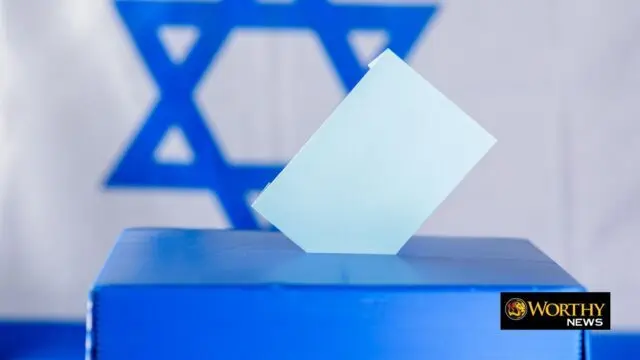
photo courtesy worthynews.com
KEY FACTS
- Israel may face another election following the inconclusive October 27 vote.
- Netanyahu’s right-wing bloc secured 53 of 120 Knesset seats, eight short of a majority.
- Gadi Eisenkot’s opposition bloc holds 48 seats, while Arab-led parties hold 19.
- Netanyahu reportedly prefers fresh elections over a unity arrangement with his political rivals.
- President Isaac Herzog is urging compromise ahead of coalition consultations beginning November 4.
- The new Knesset is scheduled to convene November 10.
by Emmitt Barry, Worthy News Washington D.C. Bureau Chief
(Worthy News) – Israel could be heading toward another national election just days after voters went to the polls, as Prime Minister Benjamin Netanyahu reportedly favors a new vote over forming a national unity government with his political rivals.
According to Israel’s Channel 14, Netanyahu has concluded that opposition leader Gadi Eisenkot, chairman of the Yashar party, is unlikely to enter a unity government with him, even under a rotating premiership arrangement. Sources involved in the discussions reportedly said Netanyahu is already preparing political messaging for another election campaign.
The reports come after Israel’s October 27 election produced a deeply divided Knesset, leaving neither Netanyahu nor Eisenkot with a clear path to forming a governing coalition.
Netanyahu’s right-wing bloc secured 53 seats in the 120-member Knesset, eight short of the 61 required for a majority. Eisenkot’s opposition bloc won 48 seats, while Arab parties captured 19 seats, potentially giving them a decisive role in determining Israel’s next government.
Likud remains the largest individual party with 27 seats, followed by Eisenkot’s Yashar party with 21.
WATCH: Israel’s Election Ends Without a Governing Majority
ABC News explains the results of the October 27 election and why neither leading bloc can currently form a majority government.
Herzog Calls for Compromise to Prevent Another Election
Israeli President Isaac Herzog appealed Sunday for political leaders to abandon rigid campaign positions and pursue a workable coalition rather than force Israelis back to the ballot box.
Speaking at a memorial ceremony honoring Israel’s first president, Chaim Weizmann, Herzog urged party leaders to approach upcoming coalition consultations with an open mind and heart.
“Come to listen and to be heard, to share ideas, and to find creative solutions to prevent another round of elections,” Herzog said.
FROM ISRAEL’S PRESIDENT: An Appeal for Compromise
President Herzog shares his November 1 remarks urging elected leaders to accept the voters’ decision and work toward a functioning coalition.
הבחירות הסתיימו ותוצאות הבחירות הן עובדה קיימת – זה הזמן למנהיגים כולם לעצור את הטיפוס על העצים ולהתמקם מול המציאות הזו. השבוע בבית הנשיא, ננסה להניח סולמות, כדי לאפשר למנהיגים – להתמקם מול המציאות הזו, בצורה שקולה וזהירה.
דברים שאמרתי היום בטקס האזכרה הממלכתי לנשיא הראשון של… pic.twitter.com/w9PMaF7xQP
— יצחק הרצוג Isaac Herzog (@Isaac_Herzog) November 1, 2026
“The elections are over. The election results are a fact. They are a reality,” he added, urging politicians to recognize the outcome and pursue compromise.
Herzog is scheduled to receive the official election results Wednesday, November 4, before beginning consultations with parliamentary factions. The newly elected Knesset is expected to be sworn in November 10.
Eisenkot Seeks Alternative Coalition
Meanwhile, Eisenkot continues efforts to assemble a broad coalition, calling on lawmakers willing to support Israel’s identity as a Jewish and democratic state, universal national service, and the removal of Hamas from Gaza to join his proposed government.
However, divisions within the opposition over cooperation with Netanyahu, the role of Arab parties, and leadership positions in the next Knesset threaten to complicate those efforts.
SOCIAL: Netanyahu Responds to Election Investigation
In a November 1 post, Netanyahu discusses concerns raised during an investigation into suspected foreign interference in Israel’s elections.
ראש השב״כ זיני התלונן בפני סולברג: יועמ״ש השב״כ כובל את ידיי מלחקור pic.twitter.com/wKlaC9gfxs
— Benjamin Netanyahu – בנימין נתניהו (@netanyahu) November 1, 2026
Why 61 Seats Matter
Israel’s 120-member Knesset requires a governing majority of at least 61 seats for a stable majority coalition.
- Netanyahu bloc: 53 seats
- Eisenkot opposition bloc: 48 seats
- Arab-led parties: 19 seats
- Majority threshold: 61 seats
These are political bloc groupings, not necessarily fixed coalition agreements.
The political uncertainty comes as Israel faces mounting security challenges, including the continuing Iranian threat and the future of Gaza.
SOCIAL: Israel’s Election Chairman Addresses the Results
Israeli journalist Daphna Liel shares a statement from election chairman Justice Noam Sohlberg, who says the October 27 vote was conducted properly while authorities investigate allegations of interference.
יו״ר ועדת הבחירות, נעם סולברג, בהודעה משותפת על דעת ראש השב״כ והיועמ״שית מבהיר שגם אם החשדות החמורים שהובאו בפניו יאומתו אין בכך כדי לגרוע מתקינות הבחירות. לדבריו אין להטיל דופי בהצבעת החברה הערבית, והשתתפות רחבה היא דבר מבורך. pic.twitter.com/xdKhcgA9p1
— דפנה ליאל (@DaphnaLiel) November 1, 2026
With neither major bloc commanding a parliamentary majority, Israel’s political leaders face a difficult choice: negotiate a coalition across deep ideological divisions or risk sending the country into another costly and potentially divisive election.
Sources & Attribution
- Worthy News — Original Article
- Congressional Research Service — Israel’s 2026 Election and Government Formation
- Times of Israel — Final Election Results
- JNS — Herzog’s Coalition Appeal
- JNS — Election Chairman’s Statement
- ABC News — Video Election Analysis
Originally published by Worthy Christian News. Republished with attribution under Worthy News syndication arrangements. Additional media, formatting and contextual links provided by KLZ.