



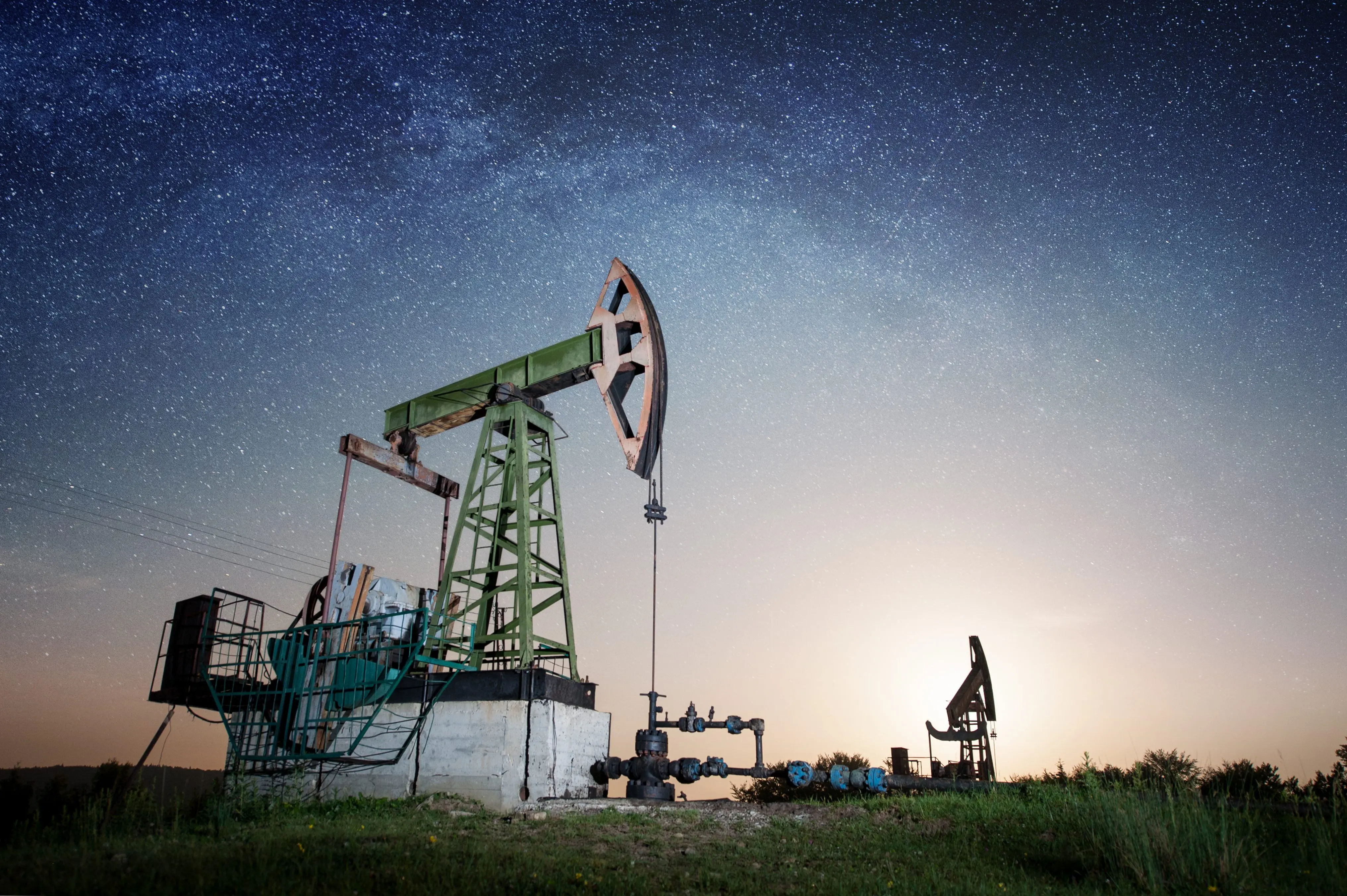
Oil pumps are working on the oil field in the evening under night sky with stars. / Envato Market
KEY FACTS
- Oil prices fell more than 4% during Monday trading amid hopes of diplomatic progress with Iran.
- Brent crude traded near $108.66 a barrel in one Reuters market update.
- U.S. crude traded near $99.83 at the same point.
- Continued negotiations could reduce fears of prolonged disruption to Gulf energy supplies.
- Energy markets remain vulnerable to renewed military escalation.
By KLZ Staff / TJ Pander | November 2, 2026
NEW YORK — Global oil prices fell sharply Monday as diplomatic efforts involving Iran raised hopes that the disruption to Middle East energy supplies could ease, offering a potential measure of relief to American households and businesses already struggling with elevated transportation costs.
Brent crude futures dropped more than 4%, while the American West Texas Intermediate benchmark slipped below $100 a barrel during the morning.
The decline followed negotiations involving Iranian representatives and Qatari intermediaries intended to find a path toward ending the ongoing conflict.
Why Traders Are Responding
Oil markets reflect expectations about future supply as well as current production. The possibility that shipping restrictions may ease can cause prices to fall even before additional petroleum reaches refineries.
Diplomatic discussions have raised hopes that commercial traffic through the strategically important Strait of Hormuz could eventually return toward normal conditions.
Because the Persian Gulf is critical to global energy transportation, even modest changes in perceived supply risks can move oil prices substantially.
What Falling Crude Prices Mean for Families
American motorists may welcome lower wholesale oil prices, but retail gasoline prices do not necessarily fall immediately or by the same percentage.
Refining costs, regional inventories, transportation expenses, taxes and local competition all affect what consumers pay at the pump.
A sustained decline in crude would generally ease pressure on gasoline, diesel, freight and some manufacturing expenses.
That matters to households because energy costs influence grocery transportation, business operating expenses and consumer purchasing power.
The Energy Security Question
The latest price movement also illustrates the risks of dependence on global energy flows vulnerable to military confrontation.
Domestic production, refining capacity, diversified suppliers and reliable transportation infrastructure can improve American resilience when foreign disruptions occur.
At the same time, American oil producers operate within an interconnected global market, meaning greater domestic output does not completely insulate consumers from international price shocks.
Diplomacy Remains Uncertain
Iranian officials have indicated that contacts with American representatives continue through mediators despite the absence of a comprehensive breakthrough.
Major disagreements remain concerning sanctions, shipping restrictions and Iran’s nuclear program.
President Trump has also maintained that military action remains possible against remaining suspected Iranian nuclear facilities.
That combination leaves markets sensitive to both encouraging diplomatic developments and renewed threats of confrontation.
What to Watch
The durability of Monday’s oil-price decline will depend largely on whether negotiations produce enforceable commitments and tangible improvements in regional shipping conditions.
Without those developments, traders could quickly rebuild the geopolitical risk premium that pushed prices higher in October.
For American consumers, the important question is not whether oil falls sharply in a single trading session, but whether prices stabilize long enough for savings to reach households.