



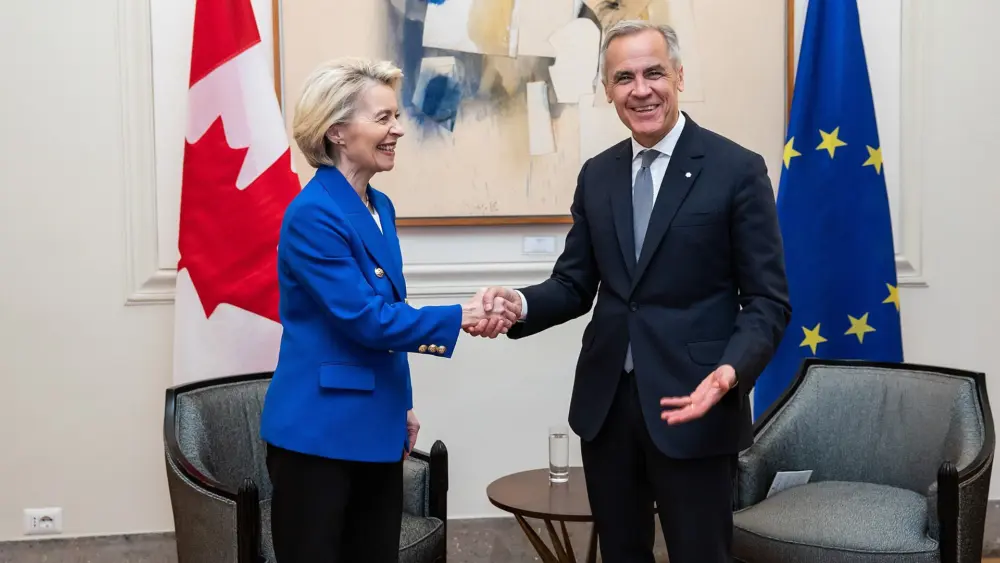
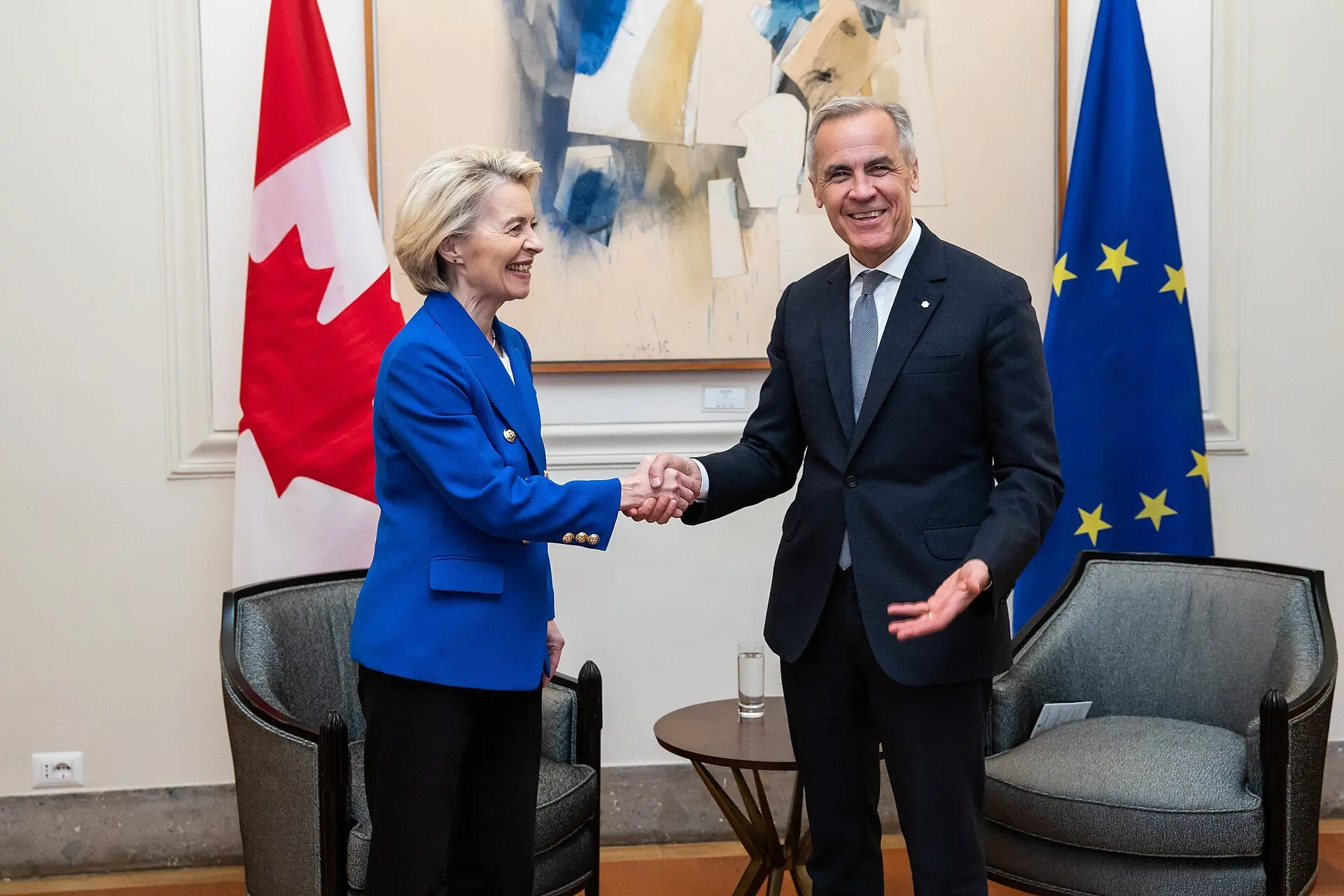
On 17 and 18 may 2025, Ursula von der Leyen, President of the European Commission, had several meetings in Rome, around the solemn Ceremony of the Inauguration of the Pontificate of Her Highness Pope Leo XIV in Vatican City on 18 May.
Key Facts
- Canadian Prime Minister Mark Carney is pursuing a closer partnership with the European Union.
- The October 30 Montreal summit focused on trade, defense, technology, energy and critical minerals.
- Leaders aim to define a new relationship short of full EU membership by June 2027.
- The proposal comes amid growing U.S.-Canada trade disagreements over President Trump’s tariffs.
- Associate EU membership has not been formally established, and disagreements remain over its feasibility and implications for sovereignty.
By Emmitt Barry, Worthy News Washington D.C. Bureau Chief
Canada Pursues Historic New Relationship With Europe
MONTREAL, CANADA (Worthy News) – Canada and the European Union have outlined a path toward an unprecedented partnership that could make Canada the EU’s first “associate member,” marking a significant shift in transatlantic relations as Ottawa seeks to reduce its economic dependence on the United States.
Following a summit in Montreal on Friday, Canadian Prime Minister Mark Carney and European Commission President Ursula von der Leyen announced plans to deepen cooperation in trade, defense, technology, critical minerals, and energy, with negotiations targeted for completion by June 2027.
Watch: Carney Embraces EU Associate Membership Proposal
Global News examines Carney’s earlier embrace of the EU associate membership concept and the implications for Canada’s relationship with Washington.
Video: Global News, September 17, 2026. Background coverage preceding the October summit.
Trade, Defense and Technology Take Center Stage
The proposed arrangement would strengthen Canada’s integration with European institutions without granting full EU membership. Leaders also discussed expanded cooperation in satellite technology, artificial intelligence, research programs, and strategic infrastructure, including potential undersea communications cables bypassing the United States.
The initiative comes amid deteriorating relations between Ottawa and Washington over President Donald Trump’s tariffs and trade policies. Trump has previously warned that an EU-Canada associate membership arrangement could constitute a hostile economic move, raising the possibility of additional American tariffs.
Watch: Leaders Address the October 30 Summit
The European Commission has published the complete Montreal summit press conference featuring Carney, von der Leyen and European Council President António Costa.
Watch the official 46-minute EU-Canada summit press conference
Questions Remain About Sovereignty and Membership
However, significant obstacles remain. Germany has expressed reservations about creating a new membership category, while Canadian critics have raised concerns about national sovereignty and regulatory independence.
The summit’s joint declaration avoided formally endorsing associate membership, instead calling for an increasingly close association between Canada and the 27-member European bloc.
If successful, the agreement could reshape Canada’s longstanding economic relationship with the United States while giving Europe a stronger strategic foothold in North America.
KLZ Context: What Does Associate Membership Mean?
Additional reporting and context from KLZ Staff.
The term “associate membership” does not currently describe an established category of European Union membership. Carney and European leaders have proposed defining a new relationship short of full accession, but the specific legal and economic obligations have not been settled.
The proposal raises questions about Canada’s ability to diversify trade while preserving control over domestic laws, regulatory decisions and economic priorities. Supporters view closer European cooperation as an opportunity to develop new markets and strengthen supply chains. Critics question whether deeper integration with European institutions could create new constraints on Canadian policymaking.
The importance of the American market remains substantial. According to reporting from The Associated Press, the United States purchased approximately 71.7% of Canada’s merchandise exports in 2025, illustrating the scale of the existing trade relationship.
The EU and Canada already have an extensive trade relationship through the Comprehensive Economic and Trade Agreement (CETA). Any future associate arrangement would build upon, rather than automatically replace, those existing agreements.
For Washington, the central issue is how substantially Canada might redirect its economic and strategic partnerships, and whether future European regulatory arrangements would affect North American supply chains and trade.
Read the Official Summit Documents
- European Council: October 2026 Canada-EU summit outcomes
- Prime Minister Carney’s October 30 closing remarks
- European Commission: Summit videos and photographs
Sources and Attribution
Original reporting by Emmitt Barry, Worthy News Washington D.C. Bureau Chief. Republished with attribution.
Read the original Worthy News article.
Additional context: European Council, Prime Minister of Canada, European Commission, Reuters and The Associated Press.