




Key Facts
- U.S. stock-index futures fell late Tuesday as Democrats gained control of Congress.
- S&P 500 futures were down approximately 1.3% in Fox Business’ initial election-night report.
- Nasdaq-100 futures dropped approximately 2.2%.
- Dow Jones futures declined approximately 0.8%.
- Investors are evaluating possible changes involving taxes, regulation, energy and technology.
- These figures describe election-night futures, not Wednesday’s final market performance.
By KLZ Staff / TJ Pander
U.S. stock futures fell sharply Tuesday night as Democrats secured sweeping victories in the congressional midterm elections, creating new uncertainty for investors evaluating the direction of American economic policy during the final two years of President Donald Trump’s term.
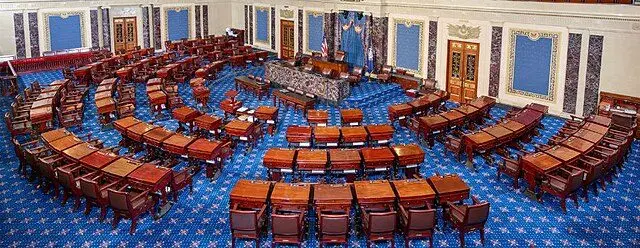
The initial selloff followed projections that Democrats would gain control of both the House of Representatives and the Senate, setting up a divided government in Washington.
Investors immediately began assessing the potential consequences for business regulation, federal taxation, spending, energy policy and the expanding artificial intelligence industry.
Markets React to the Democratic Sweep
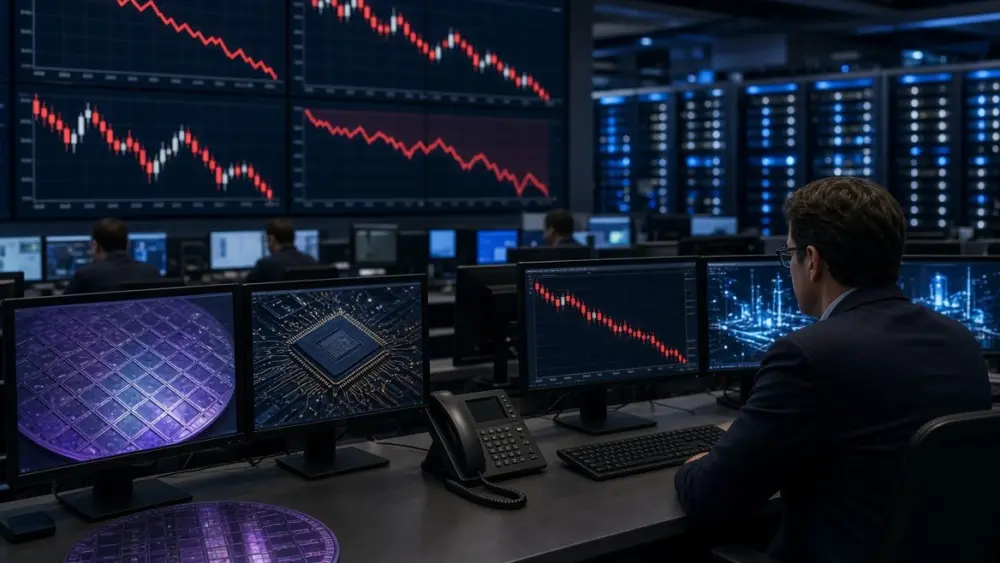
According to Fox Business, S&P 500 futures declined approximately 1.3% during the initial election-night reaction.
Futures tied to the technology-heavy Nasdaq-100 fell approximately 2.2%, while Dow Jones Industrial Average futures slipped about 0.8%.
The declines reflected concern about the incoming congressional majorities and broader uncertainty surrounding the economy.
However, futures trading is not the same as the regular stock-market session. Prices can change considerably before markets open and throughout the trading day.
Investors should therefore avoid treating the initial declines as a final verdict on how markets will perform after the election.
WATCH: Wall Street Responds to Congressional Elections
FOX Business hosts former Obama adviser Robert Wolf and former Trump campaign adviser Steve Cortes to discuss the political and financial implications.
Taxes and Regulation Are Immediate Concerns
Republican economic policy has emphasized lower taxes, regulatory relief, domestic energy production and incentives for American manufacturing.
Democratic congressional leaders may pursue different priorities, including additional oversight of major corporations, changes to federal spending and stronger regulation of selected industries.
Business leaders often seek predictable rules before committing large amounts of capital to factories, technology facilities or other long-term projects.
Uncertainty about future legislation can affect investment decisions even when no new law has been enacted.
But Democratic control of Congress does not automatically eliminate the Trump administration’s existing policies.
Any major legislation must pass both chambers and then go to the president, who retains veto authority.
That constitutional reality could limit sweeping policy changes while encouraging negotiations on selected issues.
Artificial Intelligence Stocks Face Additional Pressure
The election also intensified scrutiny of the artificial intelligence sector, particularly companies connected to large data center developments.
Several victorious Democratic candidates supported stronger restrictions on major computing facilities, citing electricity costs, water consumption and pressure on local infrastructure.
That development could affect technology companies and utilities making multibillion-dollar investment decisions.
Reuters reported that certain AI-related and data center stocks declined in early trading, while some renewable-energy companies gained as investors considered potential changes in policy.
The contrasting reactions illustrate how election outcomes can affect different industries in different ways.
Energy Prices and the Iran Conflict
Financial markets are also responding to the continuing confrontation with Iran and uncertainty surrounding shipping through the Strait of Hormuz.
Disruptions affecting global petroleum supplies can influence gasoline and diesel costs, transportation expenses and broader inflation expectations.
Those pressures played a prominent role in the election campaign, with Democrats criticizing the administration’s handling of the conflict and its economic effects.
President Trump acknowledged that the Iran war contributed to Republican political losses while defending his administration’s national-security decisions.
For investors, the central concern is whether military operations and diplomatic negotiations will produce greater stability or prolonged uncertainty.
WATCH: Could the Midterms Affect the Market’s Longer-Term Outlook?
FOX Business examines historical stock-market performance surrounding midterm elections.
Why One Night of Trading Doesn’t Tell the Whole Story
Stock markets respond to many variables beyond political party control.
Corporate earnings, Federal Reserve policy, interest rates, inflation, employment and geopolitical developments can all outweigh an individual election result over time.
Historical market performance also demonstrates that investors sometimes adjust rapidly to divided government after an initial period of uncertainty.
Some analysts argue that political gridlock can reduce the likelihood of abrupt legislative changes, creating a measure of predictability for businesses.
Others warn that prolonged disputes over federal spending, debt and regulation can create their own economic risks.
The outcome will depend less on election-night headlines than on the actual policies pursued by Congress and the White House.
What Business Owners and Investors Should Watch
The next several months will help determine how aggressively incoming Democratic leaders pursue tax changes, oversight investigations and additional business regulation.
Republican leaders, meanwhile, will seek to preserve the economic priorities they enacted while controlling Congress.
Important indicators will include inflation, energy prices, interest-rate decisions and corporate investment plans.
For businesses considering expansion, the cost of borrowing and the availability of reliable energy could be as important as any political development in Washington.
The initial market reaction underscores uncertainty, but it does not establish that a prolonged downturn is inevitable.
Investors will ultimately judge Washington on policy decisions and economic results rather than election-night rhetoric alone.