



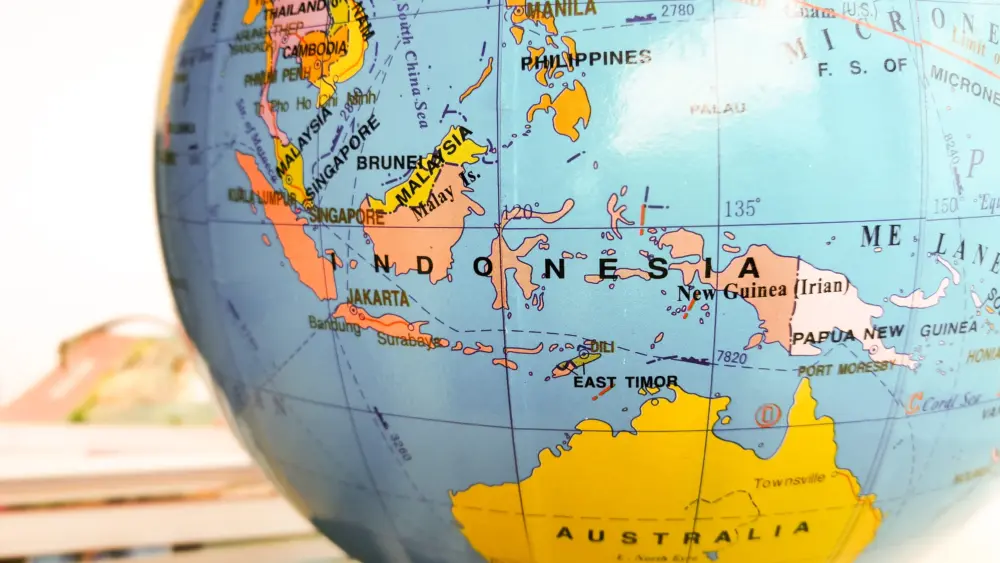
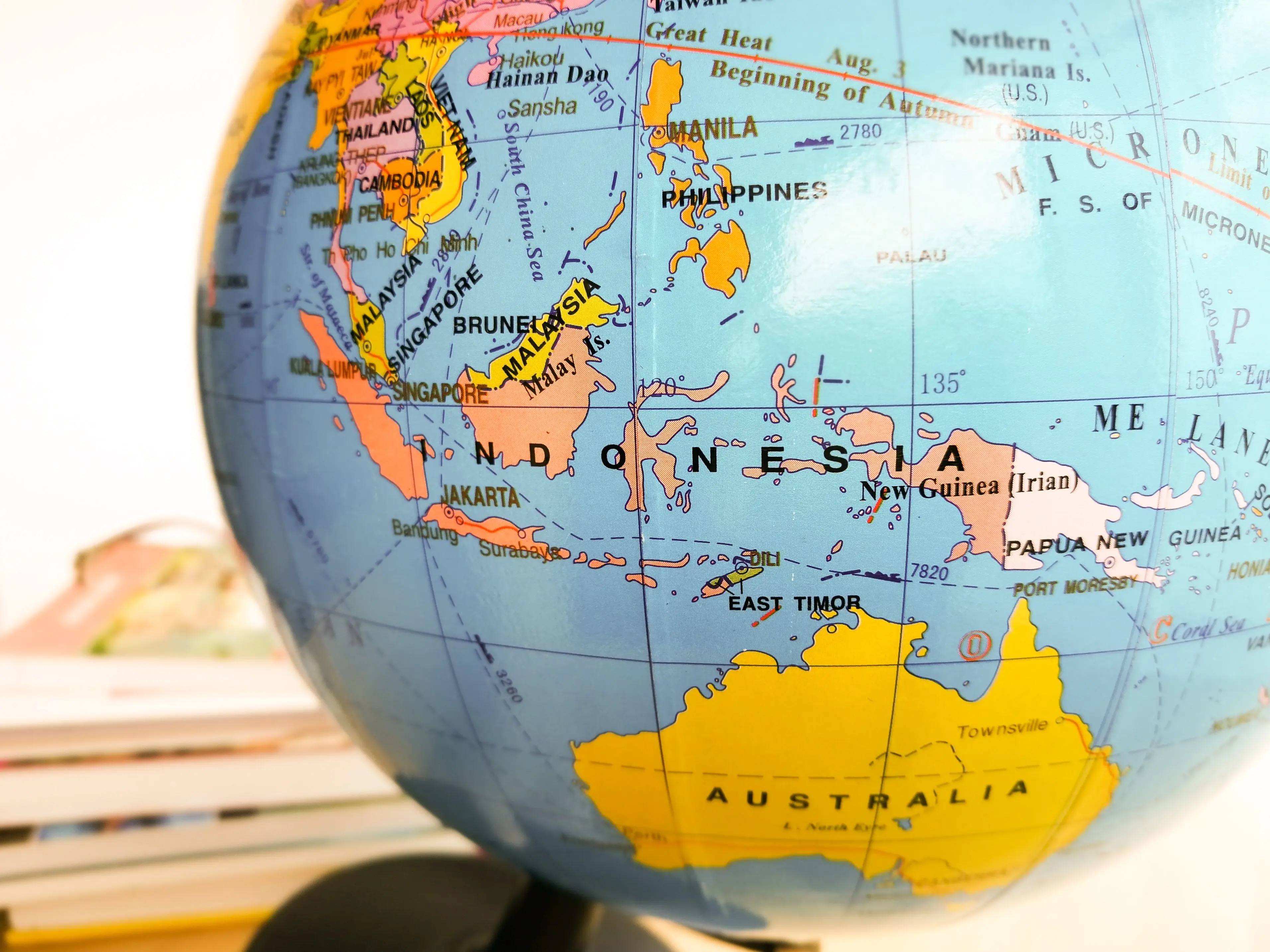
Indonesia Map / Envato Market
KEY FACTS
- Indonesia is deploying 20,980 military personnel to Jakarta, with another 13,140 on standby.
- Three senior police generals have been detained over allegations of illegal surveillance targeting President Prabowo Subianto and other prominent figures.
- President Prabowo dismissed his chief of staff, Listyo Sigit Prabowo, on November 4.
- The motive behind the alleged surveillance remains unknown, and authorities have not linked the military deployment to the investigation.
- Members of Indonesia’s Christian minority have expressed concern about potential unrest.
KLZ UPDATE — NOVEMBER 5, 2026
Thousands of Indonesian police and military personnel have been assigned to secure a high-profile court appearance by former President Joko Widodo as tensions continue surrounding an alleged illegal surveillance operation involving senior police officials.
According to the Associated Press, authorities assigned 6,770 security personnel to protect Thursday’s proceedings at the East Jakarta District Court, where Widodo appeared as a witness in a defamation case involving allegations that he used a fraudulent university diploma.
The former president denies those allegations. The defamation proceedings are separate from the wiretapping investigation, and Widodo has not been implicated in that case.
Meanwhile, retired police General Oegroseno has called for investigators to examine all potential lines of command behind the alleged surveillance operation, including whether directives could have originated from the former president. No evidence establishing such involvement has been publicly presented.
Amnesty International’s Indonesia director, Usman Hamid, also warned that the alleged surveillance could represent a serious violation of civil liberties, particularly because journalists, activists and other private individuals may have been targeted.
More than 20,000 troops have been called to Jakarta, although authorities describe the larger mobilization as precautionary and say most personnel remain on standby.
The government has not established a connection between the broader troop deployment and the wiretapping investigation, and no attempted coup has been confirmed.
For Indonesia’s Christian communities and other religious minorities, the continuing uncertainty underscores the importance of protecting civilian rights and maintaining public order without further political violence.
by Stefan J. Bos, Worthy News Chief International Correspondent
JAKARTA, INDONESIA (Worthy News) – Indonesia’s military is deploying more than 20,000 personnel to the capital, Jakarta, amid an escalating wiretapping scandal involving President Prabowo Subianto, Worthy News learned.
The mobilization began amid an investigation into an alleged illegal surveillance operation targeting the president that led to the detention of three senior police generals, including his recently appointed chief of staff.
Presidential officials also warned that the alleged surveillance could amount to conduct leading toward treason.
Christians have expressed concern about the situation, saying they fear for the future of the Muslim-majority nation. Their worries came as video footage obtained by Worthy News showed a long convoy of military vehicles entering the capital.
Military reinforcements were scheduled to begin arriving Wednesday, the same day President Prabowo dismissed his chief of staff, General Listyo Sigit Prabowo, over allegations of illegal surveillance.
SENIOR GENERALS DETAINED
Listyo, who is not related to the president, had served as Indonesia’s national police chief for five years before becoming presidential chief of staff last month. Lieutenant General Ariyo Windutomo was appointed acting chief of staff.
Listyo had been appointed national police chief under Prabowo’s predecessor, Joko Widodo, whose son, Gibran Rakabuming Raka, is now Indonesia’s vice president.
Police identified the other detained generals as Ahrie Sonta Nasution, head of the National Police’s legal division, and Eko Hadi Santoso, a senior instructor at the National Police Education and Training Institute.
Presidential spokesperson Prasetyo Hadi warned that the alleged surveillance could endanger national security and the safety of the country’s leadership.
“We believe the actions may fall within the scope of offenses that could be considered acts of treason,” he told reporters Wednesday.
ILLEGAL SURVEILLANCE
However, senior legal affairs minister Yusril Ihza Mahendra said investigators had not found evidence of treason, though the motive behind the alleged surveillance remained unclear.
Investigators allege that the unauthorized surveillance took place between 2025 and 2026, targeting the president, Cabinet ministers, politicians, journalists, civil society leaders and business executives.
The suspects allegedly ordered the deletion of intercepted communications in late October to conceal evidence of the operation.
Police have questioned 10 witnesses and three experts and seized 11 mobile phones, an iPad and four flash drives.
The three generals face allegations involving illegal interception, unauthorized access to electronic systems and deletion of electronic evidence. Some offenses carry prison sentences of up to 10 years. The suspects have not publicly responded to the allegations.
MILITARY REINFORCEMENTS
As the investigation continued, Vice Admiral Yayan Sofiyan said 20,980 personnel were involved in the military operation in Jakarta, with another 13,140 on standby.
The deployment began on a smaller scale Monday with about 2,100 personnel from units already stationed in Jakarta, while reinforcements from outside the capital were scheduled to begin arriving Wednesday.
Armed forces spokesperson Major General Muhammad Nas described the deployment as a routine security measure intended to protect national stability and territorial integrity. Authorities have not established a connection between the troop movements and the wiretapping investigation.
However, a church worker told Worthy News that she feared a return to the bloodshed of May 1998, when more than 1,000 people were killed in riots and political unrest preceding the downfall of longtime President Suharto.
Suharto resigned on May 21, 1998, after 32 years in power, amid mass demonstrations, economic turmoil and mounting pressure from Indonesia’s political and military establishment. The current president, Prabowo Subianto, was Suharto’s son-in-law and a senior military commander during the 1998 crisis.
FEARS OF NEW VIOLENCE
The latest developments unfold while President Prabowo faces serious social tensions, declining public approval and financial market turmoil that has shaken investor confidence in Southeast Asia’s largest economy.
Indonesia’s Jakarta Composite Index fell 3.78 percent Tuesday, following weeks of heavy selling that intensified after global index provider MSCI warned in October that the country’s stock market could lose its emerging-market classification.
On October 16, Indonesian shares suffered their steepest one-day decline since 1998, while the rupiah also weakened against the U.S. dollar. The market turmoil has raised concerns about further capital outflows, adding to the uncertainty surrounding the latest political and security developments.
The arrests have also raised questions about divisions within the political and military establishment of Indonesia, the world’s most populous Muslim-majority nation, with approximately 287 million inhabitants.
Representatives of Indonesia’s substantial Christian minority fear the unfolding crisis could once again plunge the Southeast Asian nation into turmoil and bloodshed.
KLZ Additional Reporting: Indonesia Faces a Test of Political Stability
KLZ Staff / TJ Pander
Indonesia’s rapidly developing surveillance scandal raises questions extending beyond the arrest of three powerful police officials. At stake are the boundaries of government surveillance, the relationship between Indonesia’s military and civilian institutions, and the security of citizens during a period of heightened political uncertainty.
The allegations also arrive in a country whose history gives particular significance to the sight of military reinforcements entering the capital.
What Investigators Say Happened
According to reporting from the Associated Press and Australia’s ABC, investigators allege that senior police officials used Indonesia’s lawful-interception infrastructure without following required authorization procedures.
Telephone numbers belonging to the president and other prominent figures were allegedly entered into a surveillance-management system without proper verification.
The reported targets extended beyond government officials to journalists, activists, civil society leaders and business executives.
Police further allege that intercepted communications were ordered deleted as investigators began examining the surveillance activity.
These remain allegations. The three detained officials have not publicly responded, and investigators have not established a motive.
The breadth of the alleged surveillance is significant. If substantiated, the investigation could raise questions about whether monitoring powers intended for lawful security purposes were instead used against political figures and private citizens.
Why the Troop Deployment Is Drawing Attention
Indonesia’s military describes the Jakarta deployment as a normal security operation. Officials have not confirmed a direct connection between the troop movements and the wiretapping investigation.
Nevertheless, the size and timing of the mobilization have attracted international attention.
According to the Associated Press, the operation includes military personnel from units in Jakarta, Java and Lampung province, with additional forces prepared to deploy if required.
A large troop presence does not itself establish that political violence or a military takeover is imminent. Such conclusions would go beyond the currently available evidence.
But the deployment comes as Indonesia faces scrutiny over its security institutions, political leadership and economic conditions.
Related reporting: Channel NewsAsia examines the troop deployment and surveillance investigation.
Indonesia’s Difficult History With Military Power
For many Indonesians, concerns about political instability are inseparable from the country’s experience under former President Suharto.
His authoritarian government remained in power for more than three decades before mass demonstrations, economic turmoil and widespread unrest preceded his resignation in May 1998.
That period was marked by serious human rights abuses and violence involving civilians, ethnic minorities and religious communities.
President Prabowo Subianto, who once served as a senior military commander under Suharto, remains a controversial figure because of his association with that period.
Indonesia subsequently undertook democratic reforms intended to strengthen civilian government and limit the military’s domestic political role.
Those reforms help explain why questions about military deployments and political surveillance carry particular weight in today’s Indonesia.
KLZ Perspective: Why Indonesia’s Christians Are Watching Closely
For American readers, Indonesia’s current crisis may appear to be another distant political controversy involving unfamiliar officials.
For the country’s Christian communities, however, memories of earlier political violence and longstanding restrictions on religious freedom make instability a deeply personal concern.
Indonesia is the world’s most populous Muslim-majority nation, but it is also home to millions of Christians, along with Hindu, Buddhist and other religious communities.
These communities are not all politically aligned, nor do they share identical experiences. Many Indonesians of different faiths live and worship peacefully alongside one another.
Yet religious freedom challenges remain substantial.
Religious Freedom Was Already Under Pressure
The United States Commission on International Religious Freedom has documented legal restrictions and discriminatory practices affecting religious minorities in Indonesia.
Its reporting identifies challenges involving the construction and repair of churches, enforcement of blasphemy laws, local government decisions and religiously motivated violence.
In its 2026 Annual Report, USCIRF recommended placing Indonesia on the U.S. Department of State’s Special Watch List for religious freedom concerns.
These issues predate the current surveillance scandal. There is no verified evidence that the latest military deployment is intended to target Christians or other religious minorities.
Nevertheless, political instability can increase uncertainty for communities already concerned about their ability to worship and participate freely in public life.
Religious freedom background: U.S. Commission on International Religious Freedom — Indonesia
The Fear of History Repeating Itself
Worthy News reports that a Christian church worker expressed fears of a return to the violence that accompanied Indonesia’s 1998 political crisis.
Those fears have a historical basis.
The U.S. State Department documented attacks against Christian places of worship during periods of unrest in the late 1990s, including incidents involving damaged and burned churches.
Ethnic Chinese Indonesians also suffered severe violence and intimidation during the upheaval surrounding Suharto’s downfall.
These events underscore the importance of protecting civilians and religious minorities during periods of political uncertainty.
But history should inform careful preparation and scrutiny, not justify unsupported predictions that similar violence will occur again.
Government Surveillance and Freedom of Conscience
One of the most troubling aspects of the allegations is the reported inclusion of journalists, civil society leaders and other private individuals among surveillance targets.
Lawful surveillance may be necessary for investigating serious crimes and protecting national security. But such powers require meaningful safeguards, independent oversight and accountability.
When those safeguards fail, surveillance systems can become tools for intimidating people who criticize those in authority.
Religious freedom and freedom of conscience depend partly on the ability of individuals and communities to speak, organize and worship without arbitrary government interference.
Protecting those liberties benefits Indonesians of every faith and political background.
A Call for Accountability Without Further Bloodshed
Political stability and individual liberty need not be competing objectives.
A credible investigation into the alleged surveillance should establish what happened, identify any unlawful conduct and respect the legal rights of the accused.
At the same time, security operations should protect the public and avoid unnecessary escalation.
The central concern is not merely which faction within Indonesia’s government emerges politically stronger. It is whether the country’s institutions can resolve a serious controversy without undermining the rights and security of ordinary citizens.
For Christians following developments from abroad, prayer for peaceful resolution, protection of vulnerable communities and fair administration of justice remains appropriate.
Indonesia’s future will ultimately be determined by its own people and institutions. International attention should remain focused on the protection of human rights and the peaceful resolution of political disputes.
What Happens Next?
Several developments will determine whether this scandal deepens or begins to subside.
Investigators have yet to publicly establish the motive behind the alleged surveillance, while the detained officials face potentially serious criminal charges.
Authorities must also clarify the purpose and duration of the military deployment, particularly if the troop presence in Jakarta expands or changes.
Meanwhile, Indonesia’s political leaders face pressure to reassure citizens, preserve public order and prevent the investigation from escalating into a broader institutional confrontation.
For Indonesia’s religious minorities, one immediate priority will be ensuring that political uncertainty does not translate into threats against churches, communities or other vulnerable groups.
KLZ will continue monitoring these developments as additional information becomes available.
Sources and Attribution
- Worthy News — Original report by Stefan J. Bos
- Reuters — November 4 surveillance scandal and troop deployment
- Channel NewsAsia — Jakarta military deployment
- Indonesian Presidential Secretariat — November 4 dismissal announcement
- USCIRF — Religious freedom conditions in Indonesia
- U.S. Department of State — 1998 Indonesia human rights report
Original reporting © Worthy News, republished with attribution. Additional reporting and KLZ Perspective commentary by KLZ Staff / TJ Pander. The KLZ editorial sections are separate from Worthy News reporting.