



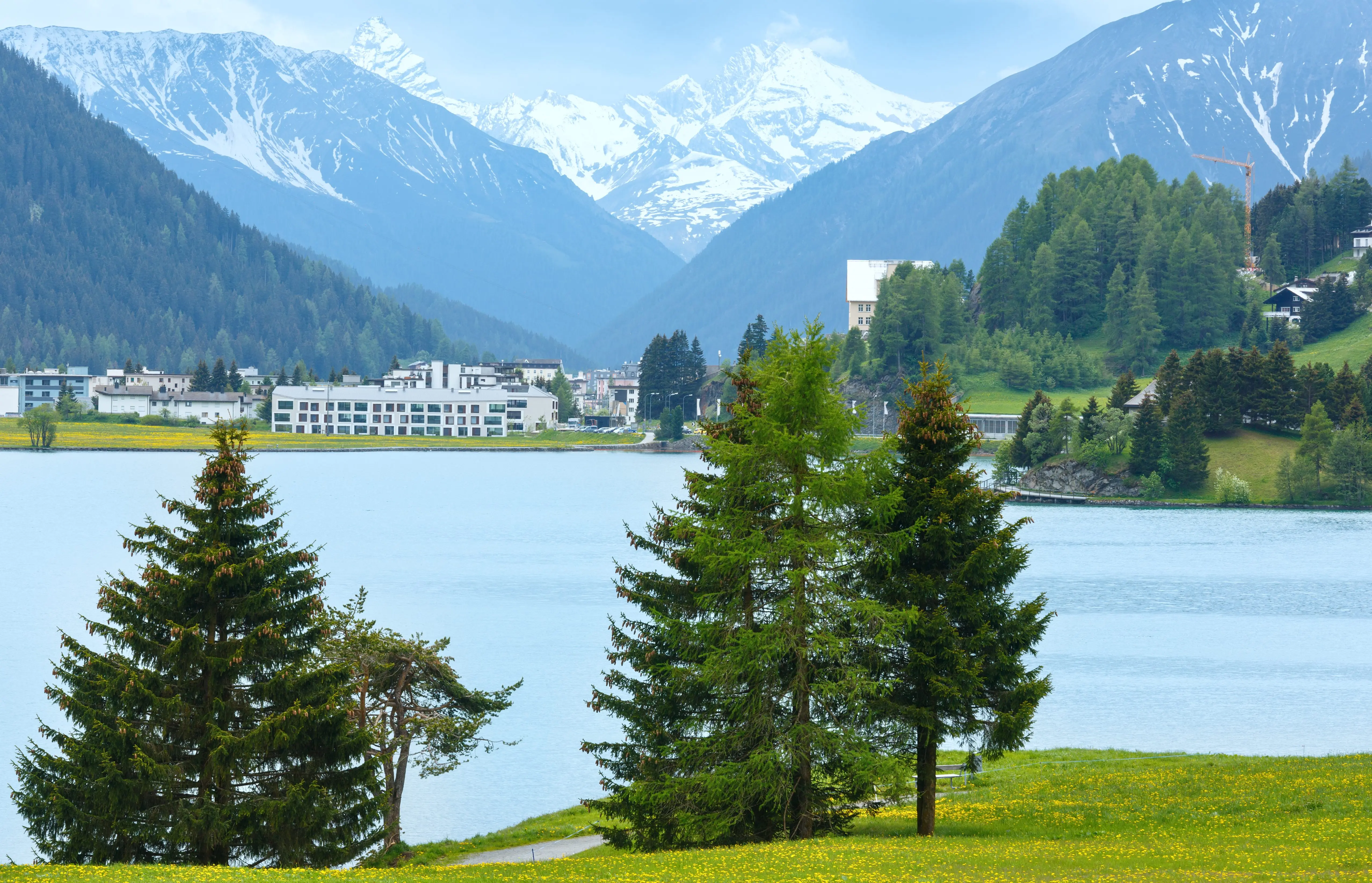
Davos, Switzerland / Envato Market
Framework Announcement at Davos
In a post on his Truth Social platform, Trump said discussions with NATO Secretary General Mark Rutte resulted in an outline of a diplomatic agreement addressing U.S. concerns over the strategic Arctic island. As a result, the planned 10% tariffs on imports from European countries — scheduled to take effect February 1 and rising to 25% by June — would not be imposed.
Trump described the outcome as a “framework” for a future agreement involving Greenland and NATO’s defense posture in the Arctic, while saying tariff plans tied to the dispute would be shelved.
“Based upon a very productive meeting that I have had with the Secretary General of NATO, Mark Rutte, we have formed the framework of a future deal with respect to Greenland and, in fact, the entire Arctic Region. This solution, if consummated, will be a great one for the United… pic.twitter.com/24b99begbb
— The White House (@WhiteHouse) January 21, 2026
The framework, details of which remain vague, was described by Trump as a step toward addressing U.S. national security interests in the Arctic and strengthening cooperation with NATO on defense issues. Trump also reiterated that military force would not be used to secure U.S. interests in Greenland, a semi-autonomous Danish territory that has been at the center of diplomatic friction.
From Tariffs to Diplomatic De-escalation
The tariff threat had been issued earlier in January when Trump announced plans to impose levies on several European nations unless a deal on Greenland was reached. That move generated significant pushback from European leaders who rejected the notion of tariffs against long-standing NATO partners and reaffirmed Denmark’s sovereignty over the island.
The reversal buoyed financial markets, with major U.S. indexes moving higher after the announcement that punitive tariffs would be shelved. Investors interpreted the news as reducing risks to global trade and economic stability.
Why Greenland Matters
MAP BREAK
This is why President Trump wants to secure Greenland for the Golden Dome Project – US Missile Defense pic.twitter.com/SqyCGA862v
— Jack Posobiec (@JackPosobiec) January 21, 2026
Greenland occupies a strategically crucial position in the Arctic, a region of growing military and economic significance amid intensifying competition between global powers. Trump and his team have framed increased U.S. engagement in the region as vital to national and NATO security, citing concerns about expanding influence from competitors such as Russia and China.
Greenland’s location and Arctic access have made it a central point in discussions about defense strategy, shipping routes, and long-term geopolitical positioning.
Despite Trump’s assurances that the U.S. would not use force, his broader insistence on U.S. interests in Greenland — and previous rhetoric about acquiring the island — drew concern from allies in recent weeks. European leaders have repeatedly maintained that Greenland is not for sale, emphasizing the island’s status under the Kingdom of Denmark and the importance of alliance cohesion.
International Reaction and What Comes Next
Reactions among European capitals were mixed. Some officials welcomed the de-escalation of immediate tariff threats, while others reiterated opposition to any coercive tactics involving tariffs or political pressure. Even with tariffs paused, European leaders have continued to stress the need for continued alliance unity and mutual respect.
Trump has indicated that additional talks will continue with NATO allies on Arctic security and related defense matters. While specifics of the framework are yet to be disclosed, the topic is expected to remain a focal point in transatlantic relations — with implications for trade policy, military cooperation, and broader Arctic strategy in the months ahead.