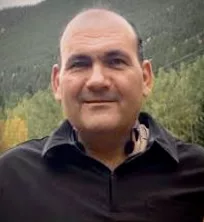

Join us for a spiritually enriching episode as we explore the profound significance of Lent with Father Andre and Mother Miriam. Father Andre shares his journey from escaping Christian massacres to leading the Mission of Hope and Mercy, emphasizing the importance of keeping God in the public square. Mother Miriam offers her insights on how beauty serves as a pathway to God and the deeper meaning behind fasting and sacrifice during Lent. This conversation illuminates the powerful role of faith, beauty, and sacrifice in our lives, providing a roadmap to spiritual growth and connection to the divine.
SPEAKER 03 :
In the name of the Father, the Son, and the Holy Spirit. Amen.
SPEAKER 02 :
At age 10, Father Andre escaped Christian massacres by living in caves in Mount Lebanon with his family. Today, Father Andre works tirelessly to encourage American leaders to keep God in the public square, defending religious freedom at home and abroad, so that all might live in peace for the glory of God. Founder and president of the Mission of Hope and Mercy, Father Andre has learned the secret to safety, joy, and peace. Love God and one another. Now, let us spend 33 minutes on the Lord’s Day, retuning ourselves to the truth of love in the hands of God.
SPEAKER 01 :
Praise be the most holy name of our Lord and Savior, Jesus Christ, now and forever and ever. Amen. Good holy day to you, my dearly beloved brothers and sisters, and our Lord and Savior, Jesus Christ. And good holy Sunday to you as well. On the Sunday, we have began with the great season of Lent. Less than a week ago in the east on Monday, we have began with Ash Monday. And then two days later on Wednesday, we have also began with Ash Wednesday. It was noticeable in the churches in the world that we saw, according to the correspondents who reflected to us the presence and the active participations of the people in Ash Monday in the East and Ash Wednesday in the West, that a lot of people actually attended the churches and a lot of people went to receive the ashes. Today, after our opening prayer, it is my pleasure and my honor to have the correspondent, and the friend, and the contributor, and one of the wonderful spiritual leaders for our mission of Popeye Mercy, for this show, the prioress of the Priory of the Daughters of Mary, Mother of Israel’s Hope, Mother Miriam, who has been with us multiple times in our show of Irrevocable. Today, Mother Miriam will be with us to speak to us about this desire of the people to receive the ashes and what does it mean in its spiritual significance to receive the ashes. In the theme of the mission of hope and mercy, we have also launched our mission appeal. In our mission appeal, we decided to take as a theme for the season of land, the beauty, the beauty as a way to God. A beauty because the world has enough sadness. A beauty because the world has enough betrayal and tribulations. Beauty as a way to God, a strange theme for this great season of Lent. Yet, we aim with it in a mission of hope and mercy to make it a little bit attractable theme, theme that through which you too will find a good reason for yourselves to maintain yourselves in the splendor of the divinity. Why? Because in our initial creation, remember, we were created in the image and in the likeness of God. What does this spiritual beauty mean, and how can we reconcile it with experiences in our human life of wars, captivities, plagues, hunger, injustices, intolerances, lies, gossips, character assassinations, destruction, betrayals, family problems, economic problems, war problems, issues of natural disasters? Is beauty reconcilable with God? And is beauty a factor that in the 20th century and then later on in our current 21st century, because the people could not reconcile the beauty of the cross with the beauty of aesthetic in a world that is filled with sadness, yet people seeking to follow and be absorbed by materialism and by materialistic satisfaction. is a beauty, a contradiction to God’s divine will, to God’s commandment, and to the power of the Holy Cross. With this, and before, we welcome Mother Miriam to tell us about her reflection on the beauty as a way to God, and on fasting, on abstinence, and how best we can live in the season of Lent, and why we must engage ourselves in a proactive way in healing our wounds, in carrying our wounds, and of course, in making peace with the brothers and sisters as much as possible as we can in order to be living in unity with our Lord and Savior, Jesus Christ. Let us do our prayer for the day. O God, come to my assistance. O Lord, make haste to help me. Glory be to the Father and to the Son and to the Holy Spirit, as it was in the beginning, is now, and will be forever. Amen. Their own strength could not save them. It was your strength and the light of your face. In Psalm 44, we pray, my brothers and sisters, we heard with our own ears, O God, our fathers have told us the story of the things you did in their days, you yourself in days long ago. To plant them, you uprooted the nations. To let them spread, you laid the peoples low. No sword of their own won the land. No arm of their own brought them victory. It was your right hand, your arm, and the light of your face, for you loved them. It is you, my king, my God, who granted victories to Jacob. Through you, we beat down our foes. In your name, we trampled our aggressors. For it was not in my bow that I trusted, nor yet was I saved by my sword. It was you who saved us from our foes. It was you who put our foes to shame. All day long, our boast was in God, and we praised your name without ceasing. Glory be to the Father, and to the Son, and to the Holy Spirit, as it was in the beginning, is now, and will be forever. Amen. Dear Mother Miriam, good holy day to you and a wonderful Sunday.
SPEAKER 03 :
Good holy day to you and Sunday, dear Father Andre. It’s an honor to be with you.
SPEAKER 01 :
It’s an honor, honestly, and I feel the blessing of God every time I speak to you. And the people in Colorado this time, in a particular way, want to hear your message. Hear your message on the first Sunday of Lent as we come on 33 Minutes on the Lord’s Day. And you heard a little bit of the introduction. We have spoken about it. I ask your little bit advice about beauty as a way to God. But did I make my point? Did I make a case and an introduction regarding materialism and the people, the way they look and they are pursuing beauty like in the end we all die and everything seems as we read in the book of Ecclesiastics, everything under the sun is vanity and beauty could be vanity. But in our fasting, in our prayer, in the season of Lent and following Jesus Christ, we adore and worship a publicly executed and publicly convicted felon, if I may say that. What is in all of this, Mother Mary? What is your last question?
SPEAKER 03 :
What is what?
SPEAKER 01 :
When we follow our Lord Jesus Christ, we know that at the season of Lent, at the end of the season of Lent, we’re following literally what we might call a publicly executed felon. He was a judge, but condemned. What is the beauty in all of this? Knowing that at the end of the season of Lent, we’re heading towards the cross and resurrection, of course.
SPEAKER 03 :
Well, Father, you’ve just converted me. When you first asked me about the theme of beautiful Lent, and I said, well, that’s not a theme I would pick. And listening to you right now, I’m fully converted. And I’m going to play your message to our entire religious community here. It’s one of the most beautiful things I’ve ever heard. There’s two things that come to mind for me. One, is the night that I got open my heart to realize that the God of Abraham, Isaac, and Jacob, who no man could look on and live, took on flesh and became man for us and died on the cross. When I realized that he was the final lamb to which millions of Old Testament dead lambs pointed, that he was the only acceptable sacrifice, that he came to earth to die, I didn’t have an actual vision, but for me, it was as if someone pulled the curtain on a stage and I saw it. I didn’t physically, I saw it. I saw him on the cross and I understood. I have chills now telling you about it. I understood the… the utter magnificence, insanity, everything of this moment, and what God has done to bring us. He came to save us, and those for whom he came put him to death. And I realized it. And I was paralyzed. I couldn’t speak. It so changed my life. And I was 32 years old, a month from 33. And I said, I never heard this before. Nobody knows. 2,000 years ago, he came, this illusion to the world. He came and he left and nobody knows he was here. And he was the only hope for the world. I said, I can’t. I wanted a ladder tall enough to get to the moon to tell the world that we have a savior and that he came and Jesus is God. So that’s one thing. And then the second thing that what you just said reminded me of, and it all comes under the heading of beauty, Father. When you love someone, you want to sacrifice for them. If they’re drowning, you risk your life to save them. If they’re in trouble, you would stand before them. You would do anything to save and help and come alongside someone you deeply, deeply love. You sacrifice for those you love. And when you love them enough… What you do to save them or sacrifice, if you could, is no longer sacrifice because you have the privilege of loving them. And in Lent, it goes further. The God we put to death wants us to travel through the wilderness with him 40 days. I can’t think of the person, just say whoever I love most in the world. And they are being put to death. And they’re going to be isolated for 40 days. And no one can touch them, but they have the opportunity to choose one person in the whole universe that they want by their side. And they choose me? How could anything be more… Ecstatic. You want me out of everyone? You want me to come beside you, to walk with you for 40 days through your temptations in the wilderness? That’s the devil’s playground, the wilderness. You want me even to have the opportunity of consoling your heart? After all you’ve done, you’ve changed me further. There can’t be anything more beautiful, more exquisite, more loving in the world than to be chosen by the one you’ve come to love most because he gave his life for you. So for me, Father, Lent is and has always been my favorite time of year because it’s the time, not Easter, not Christmas, But the time that I could enter into the sufferings of my Lord, of God, of the Messiah, of the one who became man for us, who died for us and who lives for us. He wants us. He should be disgusted. We put him to death. Think of someone we kill. They don’t want us. They want us killed. No, he took our death and he wants us, us still sinful beings, even if redeemed to accompany him in his wilderness, in his temptations. And so through his church, the faith was delivered to the saints, the church he established and called us out, um, to be part of his flesh and blood, his family. He wants us to go into the wilderness with him. Why is he in the wilderness? Did the devil put him in the wilderness? No, God did. He came out of the Jordan. And he heard the voice of God in the Jordan. This is my beloved son, hear ye him. And the devil had been looking to see, could this be him? Could this be the Messiah? Could this be the Savior? Could this be the one through whom I would be crushed? Could this be him? He wasn’t sure it was Jesus. And he came out of the Jordan. And St. Luke says that it was God, the Holy Spirit, who sent him into the wilderness. God did that. Why would God do that? He did it to send his son into suffering. But he loves his son. Why would he do that? I don’t know. Why would he put him to death for us on the cross? He did it for several reasons. He did it for us. The writer of the Hebrew says, they was tempted in all points as we, yet without sin. And we could see that in the wilderness. He did it also. Israel suffered 40 years in the wilderness because of their sin and betrayal. And his 40 days in the desert, he’s an Israeli, was in part reparation for Israel’s 40 years in the desert. And I learned, Father, that Jesus was tempted in his three points, turn this stone into bread. The devil said to Mary, as God said, go eat from the tree. Come on, you can do anything. The three temptations are the exact three temptations that the devil gave to Adam and Eve in the garden. The same temptation. Same old, same old. There’s nothing new under heaven. Absolutely nothing new under heaven. And so the same three temptations of Adam and Eve are the temptations the devil gave to our Lord. And any temptation we have today… are a variation of those three, the lust of the flesh, the eyes, and the pride of life. Every single one is one of those three. And so in order for us as children, when you raise children, you tell them, don’t cross the street, eat with your fork, all of that. And God raises us as parents to children. He helps us how to learn what his time in the wilderness was for our salvation, for us, and how to walk with him, walk through the desert with him to salvation. And so the church says it’s a time of Lent. It’s 40 days, approximately, to mirror his 40 days, to mirror Israel’s 40 days, and many 40s in the wilderness of the old covenant. And Every one of his temptations shows us how to fight and not give in. Our Lord, through his temptations, has given us the roadmap, the plan, the strength, in a sense, the miraculous answer to not giving in to temptation. Right? He was tempted in all points as we, yet without sin, which means he was tempted beyond what any of us could ever be tempted. Because when we give in to temptation, we give in with sin. But Jesus never gave in. So he was tempted to the full. Absolutely to the full. And he was strengthened through that. as we get strengthened through our temptations. And do I have a minute or two for one more thought, Father? Of course, of course. Let the Holy Spirit flow. When Adam and Eve were tempted in the desert, as God said, come on, you’re not going to be like God. Come on, eat from the tree. Well, That’s a lie. God does want us to be like him. He created us in his image. And we’re being conformed to the image of his son. The psalmist said we’ll awaken his likeness. He wants us to be like him. So what was wrong with the temptation for Adam and Eve? Take it and you’ll be like God. It is that Adam and Eve wanted to be like God without God. to take it before God had it for them and in their own terms. And every single time, and if you look at the three temptations in the wilderness, every one of them is legitimate he could turn bread stone into bread he could jump off the pinnacle he could um well he could worship something other than god but he’s not going to he could do all that and every temptation we have is what god legitimately if it’s it’s a if it’s a fine temptation it may be what god has for us but in his time and in his way. And we want to grab it now. We want to be like God without God. We want what we want. So what is Lent about? Lent is learning to have mastery over self, learning to pray, learning to not let our flesh direct us, learning to not have instant gratification. And so he gives us 40 days of fasting. And I’ll tell you, Father, the church’s rule, at least in the West, is that fasting is one meal a day. That’s at least on Ash Wednesday and Good Friday. One meal a day with two little snacks or meals that don’t equal up to one. To me, that is so shameful. It’s shameful. I grew up in my Jewish home. We knew what it was to fast. We didn’t even have water. We didn’t have water. I was five years old, and my mother said, no, Rosalind, my given name, no, no, you need to eat. You’re not old enough. I said, Mommy, I’m Jewish. I want to fast. I don’t want to eat. I cried my eyes out. We wouldn’t even have a glass of water. We were fasting because we were God’s people. And now… We complain if we give up peanut butter or coffee or something. It’s shameful. We haven’t been formed. And then abstinence, of course, is to do without any meat. Why? Why meat? When I came to the Catholic Church, before I was Catholic, I took a waitress job. I ran two businesses in New York, and I came to New York and took a waitress job to look into the Catholic Church. And I saw, I worked for an Italian restaurant. They’re all Catholic. And people would come in on a Friday night. And because it was a big Catholic family place, they didn’t have meat. They would order lobster feasts and all kinds of things. And I learned why they didn’t have meat. And I said, but you’re coming here for a lobster feast. How is that a penance? How is that abstinence? It was just… Just amazing. And so the idea of giving up meat is because Jesus is the Lamb of God who gave up his life. Can we not give up meat for a day or two days of the year? And the fact is, the church has asked us to give up meat for every Friday. And after Vatican II, for reasons I won’t go into now for time, they allowed meat because it’s not necessarily a sacrifice.
SPEAKER 01 :
If someone’s a vegetarian, it’s not a problem. And the Lamb never changed, Mother Miriam, by the way, by time. prescribed ecclesiastical law, nobody can change the law to eat meat on Fridays, by the way, no one. But for pastoral reasons, the prelates of the church, they dispense from that law, but they cannot abolish that law. I do not know if the difference is happening.
SPEAKER 03 :
Well, what they said was, and again, because their reasoning was they said they want their children to grow up, not just to not have meat on Friday and not understand anything. But it’s a sacrifice to enter into the sacrifice of Christ. And so, again, if someone’s a vegetarian, they don’t have meat anyway, you know, maybe whatever. So they said the idea is to sacrifice. We’re not telling you not to give up meat. But not every one of you has meat. Somebody has to have meat if they’re sick or something. So the idea is you must sacrifice. Every Friday is a time to join in to the sacrifice of Christ and the bishops of the United States at least. asked everyone to continue the sacrifice of not having meat for the end to abortion. But so the law of sacrifice hasn’t changed, but they they’ve given the people the freedom. Again, if you’re a vegetarian or whatever it is, don’t skip sacrificing on Friday.
SPEAKER 01 :
mother miriam i don’t need to change the tone of our spiritual encounter the people on irrevocable uh conversation and reflections with you and with myself i’m guided by the holy spirit are happy to hear these instructions and i pray they pursue them they follow them and also the people watching us on 33 minutes on the lowest day on the sunday in the state of colorado and the neighboring states are definitely enjoying knowing what is the best way to enter into land But I have a concrete question, because this is your field. You are a defender of the faith. And I know that. You’re a defender of innocence, actually. You’re a defender of justice. You have a heart from the divine mercy. God gave you life, and somehow. Where does this come from in your character?
SPEAKER 03 :
Kind of being overwhelmed. Since a little child, I knew who we were. Identity. I knew we were God’s people. I didn’t even know the word grace. But yet I said, but that’s what I felt all my life. How is it that I should be born from Jewish blood, father, mother, grandparents on both sides? and automatically be the people of god i didn’t do anything it’s not that we’re better it’s what god said i there was no it’s pure grace but it was also responsibility with that grace that we needed to live as god’s people and most of my life as i got older i didn’t have a reason to live is that’s a bigger story and then when i found out that there was a reason that god came to earth to bring us to him And I found out and I knew it was by grace because he penetrated my heart. It felt like no less than Paul’s fall off the horse. I was a completely, completely new creature on earth and had a reason to live. And to this day, I have a reason to live for every second I breathe because of that. I forgot even the question you asked me.
SPEAKER 01 :
There’s this discernment in your heart when somebody tells you a story. Well, first of all, it has to do with the character of a merciful mind that you have and a just mind that you have, which I personally experience in you that not too many people have, and it’s problematic. And you hear a story, you take a moment, you address it, and you address it in what builds up, and never in what destroys. I experienced that personally. This character of mercy is very close to almost what the Divine Father is. Because, you know, if I were to look in one of the readings we start reading in the Sealing of the Lamb, it’s a book of Job, in our tradition in the East, in the Maronite tradition. every evening when we do the evening prayer and every Friday when we do the evening prayer for the benediction of the cross. And we have about five minutes for our people in Colorado who will be following us still on irrevocable, but they will leave us on 33 minutes on a Lord’s day. In our readings, we speak about Job’s story and how Satan entered to the house of the Lord and he was always the accuser, always the accuser of the brothers and sisters. Even the book of Revelation speaks of him as the accuser and finally God would shut him down, will destroy him. You are defender of the accused. You have that nature in you. My question was, where does this come from in you?
SPEAKER 03 :
I have an idea. Suffering. There’s no other word. I’ve experienced, I haven’t made this public and I won’t give you details, but I’ve experienced so much suffering from a little child on. I was almost dead three times. And I even considered suicide in my young years. So much depth of suffering that… You can either have a life of self-pity or a life that understands the suffering of others as our Lord suffered and understands us. I’m not comparing myself to him, but that’s the only thing that comes to mind. I know what it is to have no reason to live. I know what it is to suffer in many ways. And I live with two things. I live with a heart that… wants to help others who are suffering to live, to have hope, and a heart of gratitude 24-7 that just doesn’t quit. I wake up every day and the fact that I am God’s, G-O-D apostrophe S, the fact that he has saved me so many times, the fact that he’s with me even if I feel a thousand miles from him, I know it’s true. and I live with it. So that’s the answer, Father. The suffering I’ve had, and we all have suffering, you’ve probably suffered 10 times more than me, but it’s what shapes your life. There’s no way for me to forget it. There’s no way for me to even at times not live through it. And I see it now, if I keep the right perspective, I see it as a gift because God has used that suffering beyond anything I could ever have hoped for or imagined. And I live in gratitude. That’s the answer.
SPEAKER 01 :
And we have about three minutes. And I know you will give your final message and blessing to the people in Colorado for 33 minutes on the Lord’s Day. I want to tell you that suffering was the key word for which I chose after meditation, after contemplation, after many pains in my heart, in my body, in my soul, why I chose beauty as a way to God. Because I lost everything. I lost everything without no purpose. I lost everything and not knowing why. And truthfully, not knowing why. If I come objectively to stand within myself, before myself, before my counselor, before my confessor, before my friends, and before my responsibles, and I say, What did I do to deserve the hate I was faced with? What did I do to deserve that I would do 32 surgeries in my life? What did I deserve the loss of a friend or the confusion that is happening in the world? I know that I was pursuing race. I was always doing something in perspective to follow Jesus Christ. And then almost, you know, the evil one comes and tells you, oh, see what you get when you follow him? And then I go, but no, Jesus is so beautiful. Oh, taste and see how sweet is the Lord. In Psalm 104, I believe, we pray. And that’s why I chose that theme. I said, no, the Lord is sweet. The Lord is good. So your final words in a minute. The people are struggling with following the church, following, seeing the dilemmas of the church. Like, you have no messages from national leaders more about Ramadan than about fasting in accordance with our Christian rules. There is unfairness going on. How do you strengthen their faith and tell them, fast and pray in the season of Lent?
SPEAKER 03 :
Okay. My question is the same as yours, but proposed in the opposite way. I don’t ever say, what did I do to deserve this? I don’t even think it because I deserve hell. I know that. He came for sinners. My question is, why me? Why did he pour his love and grace on me? Why do I have a reason to live? Why do I know? Why do I love? Why do I believe? And I would say to everyone, if your heart is a bit cold, if you don’t truly understand the love God has for you, Does he have it because you’re lovable? I don’t know if you’re lovable or not. But you are to God. He died for you. That makes you the most valuable person in the world. God died for you. Not a hero, not a movie star. God died for you. And you don’t fully understand it if you don’t live for him. As you live for him. You know what? When Moses, God split the sea for Moses, but he didn’t split the Jordan for Joshua. Jordan had to put his foot in the water. And as he did, the waters split and they went through. That’s what we need to do. Don’t wait. The devil’s plan is that you trust your emotions, your feelings. That’s the devil’s plan. God says, obey. Obey the God who gave his life for you. Obey me. Put your foot in the water and I will take you through to beauty you’ve never even experienced. So I would say this for Lent. Think of what holds you most. Think of what you feel you need most, chocolate ice cream, a smoke, drugs, a certain relationship that’s destroying you. Think of what you want or attracted to, the thing that holds you. You could be a millionaire, but if your possessions, if you can’t do without them, they own you. You don’t know them. You don’t own them. So think of the thing that holds you the most. One thing, give that up for Lent.
SPEAKER 01 :
Thank you, Mother Mary. For the sake of the people on 33 Minutes, I want to thank you so much for being with us. You may continue to follow the next 15 minutes on Restreaming It, basically, through our irrevocable podcast with our X page for Mission of Hope and Mercy and our YouTube page of Mission of Hope and Mercy. I want to wish you all a blessed and wonderful Sunday. And do not forget, faith… and action. It’s good to be merciful in this season of Lent. I want to thank all of the supporters who continue to tithe and to support the ministry of the Mission of Hope and Mercy and any ministry during the season of Lent of your liking. And may God bless you all. Mother Miriam, now we can continue for the segment about 15 more minutes in what you’re saying. My apology to have cut you short a little bit so we can say a wonderful Sunday to our people in Karawadi.
SPEAKER 02 :
Thank you for listening to 33 Minutes on the Lord’s Day. To hear previous programs, visit the show page at missionofhopeandmercy.org. Listen to Father Andre every Sunday morning at 7.30 on KLZ as he speaks on the unity of Christians, religious freedom, and the biblical foundation of Judeo-Christian values and traditions. Join him in bringing hope and freedom to people across the globe while also strengthening your own faith, family, and community right here in Colorado. Reawaken the spiritual strength of America. Go to missionofhopeandmercy.org.