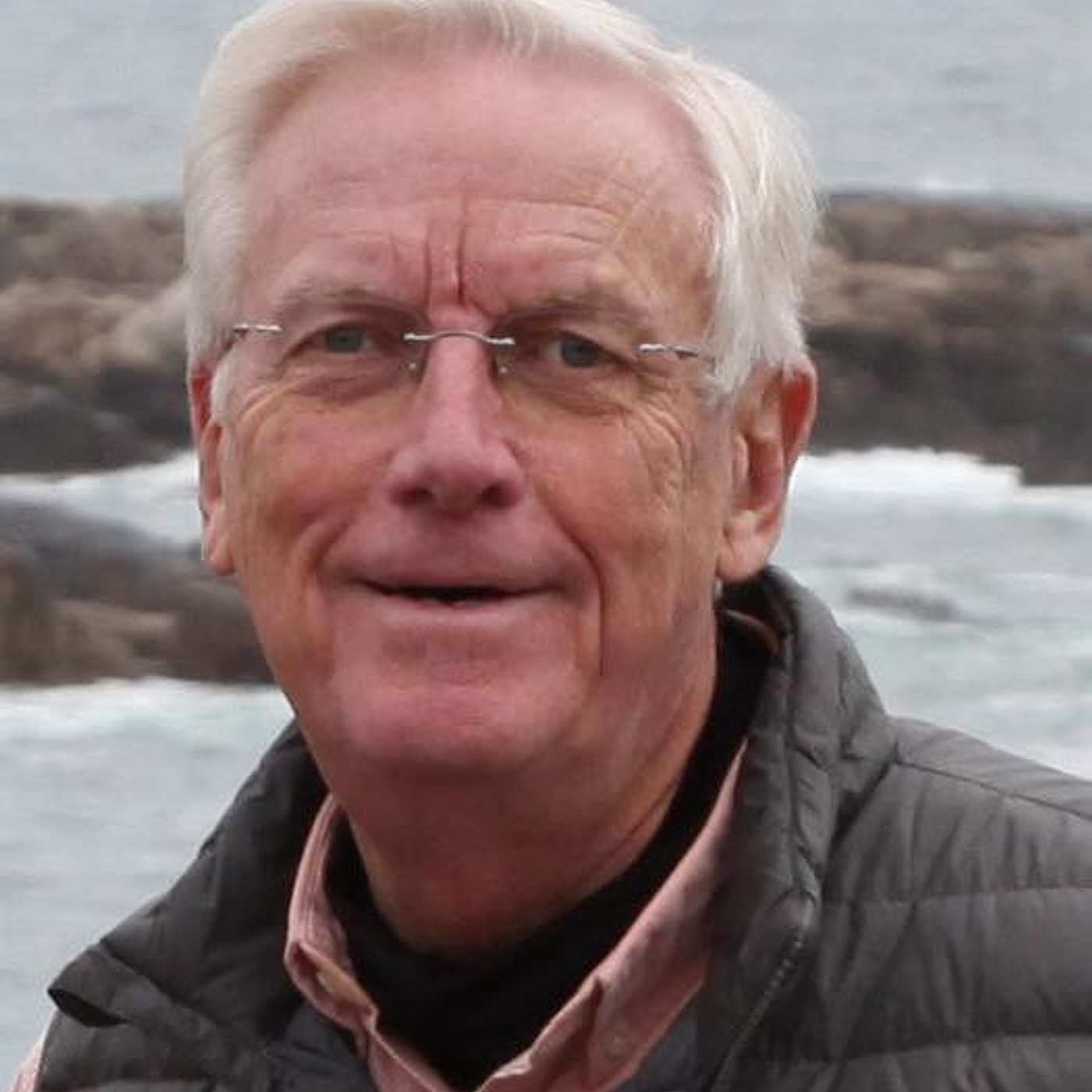

In this episode of ‘Living It Loud,’ join Tami Bandimere as she sits down with radio veteran Jack Pellin to explore his illustrious career in the broadcasting industry. From his beginnings at AM 91 The Point in a majestic Big Red Castle to managing some of Denver’s renowned radio stations, Jack’s journey is a testament to the power of local radio in connecting and uplifting communities. With a career spanning over five decades, Jack shares his experiences working with iconic programs and the role of faith-based broadcasting in encouraging and inspiring listeners every day. This episode is a deep
SPEAKER 10 :
From the day we’re born, we are scarred and torn We’ve been scared to sing out loud But we don’t care no more, cause we know life is short
SPEAKER 03 :
Hey everyone, this is Tami Bandimere, and on this episode of Living It Loud, I’m going to introduce you to somebody that if he sounds like he’s got a bit of a radio voice, it’s because he does have a radio voice. And my guest today is Jack Pellin. And Jack was the general manager at AM91, the Point radio station, from about 2002 to about 2024 is that correct yes that’s correct yeah yeah and um and the point of faith is um that’s an interesting radio station because of its roots and where it came from and and that kind of thing so first of all thank you so much for allowing me i’m actually i always let listeners know where we’re doing interviews from so that you know they have a little grace if there’s noise or whatever but um we’re in a very awesome i’m assuming this is like a little library at Jack’s house in Lakewood. A little down here. Yeah. Yeah, and it’s got great acoustics, so I’m excited.
SPEAKER 04 :
Well, I’m just so happy to have you, Tammy, and you’re turning the tables on me because I used to come by and interview you all the time, and now I’m here and you’re talking to me and asking me questions I don’t know what to do.
SPEAKER 03 :
That is true. It’s so funny because Jack said, is there anything I should get prepped for? And I’m like, well, people like stories and I know you know how to talk. So I think we’re pretty good there. And I have some questions that I’ll ask. So I think we’ll just roll right along. Well, let’s let’s go for it and see what happens.
SPEAKER 04 :
Thank you.
SPEAKER 03 :
So AM 91, the Point radio station, was located at the Big Red Castle. Yes. And that was in kind of the Westminster area, correct?
SPEAKER 04 :
Yes, it’s up on the hill at 83rd and Federal. You know, the Big Red Castle up off of the turnpike up there. And it’s quite prominent. And it’s not hard to find if you just glance that way. But that building was built in… What was it, the 1890s? And it’s just a beautiful red sandstone architecture that is just a fantastic landmark up there. It was originally built by the, was it the Presbyterian Church? I believe it was. And they made a fatal decision in the early 1900s In about 1915 or thereabouts, they decided to make that an all-men’s college, and that’s when the war broke out. So all the men left for the war effort, and they had nobody to educate at that building. So they leased it out to a farmer and he ran chickens, had chickens in the building and stored his implements and stuff. And it was just a fantastic history. But then the current ministry that owns it, the Pillar Ministry, they bought that in 1925 and refurbished it. and continue to refurbish it, because that’s what you do with old buildings. But then they built a radio station in 1928, and the radio station’s been going strong ever since. And I had the privilege, they invited me to come and help them with their radio station back just at the turn of the century. And that’s a funny way to say it. Isn’t it?
SPEAKER 07 :
Yeah, you’re right.
SPEAKER 04 :
But… I had the privilege of managing that radio station for about 22 years, and that was a real privilege. And that just tacked on to my previous radio experience at KRKS, where I got my start, and KWBI, which is now Caleb. Wow. I’ve managed three different stations here in Denver, and everyone has been a joy.
SPEAKER 03 :
It’s interesting because I didn’t realize, because I listened to AM 91 The Point, and it wasn’t until my kids were going to Silver State Christian School that And we had a, I think it was a basketball game or a volleyball game or something because there’s a school up there too. And I’m pulling up there at night and there’s these like antennas and all that kind of stuff. I’m thinking, what is going on up here? And then I realized that that’s where it was. I never had any need to go to the station because you’re right, you always came to us. And so I didn’t realize that that’s where it was.
SPEAKER 04 :
Yeah, when you’re listening to the radio station, you don’t know if it’s a mile away or 500 miles away. And, you know, that’s one of the blessings about radio, Christian radio in particular, is that it’s non-threatening. People can tune in in the privacy of their home or their car and they can listen and be encouraged by that and not feel threatened. Maybe they have a friend jump in the car and they change the station or something like that. But people can listen to it in private and it’s not threatening at all. So it’s just a tremendous opportunity to encourage people.
SPEAKER 03 :
And you used to have music, but you also had… Radio like some syndicated shows that you played and that kind of thing, correct?
SPEAKER 04 :
Yes, we would play A few programs like Focus on the Family, Chuck Swindoll, David Jeremiah, and various ones like that that added to the depth of the ministry. I mean, when I was in radio and I’m not a preacher, you know, so my message is somewhat limited. I go and share my experiences as a Christian, but I’m not a preacher. So we had an opportunity to have wonderful conversations. messages on that would encourage people along the way.
SPEAKER 03 :
Yeah, and I just remember, too, that you had, one thing that was really neat is that you had prayer time.
SPEAKER 06 :
Mm-hmm.
SPEAKER 03 :
And so talk about how that came about. And was that from the beginning? Or was that something that you just realized that there was a need for that prayer time? A couple times a day, correct?
SPEAKER 04 :
I think the concept was a carryover from KWBI. And I managed that until it was sold to K-Love. And then KPOF and the Pillar Ministry hired me to run their station. And I brought along a number of staffers from out there. And we just became such a close knit team that it was just a very natural thing to do. But the prayer time we just felt was so important because so many of our listeners are literally alone and they have no one around them that share their faith. and their reliance on prayer and so forth and so whether they were an alone individual or somebody that was very active everybody appreciates prayer when they have a special need and so we just felt that we would kind of gather our listeners around in the prayer time three times a day we had it and That gave an opportunity for people to share their needs and feel supported by all of our listeners as our listeners prayed along. So it became just a vital, vital part of the ministry.
SPEAKER 03 :
It’s really interesting, I think, because… You know, a lot of times people say, well, I suppose we should just pray about it. And they use that as almost like their last line of defense, so to speak. And yet it really should be the first line of defense.
SPEAKER 04 :
Yes, it should be. In fact, personally, my prayer is more like a conversation with a friend that’s right by my side. I could be driving or walking and I could see something and I’d say, Lord, thank you for… That particular thing that I see, you know, whether it’s the beauty of his handiwork or whether it’s a blessing or the family or whatever, I just stop and just talk to my friend and savior next to me because I feel that close to him. If you just develop a conversation with the Lord. It just draws him in closer and closer.
SPEAKER 03 :
It’s interesting that you’d say that because I was a few minutes late getting here today for this interview because I’m part of a group called Racing Wives Pray. And there’s, I think there’s about eight of us that are on like a… text message string and about once maybe twice a day but at least every other day somebody comes with a prayer request and sometimes it’s people I don’t know within the racing community and sometimes it is definitely people that I know And the fact that there are eight women praying for that person and they really don’t even know. So I guess I think to myself, sometimes you just wonder who’s praying for you.
SPEAKER 04 :
Right.
SPEAKER 03 :
That you really don’t have any idea.
SPEAKER 04 :
Well, we have no idea, you know, because people will hear about something. I’ll hear about somebody in need and I’ll pray for them and so forth. But we don’t know who’s praying for us. But the important thing is, is that we know who’s hearing the prayers and whether they act positively or negatively, you know, whether the Lord answers that or doesn’t answer it right away. We know that he knows about it and he knows about us and we should be encouraged by that because he’s so close to us.
SPEAKER 03 :
Yeah. Well, and I’m sure you’ve heard some really amazing stories from people. After you’ve prayed for them, you know, that had said things turned around for me or things got better for me or, you know, I didn’t expect whatever.
SPEAKER 05 :
Yes.
SPEAKER 03 :
You know, so, yeah. One thing that I wanted to ask you about, you know, you talked about the three stations and that. That KWBI then got sold to K-Love. So that has become a national thing. And the point of faith has stayed as a local station. So touch just a little bit. We’ve got about maybe a minute in this segment and then we’ll finish it in the next one. But talk a little bit about the difference between the local stations.
SPEAKER 04 :
station and then like a national station well just going back to what we were just talking about i feel close to the lord because i’ve drawn him into my life and i feel that he’s right next to me local radio is close to people it’s about their community and about the activities they see about the weather that’s going on and everything else and the people who are on the radio are their friends because they’re in the community And so local radio is very, very important. And we were able to connect with local pastors and local events going on and make sure that people knew about the proper events locally that were going on. So I feel very strongly about local radio because it’s close.
SPEAKER 03 :
Well, hold that thought and we’ll be back with more with Jack Pellin. I’ve got some pain to spread.
SPEAKER 09 :
After Sergeant Matthew Kyle was injured in Iraq, his young wife Tracy faced the daunting task of getting their VA benefits. There’s a lot of red tape. There’s a lot of confusion. There’s a lot of forms to fill out. For years, paralyzed veterans trained experts have helped injured veterans and their families. National Service Officer Bobby Hager explains.
SPEAKER 08 :
We’re able to fill out all of the forms and applications and ask for all of the benefits that that veteran’s entitled to. To help, visit pva.org.
SPEAKER 03 :
So we’re back with Jack Pellin, and when we left, you were talking about local radio and how special it is for people to have that local radio and have that connection with people. But you actually retired in 2024, and you did radio for 22 years or so. Yes, at that station, 52 years here in Denver. Yeah, and I think that’s just amazing that you had that, you were at three different stations, and you eventually ended up at AM 91 The Point. And I think what’s interesting is that I didn’t realize that you were in that big red castle that was up on the hill until I went to an event that my kids were, my kids went to Silver State Christian School, and then we were up at the Up at the castle. And I didn’t realize that that’s where the station was at.
SPEAKER 04 :
Yeah.
SPEAKER 03 :
And so.
SPEAKER 04 :
They have the Bellevue School up there. Uh-huh. Which is a K through 12.
SPEAKER 03 :
Mm-hmm.
SPEAKER 04 :
And so that’s what brought you up there.
SPEAKER 07 :
Mm-hmm.
SPEAKER 04 :
And the radio station is also up there on the hill. Yeah. It’s all part of the Pillar Ministries outreach up there.
SPEAKER 07 :
Mm-hmm.
SPEAKER 04 :
And that’s quite a fascinating old building. It was built in 1890s and built by the Presbyterian Church as the Princeton of the West. So it was Westminster University is what they called it. And Westminster is still on the carved redstone on the front there and so forth. Well, they made a fatal decision in the early 1900s when, just before World War I, they turned it into an all men’s school and then the war broke out and all the guys went to the war effort. And so they had an empty building and they just kind of threw up their hands and they rented it to a local farmer and he even had chickens in the building and everything else. Then in the 20s, the Pillar Ministries purchased that building and refurbished it and continue to do so because it’s an old building. But it’s just a wonderful landmark up there on the hill. All kinds of historical pictures of it. So it’s just a fascinating building, but that’s where the radio station was. And so we, I kind of came in and we lovingly called it the Big Red Castle. The ministry would call it the college building, but I lovingly called it the Big Red Castle because that’s what it looked like up on the hill.
SPEAKER 03 :
Well, buildings built back in that day were built so strong. I mean, I know that there is a lot of maintenance that has to take place on an old building like that, but It seems like that was a perfect place for a radio station. It had to have been so airtight and so like, you know, there’s not a lot of outside noise that came in. Yeah. And that kind of thing.
SPEAKER 04 :
Yeah, that worked out real good. But the other downside of that is because the way it was constructed, it’s hard to get wiring through the building. And so we struggled with that a lot in redesigning the studios and everything else. So it was a great opportunity. to broadcast from there. That radio station started in 1925 after the ministry, or 27 after the ministry bought the property in 1925.
SPEAKER 03 :
Wow. That’s really amazing. So talk about your staff that you had up there. Talk about the people that made AM91 The Point such a great local radio station.
SPEAKER 04 :
They were people known by the community. They were friends that I had worked with and had hired over at KWBI. Many of them were from KWBI before I even got there. So they were longtime radio people from KWBI. And then when Caleb bought KWBI, we were all out on the street, so to speak. And About a year later, the ministry contacted me and said, Jack, would you help us with our radio station being KPOF? And I said, well, sure. And so we went through the hoops of I would explain to the board how I would do it, what I needed to do and so forth. And they were so kind and accepted my request. ideas of how to run their radio station. And then I just did it for their edification on how to approach it. And they said, would you do it for us? And so I wound up managing the station for them. And they were just so gracious to just let me Go ahead with what we did. Well, I hired a lot of the KWBI staff that was already well known to the community. And Roy Hansky and Roxy Kuhn and let’s see, Kathy Joy at the time and different names like that. that Denise Washington Blomberg, she was a recent hire for me at KWBI, and then she was able to come over as well. So… those people were already known as local people in the community so we ran it as a local station we were involved in things we would come out to the racetrack and actually broadcast live from out there just because you had this wonderful family festival On 4th of July, that was a blessing to the community and a great way for the Vandermeer family to express their patriotism and their love for the Lord, which I really appreciated. So we were out there as a radio station covering that.
SPEAKER 03 :
Yeah. Well, and when you talk about, you know, the family, family listening and that kind of thing, my kids, well, I remember riding home with my dad from the racetrack. and we would listen to Adventures in Odyssey. And I loved that. And so then when I had kids, we would listen to Adventures in Odyssey. And in fact, it’s really interesting because the kids and I were talking a couple of months ago when I was with them, and they were saying, do you remember we had every one of those cassettes? Because back then it was cassette tapes. And my church library… at Cherry Hills Community Church, they carried the, there was like, I don’t know, four or six cassettes in a, in a package. And we would listen to those, wear them out and then return them, you know, and listen to them again. So you had stuff for children and you had stuff for adults. And so it wasn’t just music. It was Other programming as well.
SPEAKER 04 :
Right. We had folks on the family with Adventures in Odyssey, and we have Chuck Swindoll and David Jeremiah and other great teaching ministries for those of us who really appreciated being fed on a daily basis with those great preachers. But like you say, we had the wonderful children’s programming Saturday morning. We devoted to Kids Point where we had Jungle Jam and Friends, which I still love. I remember that. And Adventures in the Odyssey and Nature Corner and all that kind of things for the kids. And you know what? The adults enjoyed those as much as the kids did. It was just a great blessing.
SPEAKER 03 :
Well, and you had you had prayer time a couple of times during the day where you just took a break and you prayed for people and you prayed for unspoken requests. You prayed for specific name requests. You just you lifted people up in prayer.
SPEAKER 04 :
We did three times a day, Monday through Friday. We would have prayer time. And that was a live prayer time with real live needs and answers to prayer and things like that. And the on-air person would pray for those individuals. The importance of that is, you know, we talked a little bit about local radio. Mm-hmm. That’s how you are local. You come alongside the listener and you appreciate the fact that you’re side by side with them. You’re in the same community. You’re understanding the various needs that are. going on in the community’s life and in people’s lives and so forth, and many of whom we got to know personally. It was just a great way for local Christian radio to minister to the local audience, individuals, on a personal level.
SPEAKER 03 :
And as great as local radio is, it’s completely different from national radio. I’m sure there was certain challenges for local radio that that you don’t deal with a national. And where I’m going is that you had share-a-thons, you needed to raise money for your fundraising and that kind of thing, which I know they do that on a national level, but you’ve got a much smaller group of people to pull from, correct?
SPEAKER 04 :
Yes, that’s correct. We’re just asking the local community in that instance to support a local Christian radio station. Some of the national networks… We’ll ask for money and the call will come in from Florida or Tennessee or Washington or wherever, you know, so and they are operating a single staff just like we’re operating, but they’re operating out of a central studio and serving the whole community. So they have about well, the staff is larger, but it’s essentially a one station staff that is being broadcast all over the country. So That was a challenge, but we improved every year. Our listeners were so faithful in supporting us.
SPEAKER 03 :
Yeah.
SPEAKER 04 :
And it was just great.
SPEAKER 03 :
Yeah. Well, and again, you would hear names and you’d be like, I know that person. You know, I recognize that name. Yeah. Uh-huh. For sure. So talk a little bit about, you started with a certain radio station and then you moved through. How did you land at AM 91, the point?
SPEAKER 04 :
How did that actually… Well, we could go back to how I got in radio. Yeah.
SPEAKER 03 :
Yeah.
SPEAKER 04 :
I wanted to be an architect, so I went to John Brown University in Xylem Springs, Arkansas, which had a good engineering school and design school and so forth, and went there for two years. Mom and dad were not able to keep me there financially, kind of hard times and so forth. So I moved back to Denver, transferred everything to the University of Denver because they accepted all of my hours from John Brown except three hours. And here I’d got two years in. So I thought, boy, that’s great. And I… You know, that doesn’t sound like a financial solution to go to the University of Denver. But I was able to just take a few classes at a time and pay for it as I went. And I crammed four years into 13. But I got it done, Tammy. And got a degree in math. building industry and real estate management and still striving for the same thing. But in that period of time, That was in the Vietnam era, and if you weren’t going full-time, you were subject to the draft. And I really didn’t want to be drafted. It wasn’t that I didn’t want to serve, but I didn’t want to be drafted. So I joined the Colorado Air National Guard and worked on the airplanes out there and the weapons systems, learned that, and then… I joined the Guard to beat the draft, but they activated the whole Guard unit and sent us over to Vietnam. So I spent a year over in Vietnam. And thankfully survived that, had a couple close calls over there. And then came back and was invited by a dear friend, Roger Anderson, who was the son of Basil Anderson, who owned KRKS at the time. And that was right next to the White Fence Farm down there in West Jewell. And I came back and he said, I need somebody to run the radio station for six hours on Friday night. I said, well, that’d be interesting, but I don’t know how to do that. He says, I’ll show you how. So he got me started. And then within a week, it was Monday through Friday, six to midnight. And then within a couple of weeks, it was from four to midnight. So it became a full-time job. Just in a short period of time.
SPEAKER 03 :
Hold that. We’ll be right back with more of Jack Pellan.
SPEAKER 02 :
God’s wisdom produces behavior that is morally pure, chaste, and modest. God’s wisdom produces relationship, not estrangement. God’s wisdom does not demand its own way, but rather functions by influence. God’s wisdom is not rooted in pride, but rather in service. God’s wisdom is marked by kindness, generosity, and helpfulness. The wisdom that is from above is first pure, then peaceable, gentle, willing to yield, full of mercy, and good fruits, without partiality and without hypocrisy. James 3.17 This is taken from God’s Way Day by Day by Charles Stanley.
SPEAKER 03 :
We’re back with Jack, and you’re talking about going from being an architect to being in radio. Yeah.
SPEAKER 04 :
It’s a little different. Yeah, that’s kind of a 90-degree turn in a sense, but I was able to use some of the skills in radio. But then I got started at KRKS Radio, and I was there for quite some time until they had a need. Well, actually, KRKS was sold to Salem Radio, and And then I didn’t have anything, but they were… I had some friends that were acquainted out at KWBI, and they invited me out to be manager of their radio station out there, which I had the privilege of doing for several years, until KWBI was sold to K-Love. And so… Here I am, and there’s a lot of inside stories there that I just was so blessed through that period of time. So then when KWBI was sold to K-Love, the people at KPOF said, would you come and help us with our station? And so I laid out a plan for them, thinking that somebody else might do that plan. But they said, would you do that for us? And so they were very gracious to hire me and basically just say, They trusted me with a radio station. And so I was able to implement a lot of things that were not there before. And it just turned out to be a real blessing.
SPEAKER 03 :
So talk a little bit about your wife, Beth, because you and I have talked about this before, that one of the things that I always wanted to do was to be a flight attendant. I just thought that would be just an awesome thing to do. And your wife has actually done that. She’s done it for a long time, hasn’t she? Yes, she has.
SPEAKER 04 :
And by the way, you would be a very good flight attendant. But that… That being said, Beth has been flying with United Airlines for about 55 years now. And she’s enjoyed all that time. And she started that just before we became acquainted and so forth. So that’s the only way I’ve known her through all of our marriages as a flight attendant. And she’s gone and so forth. But… We’ve worked that out.
SPEAKER 03 :
Yeah, yeah, you have. And did you meet her at school, or where did you meet her?
SPEAKER 04 :
No, I had a friend that was my ski buddy. We would go skiing all the time, and he had a girlfriend at the time who was a roommate with Beth in Chicago at their stew school. And every once in a while, she would come out to Denver, because she lived in Lakewood, so she would come out here and see my buddy Bill, and she would bring a friend along. I think there were four roommates.
SPEAKER 03 :
And stew school was stewardess school. Stewardess school. That’s what they called it, stewardess school. Yeah. Or stewardess, yes. Uh-huh. So she would come out.
SPEAKER 04 :
Yeah. Well, I had three different blind dates, kind of blind coffees, you know. They weren’t real dates, but we were just fellowshipping as young people all the time. Well, She would come out and she would bring one of her roommates. Well, the first one was real nice, but nah. Second one was real nice, but nah. Then she brought Beth out and I said, oh, there’s some possibility. And I was very attracted to her at the time. And those young ladies moved out to Denver and transferred to Denver as a base rather than Chicago. So that gave us an opportunity to get acquainted a little more, and this was pretty much through church and so forth, where we would meet up and so forth. She she I would call up to their apartment and I’d say, is Beth there? I’d like to talk to her. And there would be a pause and I would hear a door close. And and then the voice of a roommate would say, well, she’s not here right now. Beth would say, let me go on the hall so you can tell him I’m not here. and you’re not lying right so persistence paid off on your part it did we’ve uh we’ve been very happily married for well over 50 years and uh it’s worked out good and beth is still flying every week she still flies to germany and comes back so she’s still enjoying that and And still able to do it. I’m very thankful for her. We pray for her good health, you know, and so forth. She’s still strong enough to do that. And we’re able to get that done.
SPEAKER 03 :
And you have a daughter. Yes. And so tell us a little bit about your daughter.
SPEAKER 04 :
Yeah, our daughter, we just have one daughter, one girl, and one child. Happens to be a girl, yeah. Elizabeth. See, my mom’s name was Elizabeth. I married an Elizabeth and her daughter’s name is Elizabeth. I have no imagination. Well, it’s easy to remember. Yeah, it is. So anyway, we have the one daughter and somewhere along in high school, she said, I think I want to fly. And I don’t know if it was directly related to Beth being a flight attendant. But she wanted to actually fly. She’s kind of an adventuresome. So she went to Laterno University in West Texas. That’s a wonderful Christian school and they have a fantastic aviation program. And so she went down there and she got her degree in aeronautical science, including being a mechanic and a flight instructor. And so she had all of those. And then she didn’t have any boyfriends at the time, but a lot of friends, okay? They just kind of hung around together and were great friends. She went up to Alaska and started flying in the bush up there. And we’ll get to that in a little bit, but… She flew in the bush and then she flew regional jets out of Charlotte and Orlando. And then she went back to Alaska and flew for the Alaska Air National Guard. She flew KC-135 tankers refueling, which she did, by the way, over Afghanistan. And then she transferred and retrained into a C-17 cargo plane, and she flew all over the world with stuff in the back, helicopters or whatever. She flew troops over to Mongolia. Those were Mongolian troops returning from training in the United States. She flew them back to Mongolia. So she’s been all over with that. Right now, she’s not flying actively. They’re living in Alaska, and she’s raising a grandson and granddaughter, which we’re very proud of, and she’s been homeschooling them. So she’s had her hands full.
SPEAKER 03 :
So you have one daughter that literally keeps you up at night with this flying business, correct? Oh, yeah. You talked a little bit about how you prayed for her, but then your perspective changed. Tell that story. Oh, yeah.
SPEAKER 04 :
I think I shared that with you at some time in the past. You know, I was an anxious dad. And here our daughter was flying in the bush in Alaska through snowstorms and out over the Bering Sea, out to the little islands and so forth. And, of course, your imagination runs wild. And so here I am as a dad saying, Lord, please keep Elizabeth safe as she flies. And all the time, I just was kind of anxious about that. Just being honest with you, I was just anxious about that. I loved flying. I enjoy flying. And I was proud of her. But I was anxious as dad. And then an interesting thing happened that really changed my heart. She was over there and I was saying, Lord, protect her. Lord, protect her. Lord, protect her. Don’t let her crash. Get her safely back. And we were in Milwaukee visiting Beth’s brother over a weekend many years ago at that time. I opened up the newspaper and there was an article that said, for Beth. Regional pilots were killed on the way to the airport in an automobile accident. They were, you know, in Milwaukee and had an accident, and all four of those pilots were killed. And my thought immediately went to… Those parents were not expecting a phone call saying their child was killed in an automobile accident. They were expecting… an aircraft crash or something like that. You know, I just kind of put myself into that situation. And I thought, wait a minute, the Lord has to protect us in all things. And we can’t be focused on just one thing, even though it may be a little dangerous, you know. or have dangers, that type of thing. We can’t focus on that. We just have to trust the Lord for protection at all times. And so my prayers changed that weekend. Boy, just like that, because my heart went out to those parents of those four individuals who had lost their child in an accident, but it wasn’t an airplane accident. It was an automobile accident. And it just changed my prayer life for Elizabeth.
SPEAKER 03 :
Hold that, and we’ll be right back with Finish Up with Jack Pellan.
SPEAKER 01 :
Music that moves you. Legends of the 60s and 70s on our sister station, 95.3 FM and 810 AM.
SPEAKER 03 :
So we’re back. We’re finishing up with Jack Pellin, who was the longtime general manager at AM 91, the Point radio station. And so you retired in 2024. And so what has retirement looked like for you? Have you been keeping busy or?
SPEAKER 04 :
It’s been interesting. It’s been interesting. The retirement was planned. Finally, everybody, everybody would say to me, when are you going to retire? Because I was getting pretty old. When are you going to retire? And I said, you know, I don’t know. I really enjoy what I’m doing. And then I got to a point where You know, we had some health issues along the way with staff and so forth, and I didn’t know how long we’d be able to just keep the team cohesive. And so I decided that we need to pinpoint a day and make that a potential retirement or transition day for the radio station so that it was fair to the owners, the ministry owners of the radio station. And we made all that transpire, and several of us retired at the same time, and others kept on going with the radio station. Well, I have no regrets at all about doing it that way because it was good for the ministry, and they were able to carry on without a sudden change or disruption.
SPEAKER 03 :
And good for the listeners, too, which was kind of your family, really.
SPEAKER 04 :
Oh, absolutely. You build that family down through the years. And over 20 years of serving the community and being out in the community, being at various events, including out at the Bandimere Speedway as we would go out there for the family festival and broadcast live from out there. So we got face-to-face meet with a lot of our listeners. It was just so fun and a tremendous blessing. So do I miss it? I do in a way. Do I have any regrets? No, because… I’m getting older. And they needed to carry on and they’re doing well. So we’re grateful for that. But the first year was good. We had good activities that Beth and I stayed involved in. Of course, she was still working. And we had picked up a little cabin fixer-upper up in Leadville. And so… I started working on that and spent a lot of time working on the cabin up there that kept my hands busy and kept me going. And a year after retirement, I had a stroke and that hit my left side and messed up my dexterity, my muscles and my balance a little bit. And I’ve come back a little bit from that. And from the outside, it looks like I’m OK from the inside. It just feels weird. You know, I just, I can’t do things I need to do. So that was quite a change. And, you know, I thought, well, what am I going to do now? Because I had kind of got the cabin done. I had been promising Beth down through the years, even before the cabin, that I’d redo the bathroom here at the house. And so… And then I had a stroke and I thought, oh man, I don’t feel up to doing that much work. So we got a bid from a contractor, nice contractor, and that almost took my life because of the amount of money it was.
SPEAKER 03 :
Especially when you can do something like that, but you’re just a little, you know, disabled to say, you know.
SPEAKER 04 :
So anyway, I said to Beth, I said, wow. I could pay myself really well if I did it myself. She says, are you sure you want to tackle it? And I says, yeah, I think I want to tackle it. So I started tearing the bathroom apart, making a mess and everything else. And so after my stroke, I had that project to work on. And that was a real challenge, but my mind was still clear and I was able to do things. And what a great sense of purpose, too, right? Yeah, it was. Yeah. It was, and I didn’t have to travel far to go to work. Yeah. So that was my project after I had the stroke, and I just finished that project a week ago. So, you know, from April of this year until just now, I’ve been working on that, and it’s turned out great, and it’s done, and I’m so proud. pleased to have it done. And that really kept me going. I try and get out and walk every day and so forth. So I don’t recommend a stroke for anybody. You know, it just messes with you. It’s frustrating because in my case, it wasn’t debilitating or necessarily life-threatening, but It just kept me from doing what I was used to doing. Yeah. And I just kind of fought through that and worked slow and was able to, you know, complete the job. Yeah. And it gave me great satisfaction and kept me active. Good. So that was good. Yeah. And you got a new bathroom. Yeah, and Beth is looking at a new job for me. Yeah.
SPEAKER 03 :
Of course! There’s always jobs to do, that’s for sure. So, you and I were talking, because when I got here, you said that you were going to the Colorado Christian University Christmas program this afternoon, and my parents and I are going tomorrow. And so, Colorado Christian University played a big part of the radio station.
SPEAKER 04 :
Yes, it did. CCU was the owner of KWBI Radio. And The KWBI stands for Western Bible Institute, so that goes way back. And I know your grandpa was involved with that, Western Bible Institute, and my dad, and several of their friends, so forth. So that history goes way back. But, you know, at… About the year 2000 or thereabouts, KWBI or CCU decided they needed to sell the radio station just to get money to keep the school going. Well, that was too bad because that was a valuable asset. But they sold it to K-Love. And when they did, all of us were out on the street. And it was disappointing for all of us. And I think what really turned CCU around was not the sale of the station and the money, but it was when Bill Armstrong became president. And he was a radio guy. In fact, I even went in to see him personally. I said, Bill, is there any way that you can turn this deal around? And he says, no. He says, I can’t. He said he was on the board at the time, I think. So anyway, they sold it and we were out on the street. But getting back to CCU, the best thing that ever happened to CCU was Bill Armstrong and the subsequent presidents of the university. And I am so thankful and blessed to see that school doing well and honoring the Lord and doing what it’s supposed to do and not just trying to be bigger, just growing. Be what you’re supposed to be and the Lord will grow it. Right. And it’s done really well and they’re doing really well now. And I’m very thankful for that.
SPEAKER 03 :
Yeah. Yeah. Well, and our, you know, our family has supported CCU for years. And so, yeah, it’s really awesome. So we’re getting around. We just talked about Christmas and that kind of thing. And one thing that you did at AM 91, the point was you had 91 hours of Christmas. And and again, our family would listen to that because it was. Commercial free, so to speak. And how did that come about? And it’s still happening, correct?
SPEAKER 04 :
Yeah, it’s still happening. It’s a carryover from KWBI. The 91 hours, KWBI was 91.1 on the FM dial. And so it was originated there and became just a wonderful community, well-known organization. Well, when KWBI was sold, we took that concept to KPOF and instituted the same thing. KPOF was 910 on the AM dial, so we could still use 91. So the 91 hours continued. It was just Christmas music with no interruptions, no other programs, just staff, we wish you a Merry Christmas, and a station ID that was necessary. So it was just… For the four and a half days preceding and through Christmas, it was just Christmas music. And it’s such a blessing to listen to. That still was my favorite time of the year, you know, because it was just so pleasant to listen to.
SPEAKER 03 :
So as we wrap this up, does Jack Pellan have a favorite verse?
SPEAKER 04 :
Oh, my God. You know, I’ve got a lot of verses and I’m getting older, but, you know, I might just kind of say that one thing that’s kept me soft at heart and encouraged every day is to know how great God is. I’m a softie. And I finally figured out why I’m a softie. And it’s not because of something I’ve done, but it’s what the Lord has done. Because every time I think of the blessings that God has done, I get emotional out of a thankful heart. And so a song like How Great Thou Art and being up in the mountains and just seeing the majesty of His work and so forth… You know, the one thing, the one verse that comes to mind, which should be just steadfast. Well, two verses, because they’re coming to me now. One of my favorite verses that I would always share with people is if you can’t get past the first verse in the Bible, you can’t get anywhere. In the beginning, God created the heavens and the earth. And if you can’t get past that, there’s nowhere else to go. You’ve got to start there. And Jesus said, I am the way, the truth, and the life. No one comes to the Father but by me. And, you know, you and I both have had the just great blessing of being raised in a Christian home environment. And I’m so thankful for that. But what makes me emotional is being thankful. Just having a thankful heart. And it softens my heart and you know, think about that more when you get older. You know, you think about how many blessings you have from the Lord. As we talked about the answer to prayer with our daughter, you know, just that release in my heart. Because then I know that the Lord is close by. And He’s right by my side. My prayer life is very conversational. I’ll be… driving down the road and, you know, something might happen. And I said, well, thank you, Lord, for, you know, or doing a project or having something work out to where, you know, I wish I had a specific, but it happens so many times where just something seemingly comes together. But, you know, It’s not happen chance. I mean, it may be happen chance in the scheme of life, but the Lord is there with his finger on it. And I have to say thank you, Lord.
SPEAKER 03 :
Amen.
SPEAKER 04 :
Yeah.
SPEAKER 03 :
And as we’re talking about being thankful again, thank you so much for taking the time to share with me and to share with the listeners. And you’ve made quite the impact in Christian radio in Colorado. So thank you.
SPEAKER 04 :
Thank you, Tammy. You’re a great friend. Thank you.