
Join us as we engage with listeners who share their perspectives on the unfolding events and offer insight into the functions of power dynamics between global leaders. As the show unfolds, Logan shifts focus to legislative developments in the U.S., addressing the controversial seizures of senators’ phone records. Learn about the ongoing reforms aimed at securing constitutional rights and limiting governmental overreach, and stay informed on how recent legal victories are laying the groundwork for a more transparent and accountable future.
SPEAKER 04 :
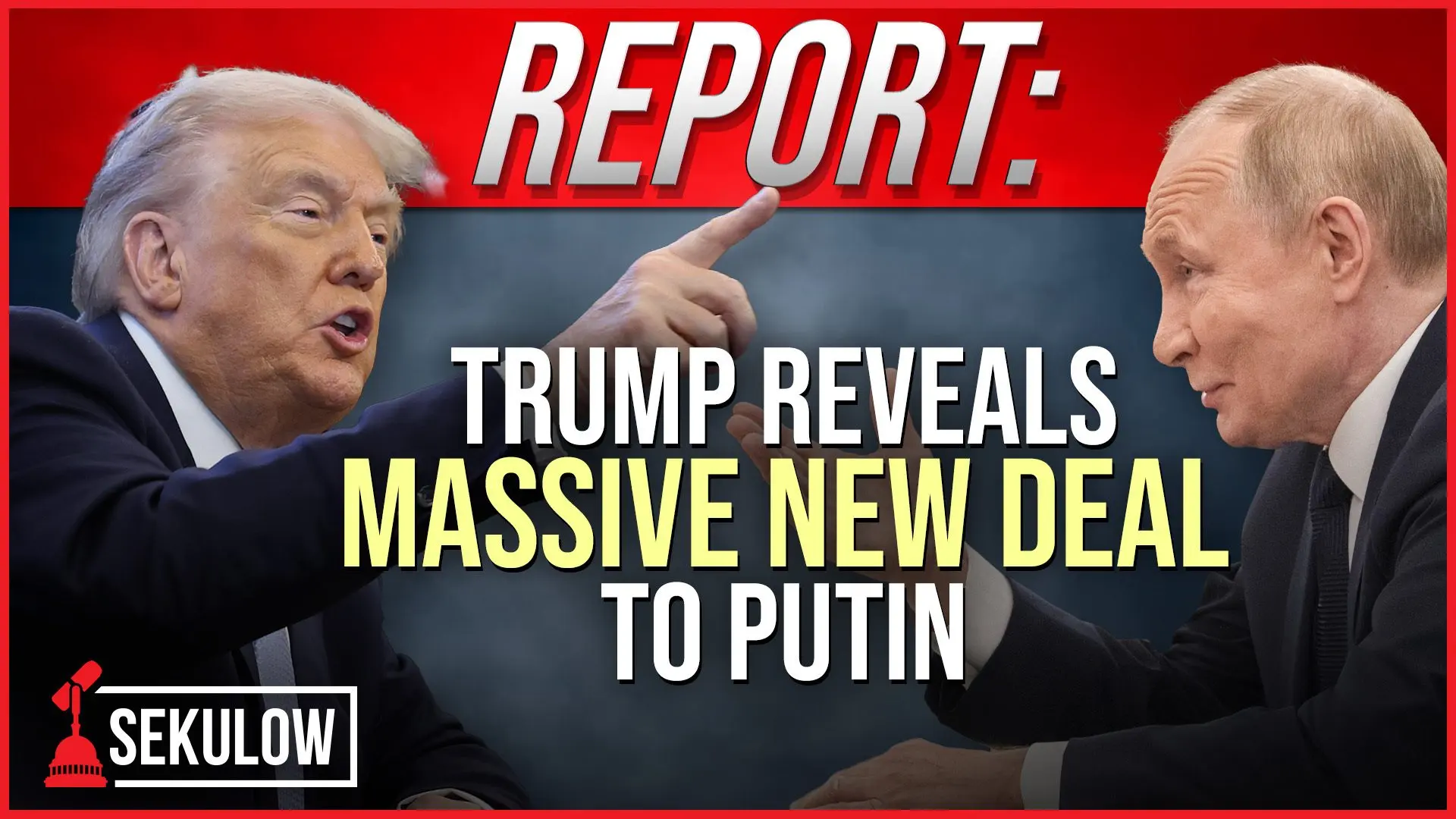
On today’s show, Trump reveals a new plan to deal with Putin and Ukraine.
SPEAKER 07 :
Keeping you informed and engaged, now more than ever, this is Seculo. We want to hear from you. Share and post your comments or call 1-800-684-3110. And now your host, Logan Sekulow.
SPEAKER 04 :
Welcome to Sekulow. Phone lines are open for you for the next two segments. I’m going to be taking calls. So if you want to call in, now is the time to do it at 1-800-684-3110. I’ll take calls in this segment and the next segment. And that’s it for today because we’ve got to pack back half of the show. If you want to call in, 1-800-684-3110. Today we are talking about, you never know what kind of news you’re going to wake up to. One of the surprising ones that came out last night was the United States has a peace proposal ready for Ukraine and Russia. It is a multi-point. I mean, it goes to a nearly 30-point, 28-point plan for the end to the war in Ukraine. It is a fascinating piece. I’m going to break down for you. I want to know where you stand currently in this situation. We know it has been a point of contention for President Trump as he’s not able to really make a whole lot of headway. in this war, something he thought he could end quickly. Obviously, dealing with Vladimir Putin is a little bit different than expected, but what we’ve been told is that this plan has been talked to the Ukrainians and to the Russians, and we don’t know where they are necessarily in their point, but at least we know an envoy is on the way there to discuss this option that would have an immediate ceasefire monitored by the U.S., We would have the Donbass region. Ukraine would secede that region, which is interesting. They would actually give it over to Russia. However, they don’t necessarily have to recognize it as permanent. The main thing that’s very interesting, because you may go, well, that feels like a big loss for Russia, as Russia has said, no land. One of the things they get in this is financial compensation to Ukraine of upwards of $100 billion from both a collective U.S. and EU fund for the lost territory and for reconstruction. So you’re talking about essentially getting paid back for… for this land and for the damage caused in war. One of the other parts of the plan actually has the U.S.-Russia investment fund of $50 billion for Ukraine’s reconstruction, co-managed by oligarchs. That is, again, another sort of fascinating move here. President Trump and his team always thinking a bit… three-dimensionally, four-dimensionally, if you will, on how you could get peace in this region. There’s also a lot of different plans we’ll go through, including no NATO expansion for the next 20 years, including Georgia and Moldova. There’s so many different things, prison for war exchange, sort of a DMZ area that would be built. and a roadmap for normalized U.S.-Russia trade, something that a lot of us really would hope could happen in the near future, that you would actually have Russia kind of get back on board with the world, which would be nice for anyone who understands the global economy and how that all works. Of course, you’ve got to be supportive and look at what’s going on in Ukraine, realize they’ve been under attack for many years now. But it doesn’t mean that there is not business to be had in Russia, and there has been for decades now uh you know since essentially the end of the cold war with that phone lines are open from you i want to hear from you at 1-800-684-3110 in the next segment we’ll kick it off hearing from president trump as he discussed this as well uh during that u.s saudi investment forum of course this comes after just a day from his meetings with mbs the crown prince of saudi arabia and what that looks like you’re talking about negotiating with very very uh unique individuals kings, dictators, and such. What does that look like from an American perspective? This new plan, though, would bring a war, bring the war in Ukraine to an end. And I think that is something we’ve all been hoping for and praying for. And I’d love to hear your thoughts because in the next segment will be the only time you can call in today. That’s at 1-800-684-3110. 1-800-684-3110. Call me now during this break if you want to be on the air. And of course, we are headed towards the end now. The end. We’re like a week away. from the end of our freedom drive be a part of it today you can have your donation doubled where you love the work the aclj does in the courts or maybe you just like this show and you like the broadcast we put on i want you to be a part of the team here and have your donation doubled today that is because there is other great supporters of the aclj ready to unlock a donation. That is at aclj.org, or you can scan the QR code you see on your screen. If you’re watching on YouTube or on Rumble, let me know in the chat where you’re watching from. I love to see around the world where people chime in from and where your voice is being heard. Again, they’ll be a part of the ACLJ Freedom Drive right now. We’ll be right back. Welcome back to Sekulow. We are going to take some phone calls. Of course, we were talking about this new plan put forward by President Trump that would, President Trump, Steve Witkoff, that would bring an end to the war in Russia and Ukraine. This has been a sticking point for President Trump as he’s clearly been frustrated with the lack of movement. This is a very unique plan. I’ve actually just read through all of it and was talking to our team. I think this is one of the smarter plans I’ve seen. Again, thinking a bit different. It’s not just like this guarantee who’s the winner, who’s the loser here. Both of them kind of come back with something, including over $150 billion to Ukraine. So understand that that is no small amount for not only rebuilding, but for also seceding some of their land. The control of the Donbass region, which we know has been something that I’m very curious what we’ll hear a response at from Zelensky. Because, of course, giving up land has not been something they have wanted to do, understandably. But what would that look like? Ukraine would adopt a permanent neutral status, foregoing NATO membership indefinitely. no NATO expansion like I said eastward for 20 years there’s a ton of other little things in here it’s not little but things that maybe are of less significance to our audience one that is actually fascinating if you’ve been on the side of going well you know I’ve heard about Christian persecution in Ukraine and that they have issues with the Christian churches there and they’ve been able to operate one of the talking points is autonomy for the Russian Orthodox Church and their properties in Ukraine So if you’ve had that sticking point where you’ve been unsure of whose side you’re on, if you will, in Russia and Ukraine, this would probably eliminate that from being something that you would have a concern about, which would, again, be good for the church. And there was also a few other different things in here. I’m sure a lot of these points will be negotiated out. I did want to take some phone calls because I’m only able to take calls in this segment. So let’s go ahead and kick it off. Let’s go to Claire, who is calling in Virginia on line one. Claire, go ahead.
SPEAKER 10 :
Good afternoon. I just have a question. I know that Trump has said repeatedly in the past and currently that had he been in office during the Biden administration, that this war between Russia and Ukraine never would have started. And I’m wondering what you all think he would have done differently to have prevented this war from starting in the first place.
SPEAKER 04 :
I think you could turn to a lot of the wars and global conflicts that happened during the Biden administration. Look what happened in Afghanistan. Look what happened in Israel. And look at look what’s generally happened around the world. The unrest has been much stronger than when President Trump was in office. There was a sense of fear there. There was a sense of concern there where, honestly, Vladimir Putin, a lot more intimidated, a lot more scared. of what president trump may do or may not do he said you know as long as they think you’re 10 crazy to summarize then they’re going to be a little bit more in control and know that those threats weren’t empty they knew the threats that were coming from the biden administration were empty and that they wouldn’t even sit down and talk to them and we know that that was the case so i think president trump wouldn’t even have to worry about this i don’t say this as a trump apologist by any means if anyone’s been watching the show long enough they know that is not the way i roll here but you know, whether you guys like it or not in the chat, you know that I’m honest with you. And I think that when it comes to, if you look at the Abraham Accords, everything that happened in Israel, the relative peace we had in the Middle East, ISIS destroyed, all these things that I wish President Trump had run on stronger in 2020, we took them for granted. And I believe it’s very similar in Russia, Ukraine. You probably would not have had this. You had a relationship between Putin and Trump, Zelensky and Trump. We know this. It’s documented. And it probably would not have escalated the way it did because they knew the U.S. was not going to get involved in a way that was going to cause any sort of significant problems. Now, I do think President Trump thought he could negotiate a little easier. with Vladimir Putin, that he thought his relationship was better. And I think we also are seeing a more galvanized Putin over the last few years than maybe he dealt with in the first administration. Because I do think there was even a little bit more concern over Barack Obama than there was Joe Biden in terms of his global work. You had obviously some of the embarrassment, obviously some of the issues with Hillary Clinton going over with the reset button and all of that. But, you know, I think there was honestly there was more respect for Hillary Clinton than there was for Joe Biden. And I believe, Claire, that’s one of the main reasons you would have not seen that happen. And I do believe you certainly would not have seen the Middle East in such chaos. I can tell you I was on this show. when Joe Biden was elected. And before then I was screaming about, I really wish President Trump would spend a lot more time talking about the Abraham courts. Because I said, we’re going to be sitting here and within this term, the Middle East is going to be in chaos and I’m going to be sitting here talking to you about radical terrorism again. And lo and behold, that is what happened. I don’t take any of that lightly. I wish the American audience, including, look, including our listener base, including everyone, including most people who would understand the world stage a bit more, would understand we have to be paying more attention to how the U.S. presents global peace. And it is that peace through strength. It’s peace through maybe uncertainty. You do want a president that they think could actually go to war with you and try to do something. We got five minutes. We got three calls right now. I want to go ahead and take some more calls, though. Actually, before that, I want you to hear from President Trump. We need to make sure we play this. This is President Trump directly talking about it.
SPEAKER 03 :
Eight raging conflicts, eight wars. I’ve settled eight wars. I have one to go. You know what that one is. I thought that was going to be my easy one because I have a good relationship with President Putin, but I’m a little disappointed in President Putin right now. He knows that. I thought that was going to be the easy one. I settled one war, 36 years.
SPEAKER 04 :
Yeah, exactly. Eight different wars. He’s at least claiming two different conflicts that have been settled. But this one, which he thought he said would be the easy one, like I told you, I think that’s one of the reasons he said that he never thought it would happen. He has a different kind of relationship with these world leaders and even some of the world kings and dictators. Let’s go ahead and take some more calls. Ronald in Georgia, go ahead.
SPEAKER 02 :
Yeah, good afternoon. So appreciate what y’all are doing. It really gives me hope. I wanted to talk about what you just played from Trump. It may be relatable. There was an old doctor in England, Doc McIntosh, and he was different medical procedures, especially birthing babies. He made the statement, sometimes the easy ones are the hard ones and sometimes the hard ones are the easy ones. And that’s exactly what you teed me up. Perfect. Cause, uh, maybe trump thought that the israeli conflict would be harder and russian conflict would be easier but you know sometimes the hard ones turn out to be the easy ones and uh the easy ones turn out to be the hard ones thank you doc mcintosh and thank you for all y’all are doing thank you ronald i appreciate it i don’t know if the israel gaza situation could be considered easy it has been a obviously thousands of years war and it is still ongoing look i think they’re
SPEAKER 04 :
American people kind of saw the ceasefire and we know that there’s been issues with that and what’s happened, what hasn’t happened. Sure, it’s different than maybe it was a few months ago. Certainly still not gone away. But the American public seems to have forgotten about it. And maybe that’s for the best. Maybe that’s for the best for what’s going on in that region. Maybe it’s the best for the Jewish people in America that we kind of move on from that. That’s not the hot topic, including Ukraine and Russia. I think eventually we get worn out. We get worn out by these kinds of things, especially when it feels like there’s no movement. I’m looking at this new plan and I’m actually kind of excited to hear about what Zelensky may do with this. Maybe there’s some of the points they want to negotiate out, but it’s very interesting. And again, provides a lot of support for Ukraine, gives Russia a little bit of what they want. And, you know, maybe there’s that middle spot where we can close, you know, President Trump can come in and cause some end to this global conflict. Because look, We used to have an office. We had the SCLJ in Russia fighting for religious freedom in Russia. It was an amazing operation. The team there was great. Of course, we had to cease operations. You’re not allowed to do business with Russia or Russia. We can’t get money there to support that. Understandably, it’s war. And it’s a war that certainly America has more picked one side than the other. And look, I get that. But we’ve essentially divested completely. With that, I would love to see at some point in my children’s lifetime, at least, for Russia to be able to reopen. One, it’s a beautiful country, beautiful people who have an amazing history, a somewhat dark history, but a history nonetheless that I think we need to make sure we remember and we’re able to see. I think a lot of these places, if you don’t get to see them, you kind of forget they exist. And that’s unfortunate over time. But I would hope over time we can get back to there. Let’s go to Ronald on Rumble. Ronald, go ahead.
SPEAKER 01 :
Yes, thanks for taking my call. Yeah, I think that Putin is dogmatic in wanting to hold on to Ukraine because I think he made a speech before or after the invasion and claiming that his purpose was to reunite Ukraine with Russia because it was considered their foundation, their homeland or their cradle for the whole Russian thing.
SPEAKER 04 :
you did that big pomp and circumstance, uh, you know, uh, event we all remember. Yeah. Go ahead though.
SPEAKER 01 :
Yeah. And, and I believe that they took advantage of that fact when, when, um, Biden was, um, in office due to the fact of, like you said, his inability to really stand up to Putin. And he thought that he would be able to put one over on him, which he did.
SPEAKER 04 :
Yeah, I mean, the idea that we were not able to meet or to have a conversation or a phone call with Russia for multiple, multiple years in the middle of wartime was absurd. That’s not the way we need to be able to run things in America. Vladimir Putin, I’m not saying he’s a good guy, certainly not. Certainly has been in some kind of dictatorship control of Russia now for many years. However, when you actually get to meet with these people, maybe things can get done. If we want global peace, which I know, you know, obviously most of us do. I would hope you do. you have to be able to meet. It doesn’t mean to be their best friend. Rick Riddell’s come on here and said you can be a diplomat and not be their friend just because you’re having a conversation with them across from the table actually can be stronger if you’re not their friend. With that, listen, I appreciate you calling in, Deb. We weren’t able to get to you. That’s going to do it for calls today. We’re going to actually play a lot of Jordan’s CPAC panel in the back half. I want you to hear some of the religious persecutions happening around the world and how we’re getting involved in that. So you’re going to hear some of that in the second half as well as some other great segments from the previous week. I’ll be honest, I got to get to my kids’ Thanksgiving lunch at their school today. You know what? I’m not going to miss that. So I want you, though, while you can, we’ll keep the chats open and everything. Support the work of the ACLJ at ACLJ.org. And I will talk to you live tomorrow. But great stuff coming right up.
SPEAKER 09 :
Welcome to Seculo. Will Haynes here, joined in studio by Jordan Seculo. And we are also joined by one of our attorneys, Ben Sisney, out of our Washington, D.C. office. And we’re going to be talking, Jordan, this is about the Jack Smith scandal. We found out he had targeted eight U.S. senators, one member of the House of Representatives, by seeking their phone logs. And fortunately for some of the senators, like Senator Ted Cruz, AT&T was like, you know what? this doesn’t sound above board. We’re not going to comply with your subpoena, which takes a lot of courage, by the way, for a big corporation when special counsel comes a knocking and says, give us these phone records. And they say, we’re going to meet with our general counsel and maybe this isn’t right. But other companies did hand over these records. But Jordan, let’s talk with Ben now and talk about one, some of the actions that have happened recently that could combat this and what we need to be doing.
SPEAKER 06 :
Ben, our folks know that we filed the FOIAs on behalf of many of these senators who we know were targeted, including people like Ted Cruz and Marsha Blackburn and Lindsey Graham and Bill Hagerty. And then they got kind of put forward with this piece of legislation that was dropped in on how they could further take action against bad actors at the DOJ and FBI. but also in the future. This also dropped in the House bill. House wasn’t really happy about it, mostly because there wasn’t a lot of discussion about the $500,000 penalty per illegal action that may be found in court. What we found is that most senators, and I want to say this right off the bat, Ben, because I think it’s important. A lot of legislation looking at protecting the government from not doing these bad things or taking these bad actors would have large financial penalties attached to it as a deterrent. So that’s part one. It’s not about enriching senators. But part two is if the $500,000 became too distractive, we’re totally fine with taking that out and just focusing it on both the, again, getting relief. So whether that’s injunctive relief, ultimately consent decrees, things like that, but also discovery, because discovery would allow this information to get out quicker than even a FOIA process. So what we’re hoping is that in the House, and listen, they can adopt this to cover themselves as well, that they keep the key cause of action for groups like the ACLJ so that we can represent these senators and get this information out to the American people.
SPEAKER 08 :
I do hope they keep that provision, Jordan, even if they need to fine tune a few things like the damages amount or increasing the applicability of whose data is protected. You know, fine tune it, tweak it. That’s kind of what happens in the legislature. It’s part of the process. But at the end of the day, that provision is an important one. As we wrote about recently, it is not even that it has to be the complete and total fix. There’s a lot of work, as we know as well as anybody, that needs to still be done. But this is a big step. It’s a good step. It’s a step in the right direction. And I do hope that they’ll hang on to this so that bad actors within the government sort of abusing that badge, that shield, With the full weight of the federal government, they’re using that to violate constitutional and, at this pass, statutory rights. We need to increase accountability however and wherever we can. This is a big step in that direction.
SPEAKER 09 :
Ben, also, when you look at the step in the right direction, you’re already starting to see people like Senator Lindsey Graham, who is saying, I think that we should now also offer a bill that would cover the cause of action for other Americans swept up in this dragnet policy. You’re hearing other sorts of reforms. Does this one serve two purposes? One, it allows quickly. the American people and the oversight of Congress by using the court system, be able to get individuals and bad actors like Jack Smith into depositions, into discovery, into things like that to get to the bottom of what really went on. as well as open the door for discussion in places like the House of Representatives, which is, as we’ve seen, been a little unruly of late. But open that door for that discussion. Now they want to talk about real reform. So I almost see this as twofold. It helps us get us in the door quickly while it’s still relevant to go after these people, as well as open up the conversation for broader reform.
SPEAKER 08 :
I think that’s completely right. This opportunity, even though this is just focused on the senators’ electronic data, is a critical opportunity for the American people to see just how bad it had gotten, how bad the actors were, what they were doing, and the lengths to which they would go. And just to make a point here, Will – If they’re willing to do that to sitting United States senators, you don’t think they’re willing to do that to you, to any of our listeners today? If you’re on the wrong side of something, we know many people have been on the wrong side of it. And we’re hearing that more is coming. More news is coming. We’ll see. But I think that’s exactly right. And this is a nice illustration of the problem of how high and honestly how deep it will go to. But at the same time, I hope it is the beginning of a new wave of conversation of reform. We’ve been calling for reform for a long time. And this is exhibit A, you know. And like I said, we have a long way to go. But if we’re having the conversations now, that’s already an improvement from where we were.
SPEAKER 06 :
So we’re going to be sharing this with our friends on the Hill. Make sure Mark from our government affairs team, we want to make sure we get to Mike Johnson’s office. Say, listen. You might want changes to it. You might want to expand it. All good. Just don’t do away with what could be a very powerful tool of your oversight when you are subject to a potentially illegal search and seizure, Fourth Amendment violation, First Amendment, which, by the way, still applies to all Americans, Ben. So, I mean, we all have those rights when we believe this happens. And I think Congress, because of their duty that we elect them to do, whether it’s classified information or highly sensitive information, I mean, it should be even a higher bar, I mean, to try and get this information. But it doesn’t prevent, and I want this to clear, it doesn’t protect corrupt politicians either, Ben. If you are the target of a criminal investigation, you will not get special notice. There are exceptions like that throughout even what may be this first flawed package that needs to be reformed.
SPEAKER 08 :
Jordan, I’m glad you brought that up because that’s exactly right. And because people who are opposed to this kind of accountability could easily even even accidentally fall into the misperception that this is protecting, you know, it’s kind of some kind of inside protection deal. No, as clear as could be in that provision, as you know, the first days that we went over this together, that the provision that clarifies specifically if a senator is a target of an investigation, and that’s a term of art for investigations, there’s a definition for it, but it kind of speaks for itself. If a senator is a target, the special notice requirements just don’t apply and the current status quo applies. And guess what? That’s how it should be.
SPEAKER 06 :
right and no one is above the law we hear that is that we could utilize a tool like this in whatever form it finalizes in we just what we’re really pushing is that keep keep it in there somehow because the ACLJ would be happy to take those same six senators we’re doing with the FOIA work with and the ones who want to move forward the lawsuit Under this new cause of action, we’d be happy to take that on. And folks, you know how we’re able to do that? With your resources. You donate to the ACLJ, these senators come for us. Let me tell you, I’m not going to name any names, of course, but they were coming to us last week saying, okay, how can we measure this so that we still can get to this information to see what these bad actors were doing? What happened to other senators? What happened to other members of Congress? So that’s what we’re talking about right now. And we can do that work if you support the work of the ACLJ today and be part of our freedom drive to double the impact of your donation. You go to ACLJ.org slash freedom. Your donations are doubled. That’s ACLJ.org slash freedom. And that’s how we continue to fight in Washington, D.C., whether it’s on behalf of you or U.S. senators to get to the truth and reform our government.
SPEAKER 07 :
keeping you informed and engaged, now more than ever. This is Sekulow.
SPEAKER 09 :
Welcome to Sekulow. Will Haines here. Jordan Sekulow joining me in studio. And Jordan, we’ve been talking about a lot today. Yes. We just had Ben Cisney on from our D.C. office talking about this issue with the seizure of phone records.
SPEAKER 06 :
Yes, I mean, you want the ACLJ. I don’t care about the $500,000. The senators I’ve talked to don’t care about the $500,000. It’s normal to put in in those kind of situations. It’s become a distraction. Strip it out. What we want… is for those sinners to have the cause of action to go to court. That court can ultimately issue adjunctive relief and also consent decrees. That means, like in the IRS cases we took on, the DOJ and FBI coming forward and saying, yes, we know this law exists, we know in the past that it appears to be violated, and we know that it governs us moving forward in the future, these notification requirements. And that if we don’t, follow these notification requirements there will be penalty you know there there are sanctions and this and that and that okay so that’s a consent decree but guess what comes in the middle of that discovery so if you think maybe it’s more than eight senators and a former member of the house uh and a couple more because we found out kevin mccarthy was also involved in that early on so can we get more of that information through discovery we’ve already got the foia in but you know the foia fights that’s a different kind of fight in a situation like this where you have a cause of action for your client, the discovery process, if you could get to that point, you’re going to be able to uncover a lot of information about this wrongdoing so that it does not happen again. I mean, the goal is this doesn’t happen to members of Congress again, regardless of what side of the aisle they’re on, and the exceptions are there to protect actual crime and fraud from elected officials, so it doesn’t protect them from that, doesn’t shield them from that. it’s almost like I wish we didn’t have to have this but we do because every two weeks we’re getting new documents about how they’re spying on presidential candidates spying on senators spying on house members the acdlj has been at the tip of this we representing those senators immediately through FOIA And I know if they had the cause of action, I don’t know if everyone wants to go into federal court, but I know enough will with us at the ACLJ that we can be the lead organization to get this information out about what Jack Smith and his team were doing so that the Jack Smiths of the future are too scared. are too scared because this will be not just career ending, it could also face other penalties. Remember, this is the penalties senators can enforce. The Department of Justice and FBI can then go and look at this employee and say, wow, you violated this, this, this, this, this, this, and this. You’re not just fired, you’re in trouble. So this is bigger than just that piece of legislation, but we need to preserve that cause of action. We’re going to get that out, making sure that’s clear. I’d love if they want to extend that to the House of Representatives. More sunlight on this is better.
SPEAKER 09 :
Yeah. And I think this actually ties into the vote that the House will be taking on the Jeffrey Epstein documents, because at the end of the day, we know he got a sweetheart deal a long time ago where he was able to have they knew what he was doing. And he went to minimum security, got to go home on the weekends to go work, et cetera. And we know that that is a corrupt system that allowed that to happen. We know the corrupt system was targeting U.S. senators. There’s from just the news. Actually, we’ll get into this in the next segment as well with Rick Grinnell. But a former U.S. attorney went to the DOJ in 2018 with information about Hunter Biden. What did the DOJ? Nothing about that information from this respected former U.S. attorney. Instead, what did they do? Subpoenaed the US attorney’s phone records. This wasn’t just US senators, folks. This was everyone they saw as a political threat.
SPEAKER 06 :
We have no idea how deep this goes, too, because these are phone, this is to the point where you don’t have to be a target. right you just have to be someone that they’re looking for information evidence from and so lord you think about how many people that could involve with arctic frost we see the scope of it’s continuing to broaden out every time we get a document dumped and we’re not shocked about what they’re doing but it’s something we shouldn’t allow in the united states of america when we have ways of correcting it so we need your support Because I want to go not just file these FOIAs we’ve done, but I want to go right into federal court with these senators, maybe House members too, if they expand the law, to get this information out so that this does not happen again to another administration that wants to change Washington for the American people for a better way, like the Trump administration.
SPEAKER 09 :
Welcome back to Seculo. We’ve got something special for you to close out this week. And we’ve talked about all week that Jordan’s been in Washington, D.C. at the CPAC Summit, which was focusing on persecution around the world and how we can be involved. And as you know, that’s something that’s very important to the ACLJ, something we’ve been fighting against, the persecution of Christians worldwide for the entire history of this organization. And our team was able to be a part of this and was able to lead panels, be involved in panels. And so we really thought it was important that you see what Jordan and the D.C. team was involved in this week. So we’re going to go right to that. And while you’re at it, while you watch this and you see the impact the ACLJ is having both individually, in dc and around the world go to aclj.org and support us today it’s the end of the month it’s a great time to do it so go to aclj.org and give a donation today and now we’re going to go to dc from this week with jordan and the dc team at the cpac summit
SPEAKER 06 :
We’ve been talking about what’s happening around the world, but I think we have to also talk about what’s happening inside the United States so that we can continue to be that country that is the beacon of hope, that is the headquarters to combat Christian persecution worldwide. We have to make sure that our churches and our Christian brothers and sisters here in the United States understand the significance of this issue, and also continue to fight for their rights here in the United States, which are ongoing fights that we battle every single day at the American Center for Law and Justice in courts across the country. Sometimes it’s the federal government. Then the federal government is on your side and you’re still dealing with state governments, local governments, school boards, municipalities, all trying to silence The Christian student, the Christian teacher, the Christian employee at their office who they say don’t keep the Bible on your desk or you can’t have a cross somewhere in your cubicle. All of those issues are still at play right here in the United States. They are not necessarily the issues of persecution that we handle as the ACLJ with our international offices worldwide. But we have to maintain… our religious liberty here. And this panel is very interesting because we have an ACLJ attorney who works on these issues, as well as a frequent client of the American Center for Law and Justice, Reverend Pat Mahoney of the Christian Defense Coalition. And I want to go to Ben first. This is Ben Sisney with the ACLJ. Ben, we saw at the beginning of our organization at the American Center for Law and Justice, it was literally about a Bible club. The case was called Mergen’s. It went all the way to the U.S. Supreme Court. A public school student wonders, there’s all these clubs at school. I want to start a Bible club. School says no. And ultimately it makes its way to the Supreme Court and we win. But then the cases continue, whether it’s speech on the sidewalk. And I say speech because for so many years, The free exercise of religion had been eviscerated by the U.S. Supreme Court and in the lower courts. It meant really nothing in the United States. And so the ACLJ started with a different idea. Let’s not focus on it being just religious. It’s speech. And the court still cares a lot about the First Amendment. and the free speech, they’re still okay there. So why is religious speech being treated differently than political speech or corporate speech and other speech? I’ll go there. Now, more recently, we’ve seen the free exercise clause get some teeth back, but that is just recently at the US Supreme Court. And Ben, I wanted you to address that, that we have finally started to move from just saying we’re speech just like all others, which is true, But at the same time, the Free Exercise Clause does mean something in the United States of America.
SPEAKER 08 :
Yeah, that’s absolutely right. Thank you, Jordan. And thank you to CPAC, the Schlaps, and your crew. This is just a fantastic opportunity to get to speak about these things and to share these important principles with people who care and to help educate people that they need to care more. And so it’s an incredible opportunity. Jordan, to your question, yes. So there was sort of this dark gray era where we didn’t really know, and it was And we’ve had a string of positive cases recently, some just really solid wins and well drafted opinions. And as you point out, focusing back actually on the free exercise aspect of the First Amendment, which is, I mean, it’s not exactly half of the First Amendment, but speech and free exercise are those are those are some significant pillars there. And of course, obviously, is the reason it’s in the First Amendment. Right. But but so so we’re we’re we’re gaining background, really, and there’s more ground to gain, right, and we’ll all keep doing what we’re doing, but I think that part of the problem, why, because we wrestle with the question, like, with these great wins, why are we still having more cases, why do we still have to keep suing municipalities and school boards or counties or states or whatever when the Supreme Court is laying down what to most of us seems relatively clear guidance and rules. And I think there’s multiple reasons for that. One is lower courts are, I think, sort of reluctant or whether it’s intentionally, I think, depending on the subject matter or just, you know, they’re busy. You know, they got a lot of cases and they’re not always up to speed on the latest. And And so it takes time for precedent from the Supreme Court to sort of work its way down across the system. I think that’s probably part of it. I think another part of it is actually some of the governmental entities involved, they’re kind of saying, I don’t care what the Supreme Court says. I’m going to keep doing this and you’re going to have to sue me because guess what? Most people have to pay lawyers. It’s being a plaintiff against a governmental entity is not a small thing. even when you don’t have to pay the lawyers.
SPEAKER 06 :
Well, I think this is key, right? And so I want to bring in Reverend Mahoney into this, because the ACLJ, it exists to defend religious liberty in the United States, the American Center for Law and Justice, and it’s become kind of the hub for the work that we do all around the world. But we are non-profit, so our donors donate so that people who typically would not be able to afford attorneys to fight back because they feel like their rights were violated, And so we get out in the meeting, we tell them all the time, if you feel that way, you need to contact us. And you’re gonna talk to a real attorney. They’re gonna walk you through. It’s not gonna cost you anything. We’ve represented you, I don’t know how many times exactly, but more than dozens, more than dozens, of times when you have faced arrest, imprisonment because of speech on a public sidewalk in the United States of America. And I want you to talk about that, how important it is that we make sure our public sidewalks continue to be free speech zones.
SPEAKER 05 :
For sure, Jordan. I want to especially thank Jordan and Ben for getting me out of jail many, many times. So a big heartfelt thanks to you. In our national archives, we see etched eternal vigilance is the price of liberty. We continually have to fight and stand for our freedoms. If we in America want to prevent persecutions of Christians in the public square, we must practice our Christian faith in the public square. That’s critical. I’d been arrested for all good things, okay, 112 times, and I can’t go over all those cases, but several keys in which the ACLJ could not have been more helpful. There were no demonstrations allowed at presidential inaugurations before 1997. We planned a major event of prayer and public witness because of President Clinton’s support of partial birth abortion. We were told if we went on the parade route for praying, we would be arrested. And I’ll never forget my comment in the Washington Post. Hell will freeze over before we surrender our right to pray in the public square. Immediately contacted the ACLJ. They went into federal court. And we won. And for the first time in history, free speech, religious liberty, was allowed at presidential inaugural parades, showing that public engagement, you don’t have to be fearful of trusting God, but then for entities like the ACLJ, was protected. Next, we were praying in front of the human interest section for a young boy named Ilion Gonzalez. The Secret Service told us if we stayed on that sidewalk to pray, we would be arrested. We said, we’re going to pray. We went to the ACLJ, and what I think is one of our most historic victories, the federal courts ruled that if people are on a sidewalk walking their dog, going to Starbucks, if that is open for that, then it has to be open for prayer. It has to be open for free speech, and we won that case, opening up religious freedom in the public square across America. And before I turn it back to you, Jordan, remember, The greatest threat we have to Christian persecution in America is a silent and apathetic and indifferent church. We must be bold, we must be courageous, I feel like I’m getting a spirit to preach here. And we must never compromise our values and be a witness. And we are so thankful there are organizations out there to stand with us.
SPEAKER 09 :
When we come back on Seculo, we will have more from this CPAC Summit in Washington, D.C. We’ll be right back. Welcome back to Sekulow, final segment of the week. And we want to go back to Washington, D.C. with more of this great content from our team at the CPAC Summit dealing with persecution of Christians globally. Take a watch.
SPEAKER 06 :
It takes those who are willing to stand up and say, no, I’m going to pray. And then there’s got to be that legal group there that they can rely on that’s not going to cost them and bankrupt them because of their prayer in the United States of America. It’s not going to bankrupt that kid’s family who calls the ACLJ and said, you know what they said, he can’t pass out Bible verses when these kids are passing out whatever they want, they said. In his own free time. Or a case that we’re ongoing right now. where literally the issue of freedom of speech, it was on Constitution Day, where public schools have to teach about the Constitution, and a student brought up Charlie Kirk and what had happened there. The teacher didn’t go into a big speech about turning point or the values he was speaking on, but brought up other political assassinations related to speech in the United States. And this teacher was immediately reprimanded, Ben. And we’re still fighting that up right now. Just because she responded to what a student had to say on Constitution Day in the United States of America about free speech. And again, the idea that religious speech is speech and it should be just as free as any other speech.
SPEAKER 08 :
Yeah, that’s right. And I think this reflects sometimes, how do these things still happen? Sometimes it’s ignorance. Sometimes I think there’s still this old knee-jerk, well, separation of church and state, which I hope everyone in here knows what the real deal was with that. But this sort of knee-jerk, oh, well, you know, religion and politics and, you know, and And we don’t want to talk about it. We don’t want to offend people, right? There’s this whole offense thing, and you’ve got to be tolerant. And of course, tolerance is a one-way street if you notice the trend. And so that’s an idea that motivates. And sometimes it’s just supervisors at a school that They think they’re following the rule they’re supposed to follow. And we’ve had clients, Jordan, who said, like, you know, my boss told me confidentially, like, they don’t like what this rule is, but they have to enforce it, you know, something like that. But I think some of it is just those kinds of things. And some of it, again, is just open hostility, you know, under the guise of anti-discrimination, you know, and that’s a trend we’re seeing, I think, more and more, I think, across the board. is the municipalities and the state governments that don’t want to play ball with Supreme Court precedent. Oh, well, we’re not banning them, barring them, doing all these things because they’re Christian, but we’re doing it because of what they believe. Now think about that for a second. So, but that’s where we are. And, you know, as long as that’s where we are, we’ll keep filing the lawsuits and using our lawful legal process that thank the Lord we still have here in the United States. We’ve got to be vigilant, vigilant and stand and not grow weary. Someone said earlier, don’t grow weary, you know, invoking scripture. And I would say and stand and keep standing. And then after that, stand some more. And you don’t have to stand alone because we’re here. There are other groups here. And I think part of the tool of the enemy is to isolate you and make you think that you’re on your own. You don’t have routes. You don’t have opportunities, alternatives. You do. If you’re not sure where to start, call us or anyone else. There are ways to lawfully, peacefully defend your rights as a Christian here in the United States. And it’s not just about you. It’s about your community, your church, your school, your state. the country, and also us continuing to get to be the city on the hill for the rest of the world.
SPEAKER 06 :
And Reverend Mahoney, it takes those who are willing to stand up, to say, you know what, I’m going to pray or I’m going to start the Bible Club. And when they tell me no, I’m going to call. I’m going to make a call to ACLJ. I’m going to call and say, can you help me here? And our job is to make sure people know that that’s available. I mean, it’s still our job. And Christians in America can feel, depending on where you live and what communities you’re inside, that that’s not an issue inside the United States anymore. But there is no way that we can combat the horrendous Christian persecution and the violence that we see worldwide, all over the world, to our Christian brothers and sisters, if we aren’t standing up for our own rights here and making sure our fellow brothers and sisters know here that we still have to ensure our rights. We still have to make sure who’s getting elected is who’s appointing the federal judges. And then who’s confirming them? Well, the U.S. Senate. So we can’t stay out of the political process. We can’t stay out of any of the processes. But to maintain the United States as that headquarters, which I’m really proud to say still is the headquarters. That’s why we’re gathered here in Washington, D.C. today. as a headquarters for religious liberty. To maintain that, we have to make sure we maintain religious liberty in the United States through all different political climates.
SPEAKER 05 :
Yeah, that’s for sure. And my message here is to stand, be bold, but you are not alone. First, we have our Lord and Savior, Jesus Christ. We have the inspiration of our brothers and sisters around the world, and we have organizations like the ACLJ. I want to share one story where it was so comforting to me. I got a six-month jail sentence for praying on a public sidewalk in front of a Planned Parenthood in Houston, Texas. And I was in for a month, and the ACLJ got involved, and I’ll never forget, I’m sitting there in my orange prison jumpsuit, and all these four, not these guys, but ACLJ attorneys in dark suits come in with their briefcases. I felt, I don’t know if I should use this example, but I felt like a mafia don or something, like what is going on here? And they got us out. They got me out. They got the others I was without. I did one month. But here’s the beauty of what it did to Houston. And I want to show the power of engagement. Brothers and sisters, we have to stand. The judge who sentenced us to six months, she so angered the Houston Christian community that they decided the next election cycle they would run a judge against her. They ran a judge against her, he won. That judge later became the Chief Justice of the Texas Supreme Court because of working with the law and public engagement and the best part, his last name was Devine. Houston was actually maybe my greatest jail experience. because I look like I own a Jewish delicatessen and no one’s gonna be afraid of me, and so they put me in with some really dangerous murderers and bank robbers, a Grizzly Adams rapist, and as you sit around and you eat lunch and you’re there with all the folks in prison, what are you in for? I’m in for bank robbery. What are you in for? Armed robbery. What are you in for? Murder. Then they get to me. What are you in for? Prayer. And they looked at me like going, this guy’s really bad if he’s in for prayer. Like, don’t mess with him.
SPEAKER 06 :
So this is, I think, so important. Ben, just a final remark. We’re there for everyone. And also for those who are facing the persecution worldwide, if they’ve got, if you’re here in the United States, you can start by contacting us here in the United States.
SPEAKER 08 :
Yeah, absolutely. You know, ACLJ.org, there’s a process there. And just reach out, get a hold of us. There is a variety of avenues that can be taken. Not everything has to be a federal lawsuit. You know, the allies, the groups, the organizations like CPAC. I mean, there are so many ways that you can join together, have your rights defended,
SPEAKER 09 :
in a variety of ways and it just takes courage and don’t fall for the trap that you’re alone and you don’t have any options you do thank you guys thank you thank you for watching and supporting the aclj go ahead and support the aclj today at aclj.org we’ll talk to you next week