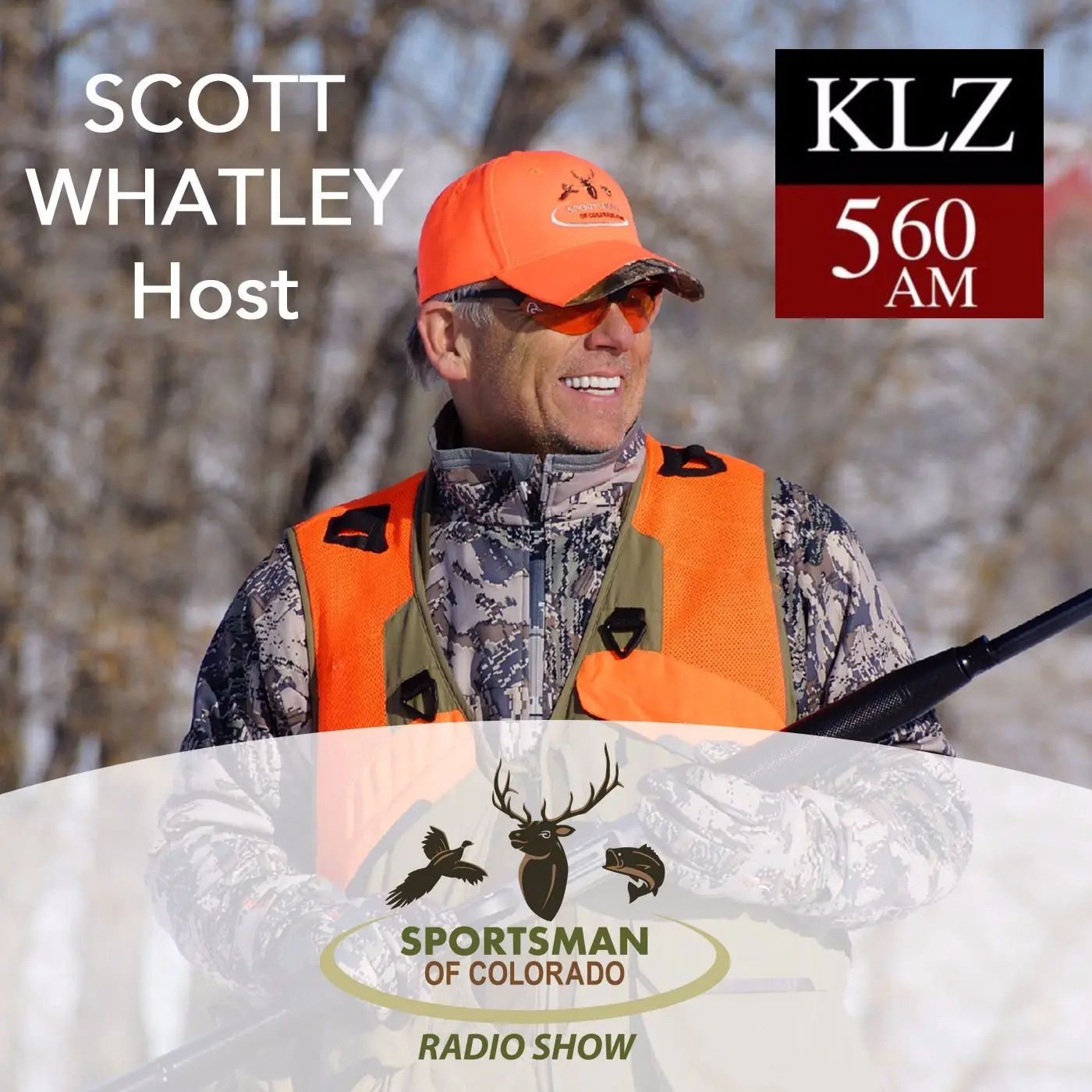

In this episode of Sportsman of Colorado, Scott Watley hosts Dan Gates for an in-depth discussion on the significant changes within Colorado’s wildlife management. They delve into the recent transition to a new director, Major General Laura Clellan, who brings a military’s precision and structure to the state’s wildlife department. Gates shares insights into the challenging political climate that has shaped current policies and the influence of governmental changes over the last decade. Key topics include the controversial wolf reintroduction program and its far-reaching implications for local wildlife conservation efforts.
SPEAKER 01 :
Welcome to Sportsman of Colorado, Colorado’s premier outdoor radio show heard every Saturday afternoon on KLZ 560 with insights on hunting, fishing, archery, guns, and ammo from Colorado’s top outfitters featuring the industry’s leading experts on how to enhance your experience in the great outdoors. Now, here’s your host, Scott Watley.
SPEAKER 05 :
Welcome to Sports from Colorado. Thank you so much for joining us today. Glad to have our good buddy Dan Gates with us. Colorado is responsible for wildlife management. SaveTheHuntColorado.com is the website, and it’s been a little bit, Dan, since we’ve been able to do this, but welcome back. Good to have you.
SPEAKER 11 :
Well, thank you very much, Scott. And it seems like I’ve got to keep bugging you about things that maybe you don’t want me to bug you about.
SPEAKER 04 :
No, no, man. I wish you didn’t have to bug me about them. But, man, you need to bug me about them.
SPEAKER 11 :
I’d rather talk about hunting destinations and ballistic coefficients and arrow shaft weights and draw lengths and stuff. But what I do, we can’t talk like that. I know. You know. So we have a full boat, legislative sessions in full session. Parks and Wildlife Commission is dealing with a variety of things that we’re going to talk about. But just the stage of what they call a lame duck, hunting terms, a lame duck government. Right, right. And it’s interesting to see how this stuff plays out where there’s a sense of urgency at so many different levels.
SPEAKER 05 :
mm-hmm i tell you over the last months um well you’ve really seen cpw struggle yeah through a lot of things um and now um of course the director we only got 30 minutes we can’t go through that whole drama but you know he’s gone now in wyoming and now it looks like We’re going to have a lady.
SPEAKER 11 :
We have a new director going through a 14-day review process for public comment and so forth. Laura Clellan, Major General Laura Clellan. Yep, I just talked to her. Who was the acting director after Jeff resigned, or as we know, that he was forcefully terminated. But Laura, you know, we’ve worked with her since day one, and she –
SPEAKER 05 :
Yeah, give us some insight there because I think that’s interesting.
SPEAKER 11 :
She’s a really good gal. And the thing that I would say is what we’ve had to work with her so far on is she is a military process and procedure, chain of command, but also fact and data driven from what we’ve seen so far. Which is a breath of fresh air because the agency has waned on a variety of different levels. And we know that Governor Polis had significant influence in this selection. But the commission voted overwhelmingly through the process to retain her as the director, from acting director. And that shows a vote of confidence, but… You know, there was multiple stakeholder panels from the agency itself and from sportsmen and women and non-consumptive users and so forth. And the overwhelming majority, not all of them, but the overwhelming majority indicated that she would be the best choice that they had to select from. Now, if Teddy Roosevelt was reincarnated, maybe he’d be the best choice, but he wasn’t. And so you have to look at the applicants. And what I would say to the listener here is, Stop and think for somebody that would be legitimately qualified. And from what we heard, there was over 140 applicants for that position. I don’t think that they realized there was a high likelihood that that would be an 11-month position. And who in your right mind, if they had those qualifications to run an agency with 2,000 full and part-time employees governing 43 state parks and 961 species of wildlife and millions of acres and having to run through this type one agency, if they were truly qualified outside of what we already had as an acting director, they would have thought, well, I can’t afford to turn around and waste my efforts on a on a legitimate 11 month position, knowing full well that there’s a likelihood I won’t be here after a new governor is selected. So I think that the trials and tribulations of what Colorado has had to deal with and the Wolf issue, the ballot initiative stuff, the commission stuff, I mean, you read into the weeds on so many different things. If I was a qualified director from some other state or an acting director or a deputy director, There’s no way in hell I would have put in for the state of Colorado to go, oh, that’s what I’m going to get on my resume. And that’s speaking tongue-in-cheek, but I think director Laura Cleland is probably the best choice considering who she was up against. And could it be better? Probably so. Could it be a hell of a lot worse? Yeah, you bet your butt.
SPEAKER 05 :
Dan Gates is with us. And it is something point out then this is an 11 month deal. Cause like I say, new governor then can do whatever they want then.
SPEAKER 11 :
Right. According to the, yeah. I mean that, that position is that will, I mean, so in theory, governor Polis could get rid of her like he’s done on several prior to her. Um, I think that she comes from a cloth of integrity and institutional knowledge about process and procedure. She used to work for U.S. Fish and Wildlife Service, and she worked for the Colorado National Guard and was a major general. Running a large organization that is controversial subject matter and that has a lot of people for a lot of different positions – I think that she fully understands how to turn around and come in. And I’m not going to say right the ship. I want listeners at different levels to understand. Her task, in our view, was not to right the ship. It was to keep the ship afloat. And I think there’s two different things there. Is the ship listing to one side or the other? Maybe it is. But I’d rather her keep it afloat than watch it get grounded.
SPEAKER 05 :
I saw a clip of yours with Murphy Robinson. uh and uh former commissioner yeah former commissioner there and there was one little part that really stuck out to me you asked him what the biggest challenge was yeah and he said uh first of all he said how to say this that was yeah that’s what he first said he thought really thoughtfully about but he said separating policy scientific representation over um um overreaching political yeah you know so um Man, it has. I mean, has it always been so political and we just didn’t know it? But these last, what, 10 years, 15 years?
SPEAKER 11 :
Man, it just seems to. The last 10 or 15 years. I mean, if you look at going back to the days of the merge around 2010 to 2012. Was that our big mistake? I believe it was. I think that people had good intentions. I think other people had ill intentions. But I think at the time, Governor Hickenlooper was being fed information that he believed was to be in the best interest. Now, maybe he honestly believed that. I don’t know. I was appointed by Governor Hickenlooper and was confirmed by the Senate to sit on the Habitat Stamp Committee. And so while I think… Governor John Hickenlooper, now Senator John Hickenlooper, was attempting to try to do the right thing Would he have done things differently now? I believe that he probably would have. But looking at the way Colorado was then, look at the way the makeup of the agency was and the political structure in the state, I believe that he probably thought that that was the best course of action to streamline and also at the same time try to accomplish multiple goals from two different agencies that he thought could have been better well-suited under one umbrella. And I’m not saying it was the right thing or the wrong thing. I don’t think it was the right thing. But I think there would have been better choices to be able to have. And I think that that’s been part of the problems that we’ve had to deal with, not since then, but specifically in the last seven and a half years. Right. But I mean, you take these last five years. Yeah. It’s been insane. Last five years have created so much uncertainty and consternation and questions in the way that people interpret society. Colorado Parks and Wildlife’s job is. And we still get people that say, you know, DOW, Division of Wildlife. I mean, I even get new people that say that. But the reality is you have to play with what cards you’re dealt and the players on the field. The biggest thing that I could see is what John Hickenlooper did or what Governor Ritter did or what Governor Owens did. They didn’t appear to be so interested to micromanage and manipulate an agency that Colorado residents and the visitors alike, because that’s what the statute says. That’s what the mission says. I don’t think that they appeared to be as interested in trying to derail and erode a specific agency, which is a type one enterprise agency. To the point to where they could capitalize on it for their own personal agenda. And I honestly believe that. I mean, just look at the selection of the commissioners. You look at the the undermined motives. You look at the director positions and who is put in. And granted, this was not a perfect setup. The the Wolf introduction, these ballot initiatives, a lot of things came to fruition during this election. the governor’s administration since, well, essentially January of 2019, that could anybody have predicted what we were going to have to deal with? And I don’t think that they could, but I think that some people planned on it from the day that they took office. And this is what we’re left with. I mean, elections have consequences, and whether people like it or not, they have to figure out a way to live with it or circumvent it.
SPEAKER 05 :
Right. Right. Let’s give folks an update kind of where the wolf thing is today. We’ve seen – Why are you asking me? Well, Greg Lopez, a friend of both of ours, okay, running for governor. And you correct me if you feel different, but I feel Greg was pretty instrumental in this thing of bringing the attention of U.S. Game and Fish that – he felt they had violated some of the rules of where to get wolves from. And, again, I don’t know all the political aspects of that. But, anyway, there was a cease and desist deal. Oh, yeah. They couldn’t get them from Canada.
SPEAKER 11 :
Yeah, that came from Director Nisvik with the U.S. Fish and Wildlife Service. And while that process started under former Director Davis’ regime that then-Acting Director Laura Clowen had to deal with to where they had to respond to the U.S. Fish and Wildlife Service, Now there’s been decided that there will be a pause, and it doesn’t have anything to do with the petition that was formulated by the ag community to pause introduction until CPW got their feet underneath their asses when it came to actually putting things together for process and procedure. And there again, I’m not knocking CPW on any of this because I understand the illegitimacy or the misunderstandings and misguidance of this whole process. Mm-hmm. There won’t be wolves dumped in Colorado for this winter. It’s yet to be seen if they’re going to be dumped in Colorado in December or before January 12th of 2027, which is when Governor Polis exits. But there’s I mean, they feel like that they’re mandated by the voter of Proposition 114. to continue the process to put wolves on the ground and whether u.s fish and wildlife service or whether we call it a legislature or somebody else gets involved in that that’s yet to be seen but it’s the story is not over i mean it’s it’s like a saga between yellowstone dallas for anybody that can remember that that that soap opera drama and maybe days of our lives so for the old people that could understand that that’s me and you
SPEAKER 05 :
right yeah absolutely dan gates is with us once again dan’s been on uh mostly under the umbrella of colorado and is responsible for wildlife management save the hunt colorado.com for those that don’t know about you know man i’ve met a guy today sitting at a starbucks and he saw my um save the hunt um some information i had with me and um he said oh i’ve just moved here thinking about hunting it was what’s that about you know so for those that don’t know about your organization there, Colorado’s First Response for Wildlife Management. Let’s take a minute and fill them in there.
SPEAKER 11 :
Well, I appreciate that. I mean, we formulated back in 2016 because we felt the need for an umbrella organization at the time to provide lobbying representation for sportsmen and women at the Colorado State Capitol. Our mission is to enhance, promote, and defend the North American model of wildlife conservation and responsible wildlife management. For those that don’t know that, the acronym for that would be NAM, the North American model. That was formulated under Valerius Geist, Dr. Valerius Geist and Shane Mahoney with Conservation Visions. And while people refer to the model itself as something that was created 125 years ago, The model was actually written and created by Shane and Valerius with a bunch of other individuals that had input on that. But Teddy Roosevelt did not start the North American model. They instituted plans and procedures and programs in place that the model then was built after. But the adherence to scientific, wildlife, biology, and stewardship continued. was coined after the early pioneers of early-day conservation and hunting practices, regulated hunting, not market hunting, not extirpation hunting, not supplying the food source for the entire population of the western United States. But what they encompassed back in the 1880s into the early 1900s and then under Roosevelt was what needed to be done, which is an adaptive model that Shane Mahoney, and for anybody that questions what their intent was, I mean, I drank a beer with Shane Mahoney at the Wild Sheep Foundation event in Reno, Nevada two and a half weeks ago. Shane and I have had multiple interactions and communications on a variety of different levels. And when I was actually the chair of the Wildlife Council, we got Shane to come and speak at the Colorado Outdoor Partners in the Outdoor Conference. He is one of the most renowned individuals in the world that believes in wild harvest. And we can get into that at some other time, but the Wild Harvest Initiative is something that is part of the North American model because we have to realize that stewardship of our wildlife resources throughout the world and our habitat is imperative through a regulated process of government agencies with stewarded funding from a pay-to-play system. CRWM believes in that whole model, but we are a 501 , and we do have a foundation for donation purposes, but the allows us to advocate Right. Right. commission petition since 2016. We have fought and beat every single legislative battle, except for guns, which we didn’t fight in because the gun lobby was doing that and we were doing the wildlife stuff. But we have made a mark on the community on behalf of sportsmen and women And trying to help set up that umbrella, along with the organization, the Colorado Wildlife Conservation Project, that I’m the vice chair of, and Gaspar Perricone is the chair. And that’s 26 different organizations, nationwide, regional, and statewide organizations that make up that particular partnership. So, I mean, we built up the resources, what we could possibly do to the best level that we could. It doesn’t mean that we’re flawless, and it doesn’t mean that our records are spotless, but I can tell you there’s not another organization in the state of Colorado that provides a lobbying representation full-time to address the issues from an advocacy standpoint and not an individual conservation standpoint for an organization like They’re advocating for elk or they’re advocating for sheep or they’re advocating for deer or turkeys or whatever. We advocate for the practice of responsible wildlife management under the North American model. And hunting and fishing and trapping are part of that model.
SPEAKER 05 :
Again, Dan Gates is with us. Tell you what, we’re going to take a quick break. When we come back, though, we’re going to be going over something that’s going to be vital, okay, for sportsmen, outdoorsmen. I mean, if you care at all about what we’re doing here in the outdoors as sportsmen and women, do not miss this next segment with Dan Gates. We’ll be right back.
SPEAKER 02 :
Are you in the market for a new firearm? Or maybe looking to purchase your very first firearm? Well, wouldn’t it be great to have an experience worth telling your friends and family about while making such an important purchase? At Big Horn Firearms, we know how important that is, and it’s our mission to provide this experience to every customer that walks through our front door. Hi, I’m Ryan, owner of Bighorn Firearms, located in southeast Denver, and my team and I are customers too. We know what it’s like to experience the typical specialty store attitude, and we believe everyone deserves a first-class experience when purchasing a firearm. If you’re searching for friendly service, a knowledgeable and passionate staff, and a great selection of firearms, we’d like to invite you to Denver’s best independent gun store, Bighorn Firearms, one mile east of Evans and I-25. Whether it’s your first gun or you’ve been collecting for years, our friendly and knowledgeable staff are passionate about answering all of your questions. Service and selection is our commitment to you. That’s Bighorn Firearms, located at 2175 South Jasmine Street, Suite 105, Denver. Call us now, 303-758-9423, or shop online, bighornusa.com.
SPEAKER 05 :
February is National Pet Dental Health Month. Hey, this is Scott Whatley for my friends at Lone Tree Veterinary Medical Center. As a part of their commitment to dental health for pets, Lone Tree Veterinary Medical Center is offering a flash special of $50 off all dental cleanings during the month of February. Dental disease can cause tooth loss, bad breath, and pain. It can also lead to more serious health issues like heart disease and blood infections. Remember, a healthy mouth is a happy mouth. Lone Tree Veterinary Medical Center has been taking care of our pets for over 20 years. Beat the rush and schedule your pet’s dental today. Call 303-708-8050. That’s 303-708-8050. Check out their blogs at lontreevet.com.
SPEAKER 06 :
If you’re in the market for a new rifle for the big game season or a new shotgun for some doves or upland game birds, head on over to The Gun Room. Kevin Flesch here from Sportsman of Colorado, inviting you to visit Denver’s oldest gun dealer. And that’s The Gun Room at 1595 Carr Street in Lakewood. They offer buy, trade, consignment, transfers, and appraisals. And if you purchase a gun, we’ll cover your background check fee. It’s The Gun Room, 1595 Carr Street. Tell them Sportsman of Colorado sent you.
SPEAKER 05 :
Looking to gear up for your next hunt, fishing trip, or camping adventure? Head to the Outdoorsman’s Attic, Colorado’s largest consignment store for hunting, fishing, and camping gear, located at 2650 West Hampton. Hey, this is Scott with Sportsman of Colorado Radio, and you’ll find wall to wall. outdoor gear to firearms and ammo. You’ll find incredible selection at unbeatable prices, plus clothing over 90 days old is up to 50% off, so there’s always great deals waiting. Whether you’re upgrading gear or just getting started, the Outdoorsman’s Attic is a must-stop. Mention Sportsman of Colorado for additional discounts. It’s the Outdoorsman’s Attic, where smart outdoorsmen shop. Tell them Scott sent you. It’s 2650 West Hamden.
SPEAKER 03 :
They’re the first on call and the first on scene. But did you know the suicide rate for first responders is one and a half times higher than the general public? At Hometown Hero Outdoors, we help to provide healing for veterans, law enforcement and first responders by creating memorable outdoor experiences designed to focus on camaraderie and mental health. Our mission is to serve those who have served us. Help us make a difference. To join Hometown Hero Outdoors or to help by donating, visit hometownherooutdoors.org.
SPEAKER 05 :
Sportsman of Colorado Radio is brought to you by the Colorado Wildlife Council. The council works to educate the public on the importance of scientific wildlife management, conservation, and the benefits of wildlife-related recreational opportunities, specifically hunting and fishing. For the hunter and angler community, this educational mission is vital. It empowers us to become effective advocates for the wildlife and outdoor traditions we value. Their mission is to ensure that Colorado’s wildlife is preserved for future generations through public education. Learn more about their work and how it supports your role as an advocate at cowildlifecouncil.org. We thank the Colorado Wildlife Council for their support of Sportsman of Colorado Radio.
SPEAKER 13 :
560-KLZ, your home station.
SPEAKER 05 :
Welcome back to Sports from Colorado. If you’re just joining us, my name is Scott Watley. Don’t forget, if you are listening to our show here on Saturday, this is our live show, 1 to 2 p.m., and then we replay on Sundays, 8 in the morning, 8 at night, and then the following Thursday at 9 a.m. So, hey, four times you can catch us here on KLZ 560 and, of course, our podcast, wherever you get yours. But if you’re just joining us, Dan Gates is with us. Colorado’s responsible for wildlife management. SaveTheHuntColorado.com. And I said before the break, vital information coming forth right here. And, you know, I think we’ve all, if you’ve been listening to the show at all, you’ve heard a lot of different times we’ve said, hey, you’ve got to show up to this or that. You know, we really need your support. I cannot stress this one enough that’s coming up here. And Dan’s going to give us the details on this now. All right.
SPEAKER 11 :
So if anybody doesn’t want to listen, they can turn it off now and not have to listen to me continually gripe and moan and groan and complain. No, we have fought diligently at so many different levels. And I say our enemies as a community. The Center for Biological Diversity, who wants nothing other than to see the complete end, the prohibition of hunting and trapping. And for the most part, even fishing. Now they’re griping about catching release stuff because we’re jerking something out of the water and releasing it back in, harmed. And how many times can you do that before there’s some sort of damage to it? We saw attempts at fishing restrictions for live bait bands through the Parks and Wildlife Commission. We’ve seen a variety of other components that have been attempted to be thrown at that wall to see what would stick. The Center for Biological Diversity has now hired Samantha Miller, and Samantha Miller was the lead, the campaign lead, on the Proposition 127, which would have banned the harvest of mountain lions and bobcats. She got her butt kicked. But she went and got a job. And she went and got a job with an organization that has a bottom line of somewhere in the neighborhood of $40 to $70 million a year to turn around and take hunting and fishing rights and practices away from licensed, buying, regulated sportsmen and women throughout the western United States. The whole country as a whole, but they’re all circling in on like vultures on a wildebeest. on the western United States. They find that to be probably more receptive to people because we’ve got more big game animals. We’ve got more cuddly predator type animals than a lot of the eastern and midwest states. They have come up with an idea for a petition to go in front of the Parks and Wildlife Commission to prohibit the commercial sale of wildlife fur in Colorado. Now for some people, some listeners, they might say, oh yeah, we should do that. But I want to emphasize the fact that the small game furbearer regulations under chapter three of Colorado Parks and Wildlife are some of the most highly restrictive and regulated regulations out of the entire wildlife code. And we’ve got 17 species of furbearers underneath that classification. The interesting thing about this is I sat on a working group focus group, stakeholder group, whatever you want to call it, last year with a bunch of our counterparts and a bunch of what I would consider my adversaries, our adversaries, this Center for Biological Diversity and Project Coyote and a bunch of other organizations, Humane World for Animals, and a bunch of them were on there, people that we’ve been butting heads with over the course of the last 15 or 20 years. That working group established protocols and procedures for about furbearer regulations that Colorado Parks and Wildlife staff undertook and now is going to make recommendations to the commission on either the 4th or 5th of March about how to enhance regulatory effects on 16 of those 17 furbearing species because beavers were not allowed to be talked about because there was a separate working group, stakeholder group, on beavers because now there’s a statewide beaver management strategy plan. In addition to that, the Colorado General Assembly is running a bill, specific individuals that are animal rights oriented, to ban the harvest of beavers in the state of Colorado. Now, all this stuff might seem like it’s not that big of a deal. And to me, it seems like to some it should be considered a camel nose under the tent. But if you look at the language of this, this is a complete attempt to circumvent Ordinance 308, which in November of 2024… was defeated in the city and county of Denver by 17 and a half points. Several million people had a chance to vote on different things, and they shot this down by 17 and a half points in the city and county of Denver. Which was shocking. Yeah, and people said we couldn’t do that, and they said we couldn’t do that on 127 as well, and we beat that by 10 and a half points. This particular issue, it says, pursuant to the authority granted under CRS 2-4, I won’t get into the specifics, the undersigned petitioner respectfully submits a petition for rulemaking to the Colorado Parks and Wildlife Commission requesting an amendment to that specific piece of regulatory language to prohibit the commercial sale, barter, or trade of wildlife fur in Colorado. This proposed amendment covers only… the for-profit sale of furbearer parts including hides, pelts, skins, claws, and similar items with limited exceptions and does not impose any restrictions on the hunting or trapping of furbearers. Well, you listen to what that says and you’re trying not to laugh and I’m trying to hold a straight face. This is even more extensive than what Ordinance 308 was because this includes the claws and semilitums, so it would be teeth and skulls. Now, we’re talking about something that people need to understand. If you trap a skunk underneath your chicken coop or if you want to pick a bobcat up off the side of the road, If you happen to harvest two gray fox and you want to get one tanned and then sell one to your taxidermist, all of those examples I just gave will be illegal. You will be a violator of wildlife law. Now, there’s no scientific data to back any of this up. Colorado Parks and Wildlife has not deemed any of this necessary in any way, shape, or form because of the seasons that have been set and the way that these animals can be harvested, which for anybody that knows… When they keep talking about trapping, we have cage trapping in the state of Colorado for avocational purposes on private and public land. You can’t use foothold traps. You can’t use body gripping devices. You can’t use cable restraint devices unless that’s underneath of a 30-day exemption period, which is codified in the Colorado State Constitution by Amendment 14 that was voted on by the people back in 1996. You can’t use anything besides cages. They’re going to continue to allow cages, but you won’t be able to do anything with the animals that you harvest with those cages. And if you look at the language that’s in here, it specifically underlines the fact that you can sell the finished product of the accessories off of these animals. Right. But you can’t sell the raw material to make the product. This incorporates fly fishing manufacturers and fishing manufacturers with fishing lures. It includes the cowboy hats again. So is that a beaver cowboy hat? Yeah, you could sell the hat, but you can’t sell the beaver pelt to make the hat. It includes the Native American side of things. It includes now Native American craftsmen jewelers because they use maybe badger claws or porcupine claws or bobcat claws off of legally harvested fur-bearing animals. that people buy a license for, and then turn around and go through the practice, and they get a furbearer permit to go along with that. They complete their surveys and data through the science side of CPW. All of this would be banned. And whether somebody believes that this process should be allowed or not, they ought to take deep consideration that this is an attempt to derail and erode democracy, the democratic process of a ballot initiative, which I don’t agree with. But now that we’ve already done it, let’s talk about the will of the people, Scott. The will of the people have been totally shoved down our throats over the course of the last six years over the wolf issue. 1.7% or 1.8% margin of victory that my adversaries got. I didn’t fight the wolf deal because we were fighting the other stuff, as I mentioned. Right. But I’m willing to accept the fact that there was more people that voted for wolves than voted against it. That mandates CPW to adhere to state law. Do I agree with the process? No. Do I agree with the way that wolves have been handled since? No. But the fact of the matter is people voted on it unless we’re going to change the vote and go backwards. We shouldn’t be turning around and trying to undermine the process. And if that’s the case… then why the hell are these people turning around and trying to undermine the will of the people on 127 and Ordinance 308? There again, not by 1.7%, not by 1.8%, by 10 points on 127 and by 17.5 points on 308. I think that’s a travesty, and if the commission wants to continue to go down this road, where does that stop? If we’re going to go against the will of the people, Where does that stop? I understand the legislature is doing things that we don’t all agree with. And I understand the Colorado Parks and Wildlife Commission probably does some things that we don’t agree with. The agency probably does some things that we don’t agree with. There’s a process to go through that. But when you’re trying to undermine something that’s already been voted on, already been shot down, and for those that don’t know, the same type of issues that surfaced in 2019 at the commission, 2020 at the commission, Our adversaries withdrew the petitions in 2021. Then our adversaries came back to the General Assembly in February of 22, and we beat that back. Then they went to the ballot process through legislative council and the title board in 23, which we ended up with Proposition 127 and Ordinance 308, and we beat those back significantly. And these people and organizations who have now changed positions and employers and practices and ideologies now want to turn around and go back to a party of 11 or 10 people, depending on if this new commissioner is selected, to be put in. And we’re going to allow 10 or 11 commissioners to override the will of the people in the city and county of Denver and then impose these same regulations on the entire state. Right. I think that’s a travesty, and I think it should be held accountable, and that’s why we’re asking people to show up.
SPEAKER 05 :
Yeah. Tell you what, you know, I just went to a stock show one night walking through there. What you just talked about right there, we got about 40% less vendors. Yeah.
SPEAKER 11 :
You look at what Mile High Hunting Fish Expo does. They’re going into the city and county of Denver. When they were in Gaylord, they weren’t. You look at the fly fishing shows. You look at the ISC sports show. You look at the Native American powwows, the March powwow, the Indian markets. You look at fly fishing shops in the city and county of Denver that would have been affected before. Now it’s statewide. the entire industry is affected. Bow hunters need to step up, sheep hunters need to step up, mountain lion hunters, overall houndsmen, upland bird hunters, elk hunters, fur harvesters. This is a highly regulated practice and they’re still, here’s the deal, they’re still allowing us to do this, they say. This is no restriction or prohibition on anything to harvest it. You just won’t be able to do anything with it. I find that a travesty in itself because it’s a wanton waste. If you turn around and harvest something, they don’t want you to salvage it. They don’t want you to utilize it because they think it’s wrong. When it really gets down to it, they don’t want you to harvest it. It’s just that they think that this is a way to circumvent the entire system. And I think that they’re going to find out they walk into a buzzsaw over this because the city and county of Denver, the National Western Stock Show, they’re not happy about being circumvented. And I’m hopeful that the commission fully understands, you want to go this route? maybe look at other options on how we could turn around and stop that and make people accountable for their actions.
SPEAKER 05 :
Dan Gates is with us. Colorado is responsible for wildlife management. SaveTheHuntColorado.com. All right, three or four minutes left here. Let’s hit some important dates coming up of where we need to show up.
SPEAKER 11 :
If you look at SaveTheHuntColorado.com and if you look at any of the information and stuff that we’re doing on our social media pages, on Instagram, Facebook, or you can do the podcast that we run, Through the Gates, we need people to show up to the March Commission meeting at the Doubletree Westminster Hotel. March 4th and or 5th. Now, I want to emphasize the agenda has not been set. And you and I discussed about getting me back on for another Saturday to reconfirm the times and so forth. But we need people to plan on at least one of those two days, but we don’t know which one yet. We need people to show up and show a force of arms, unite the fight to save the hunt. And if nothing else, make sure that the commissioners see and understand that you say enough is enough. Quit making decisions to override what people have already decided on. Quit wasting the time of the agency adhering to the practices of science-based wildlife management. and making sure that we are lockstep in our efforts, that bow hunters and muzzleload hunters and houndsmen and fly fishermen and elk hunters and everybody underneath that umbrella is part of the fight, and we are sportsmen as part of the fight. If we want 10 or 11 individuals making all the decisions with no science and no data, then stay home if you think that’s the right way to go. If you think it’s the wrong way to go, come support us and help us on March 4th and 5th. And then we’ll need help again in Grand Junction on May 6th and 7th for the same thing that we have to do on this and other things that have not yet been set on the agenda.
SPEAKER 05 :
And we’ll get some times from Dan to fill you in on this once we get the dates secured and then times were to show up. And Dan, if 30 people come to that, we’re in trouble.
SPEAKER 11 :
If we had 30 people in the city or in the Denver metro area to show up, I’d like to know who’s going to show up when it’s an issue that you’re concerned about, whether it’s bow hunting or live bait for fishing or maybe it’s falconry or maybe it’s elk hunting seasons or whatever. We need to make sure that we lock arms and stay united because – This particular administration is after not me and not you. It’s after all of us. Listen to what they say. Listen to their actions. Actions speak louder than words. Listen to the facts of what they’re doing at the legislature and what they’re trying to get this commission to do. Stay united and make sure that we continue to help save the hunt. A thousand plus would be good. Yeah. I mean, we’ve got a lot of things in the works. We’ll give some more information the next time you have me on in the next several weeks. But this is a transition that is happening. And as soon as it’s able to come to fruition, we’ll be able to give more information.
SPEAKER 05 :
Dan, we appreciate it as always.
SPEAKER 11 :
Thank you very much, Scott. Appreciate it.
SPEAKER 05 :
SaveTheHuntColorado.com for more information. Hey, if you’ve got questions, give me a call, 720-201-8585. Shoot me a text. And, folks, we need everybody there March 4th and 5th. Once again, Doubletree by Hilton there, Hotel Denver in Westminster. It’s 8773 Yates Drive, and we’ll get you more information on the exact times of that. You’re listening to Sports from Colorado. We’ve got to take a quick break, and we’ll be back with more right after this.
SPEAKER 07 :
Riding an e-bike will make you feel like a kid again. Just try it. Hi, I’m Randy Curranci, founder of e-bike of Colorado. E-bikes are a fun way to ride the trails. Pedal assist technology flattens the steepest hills. We have 14 major brands to choose from and our expert staff will find you the perfect bike. Come take a free test ride at e-bike of Colorado in downtown Louisville next to the historic grain elevator. Open seven days a week from 10 a.m. to 7 p.m. Learn more at ebikeofcolorado.com. Just try it.
SPEAKER 05 :
For over 10 years, hunters have relied on OnX maps to help navigate public and private land boundaries across the country. OnX Hunt is the only tool comprised of more than 400 countrywide maps that give clear private and public land boundaries, trails, hunting specific data, and more. New map layers are constantly being added by pairing with some of the leading names in conservation and the outdoor industry. like the Rocky Mountain Elk Foundation, Boone and Crockett Club, and Eastman’s. Whether it’s on your smartphone or handheld GPS, make the most of your precious time in the field by navigating with OnX Hunt. Go to the App Store or OnXMaps.com.
SPEAKER 13 :
Here’s why you need personal injury attorney Kevin Flesch on your side. He understands the way the jury thinks. In the context of a personal injury case, you’ve been hurt by someone else’s negligence. The idea is that you’re going to try to recover so that you can get back to where you were just prior to that incident occurring. What that really means from a jurist’s perspective is that you’re going to be asking them to award you money. So when we talk about fairness, we’re talking about six people that you don’t know. Those six people view the evidence and make a unanimous decision that will decide what the fair value is. When you’re the one who’s hurt, you have a good idea of what you think it’s worth. The question is, can you persuade those other individuals whom you don’t know and were witnesses to believe that’s what the case is worth? Kevin Flesch understands the way the jury thinks. Call now for a free consultation, 303-806-8886.
SPEAKER 05 :
Here’s your Water Talk Minute with Paul the Water Man, brought to you by Water Pros.
SPEAKER 09 :
Folks, everybody needs to go to the EPA website and check out the contaminated candidate list. There’s unregulated contaminants that have been in our drinking water forever. And what that means is that municipalities don’t have to test for them. So we have 1,4-dioxin. It’s an unregulated contaminant that’s been in the water supply since the early 1900s. We have synthetic estrogen that’s in our water supply. We have pesticides, herbicides in our water supply. So this is something that educate yourself. This is why we need a point-of-use reverse osmosis system for our drinking water, because of all the contaminants that the EPA is not allowing our municipalities to tell us about.
SPEAKER 05 :
Need new glasses fast? With Stack Optical’s on-site lab, you’ll get your prescription glasses in just three to four days. No long wait times. Hey, this is Scott Whatley, and I’ve trusted my eye care to Allen Stack and Stack Optical for the last 15 years. Eye exams are only $69. And that should be a part of your physical checkups each year. For over 50 years, Denver has trusted this family-owned boutique eye care center for premium vision care, custom eyewear, and expert repairs. See the Stack Optical difference today. Call 303-321-1578. That’s 303-321-1578. And tell them Scott sent you. Stack Optical. Since 1968, at Stack Optical, you’ll see the difference.
SPEAKER 13 :
This is 560 KLZ, your home station.
SPEAKER 05 :
Welcome back to Sportsman of Colorado. Again, thank you so much for being with us. Well, you’ve known over the last few months we have been working with the Colorado Wildlife Council, and we are very proud to be working with them and getting out their message and really letting our sportsmen, outdoorsmen, men and women know about the council and all they do. And to be quite honest with you, I was not 100% clear about And I’ve really enjoyed doing these interviews. We’ve had Nate Zielinski on with us, Brian Gwynn. And today we are honored to have Lonnie Kitching with us. And Lonnie is the chair for the West Slope Angler representative. So, Lonnie, thanks for being with us today on Sportsman Colorado. How are you?
SPEAKER 08 :
Oh, my pleasure. Thanks for having me.
SPEAKER 05 :
Well, good. We got to bump into each other at the International Sportsman’s Expo, and little did we know, here soon we’d be on the radio together, so I’m glad it worked out. Hey, tell me, well, I’ll tell you what, let me break it down a little bit for folks, because again, we’re trying to educate everyone on the council, and You know, through my research and just being around you guys here for the last few months, there’s nine individuals that make up, I guess we can use the term, this board. Would that be the right way to say it?
SPEAKER 08 :
Oh, yeah, that’s what we’re called.
SPEAKER 05 :
Okay, all right. So we’ve got nine individuals, which is great. So you’ve got two people that represent the hunting and fishing public east of the Continental Divide. You’ve got two… west of the Continental Divide on the hunting and fishing side. You’ve got one that represents the agriculture and livestock industry. We have another set of people. You have two. You have one that represents municipalities, one that represents counties. Then they have a media person and marketing expert. And then they’ve got someone that represents Colorado Parks and Wildlife. And as I mentioned at the beginning, Lonnie is the chair of the West Slope Angler Representative. So Lonnie, fill us in a little bit about your background a little bit and let folks get to know you a little bit. So how did you get to this point? Fill us in.
SPEAKER 08 :
Oh, boy. Well, I will do that with a disclaimer to the listeners that my intro will be the most boring segment.
SPEAKER 05 :
No, I’ve read about you. You’ve done a lot of cool things and still doing cool things.
SPEAKER 08 :
Oh, well, seeing it’s right around lunchtime, maybe a chance for them to go get a sandwich or something. Five years ago, I was contacted by our CPW area wildlife manager to let me know that the agency had a Wildlife Council opening and would I be interested. At the time, as still a sitting elected on town council, you find yourself invited to get involved with stuff pretty often. So I said to him, what? don’t know what is it and he came back with i don’t know i have no idea well okay thanks so do you have something you can send to me which he did um that didn’t really describe much other than if you’re interested please submit a letter of interest which out of sheer curiosity i did what i got back was a short description showing two openings one for a municipal rep and one for a West Slope angler rep. So, okay, as a sitting EO on Carbondale Town Council in public life and a local fly fishing outfitter in private life, I checked those boxes. What the heck? I just wanted the info. Sure. What came next was a request for letters of qualification. Keith, I was just trying to get something to pass along to my CPW Service Center, who We, as longtime river users, work closely together in this region. You may be familiar with the term rugged resourcefulness and rural environments, one for all and all for one. Well, that’s how it is up here in the mountains. Well, moving on, no big deal. I got a letter from the Carbondale mayor and one from the president of the Roaring Fork Fishing Guide Alliance I just termed off the founding board from. And the next thing I know, I get an email requesting an interview to get a better description. Okay, pitching, suck it up.
SPEAKER 05 :
See where your curiosity got you?
SPEAKER 08 :
Exactly. If this is what it takes to get more info for the team, we’ll do it, which I did. and uh was the first time i set eyes on the then wildlife council chairman dan gates oh okay our former guest yes you can only imagine um well and then next came a letter congratulating me on my municipal rep appointment um there was um evidently a qualified alternate for the west slope angler seat but not one for municipalities well i figured i’m already neck deep in muni governance and being dubbed the town’s water maven i wanted to help my wildlife region so why not take this opportunity to see how the state works here i still am into my second four-year term now serving as chair of the wildlife council succeeding dan gates who could Um, but I will say that, um, you know, and plus along with having worked alongside my local area service center for years, and that maybe this appointment could now help me support them internally. So I, I was hooked. Um, what came out of this though, it’s been a far better understanding of state operations. Um, I, I will say that, um, of course the wildlife council. also falling under the Department of Natural Resources is by statute an independent adjunct entity to a well-known CPW agency. So although it sounded like an ordeal, the self-orientation I did during and following the process actually taught me a lot. For instance, as a member of the public, I probably… most folks in general population. When I previously saw CPW officers in their khaki shirts carrying a sidearm, I assumed they provided a service that we as taxpayers funded. Totally wrong. Just like with a municipal, whatever it is, chamber of commerce, Public Works and Parks and Rec Department that I oversaw in my municipal role, these functions are self-funded by way of facility usage, memberships, lodging tax, water delivery, infrastructure maintenance, to name a few. Of course, if you present an eligible project or program, you might qualify for a state or other grant to help you out. By comparison, Parks and Wildlife including the Wildlife Council, are primarily funded by a small portion, $1.50, of state-regulated hunting and fishing licenses and the commercial outfitter permits we all have to requalify for and renew every season, not taxes. Who knew? Anyway, Scott, I won’t drag on.
SPEAKER 05 :
down this rabbit hole any further so we’ll turn it up but but this brings up exactly what you know when i first met with brian uh gwen and we started talking about this i was talking about the education side of it i think is so vastly important for sportsmen you know outdoorsmen men and women uh to really let them understand how cpw works just like you described there you know what that dollar 50 goes for uh and i mean i will tell you right now that has shocked a lot of people that i have met they did not know either so yeah well i mean okay so we’ve done it we’ve done our little bit of education which
SPEAKER 08 :
It kind of takes me, and before I forget, if you don’t mind, we are now once again asking for nominations for Conservationist of the Year. And this is intended to recognize individuals and organizations making an impact on wildlife. wildlife conservation, sustainability, and conservation-oriented public education. Well, you can’t understand that unless you know what the backbone of it, right? Which, you know, we’re trying to push across to the listening public. So if you as listeners know someone whose work supports Colorado’s natural resources, and also highlights the role of hunting and fishing as a historically essential method of science-based conservation for the betterment of wildlife, that’s a person we’re interested in. We’re honoring those who embrace conservation being a shared effort, and with each person’s commitment, be it a rancher, landowner, birder, angler, hunter, or whoever it is, that contributes to making a difference for Colorado’s wildlife, their sustainable habitats and continued enhancement, of course, of our personal enjoyment as well.
SPEAKER 05 :
Right. And, you know, and they can just go to the website, cowildlifecouncil.org, to nominate someone for that.
SPEAKER 08 :
Yeah. And you can pick up a nomination sheet or whatever you call it.
SPEAKER 04 :
That sounded good to me.
SPEAKER 08 :
Yeah. They’ll recognize it when you see it. But yeah, fill that out. And it could, pardon me, it could be for an individual, a group, you know, whoever you feel meets those objectives to really help people understand better what goes into the beautiful environments and landscapes that we enjoy.
SPEAKER 05 :
Absolutely. And you can follow the Colorado Wildlife Council on their social media. And hey, when you’re on, share their Science in the Wild post. And you sharing that helps get the message across to reach people who may never visit. know a bait shop an archery range anything like that and um and again it’s just a chance to stay educated and lonnie i think you know when we look at you know we got elections coming up and being educated on a lot of things can really help you be better at everything but even a better voter you know if you’re just aware of what’s going on and not just listening to all the hype and maybe media things out there to really be educated on about things going on out there in the outdoors here in Colorado. Would you agree with that?
SPEAKER 08 :
Yeah. And another thing you might do if you don’t have an opportunity to come into the wilderness yourself, I mean, there are a lot of expos and stuff that are happening in the city right now. This seems to be a good time of year in between seasons to show people what the benefits of hunting and fishing are. I mean, I see the outdoor industry in general and the sportsperson’s participation in particular being very robust. I’m not sure if it’s a COVID residual or a normal fluctuation according to whatever else is attracting or demanding people’s time. But the last couple of expos I attended were hopping with interest. People just really rapped over what is being shown. And with that, I should give a big Valentine’s Day shout out to Tightline Outdoors, Colorado Triad Unlimited, the Roaring Fort Conservancy, and numerous other foundations that and federations for their great wildlife conservation partnerships and Wildlife Council support.
SPEAKER 05 :
Absolutely. And mentioning expos, hey, Lonnie will be at our Mile High and the Colorado Wildlife Council will be at our Mile High Hunt and Fish Expo, which that’s coming up March 20th through the 22nd. And again, you can go to milehighhuntexpo.com for tickets. Put in the promo code SOCR for Sportsman of Colorado Radio, SOCR2026. that’ll give you a 10% off your pick your tickets a lot of people have been buying multi-day tickets for that that 10% is better than getting two bucks off a ticket or three bucks off a ticket so again milehighhuntexpo.com and the promo code is SOCR2026 and save 10% on your ticket and we’ll be doing a lot of interviews there matter of fact Lonnie’s going to be back with us there for a a much more expanded interview. Our time was a little bit short today, but we definitely want to get her on and, and talk about some of these things. And then Lonnie, you know, I didn’t realize once again, until I really got into this with y’all that this, the council was actually established in 1998.
SPEAKER 08 :
Yeah, it was, um, through a legislative move. There was a, oh, some, uh, misrepresentation of the spring bear hunt, um, that caused, um, You know people to question and disrupt what our historical or what our yeah what our historical hunting cycle is and so. The legislature took it up, actually, and through a bill, they then established the Colorado Wildlife Council to specifically engage in educating the public on the benefits of hunting and fishing based on the regulations that were in place. I mean, this isn’t a free-for-all out in the field.
SPEAKER 12 :
Mm-hmm.
SPEAKER 08 :
We’re very strictly regulated. I mean, I as an outfitter, as I mentioned, have to re-qualify for my license every year. So, you know, we’re pleased about that. We have so much history in the United States overall, but in particular in Colorado, the establishment of the state and what it took to sustain ourselves. And we don’t want to lose that. We don’t want to lose the value and the history that brought us to be. And we want to respect it. We don’t want to damage it. So that’s a big part of What we are is to just educate folks on the benefits, how science in the wild is applied to this. It doesn’t happen randomly. We have a very talented, highly educated staff of well-trained professionals that are looking at
SPEAKER 05 :
Well, here’s what, yeah, let’s do this because we do have about 90 seconds left. But let me end it with this, and then again, we’re going to get you back on. But once again, a couple of high points I want you to get in the interview. And there’s a lot of reasons why the Colorado Wildlife Council exists, but here’s one I just really want to get across to all of our sportsmen out there. You know, they want to support for wildlife management, ensure that hunting and fishing remain protected activities for future generations. We’ve got this Conservationist of the Year. Once again, you can nominate someone by going to cowildlifecouncil.org for that. And for more information just about the council, visit the website, follow them on their social media. And again, we’re going to be doing these interviews here for the next few months. So we certainly want to help them get their message out and in turn help us as sportsmen and outdoorsmen understand all that the Wildlife Council is doing for us here. And Lonnie, we want to thank you for all your contributions that not only have you done, you’re continuing to do, and I know you’re going to be in the future to do. So we thank you for that as well. And I look forward to seeing you at the Mile High Hunt Expo, March 20th through the 22nd. We’re going to do this again.
SPEAKER 08 :
Okay. Thank you very much for having me on.
SPEAKER 05 :
All right. That’s Lonnie Kitching. Once again, she is the chair for West Slope Angler Representative for the Colorado Wildlife Council. And our show today is brought to you by the Colorado Wildlife Council. And once again, we want to thank them for their partnership. Want to thank Dan Gates as well and Lonnie for being with us today. And you, our listeners out there. Remember now, Sundays you can hear a replay of our Saturday show, 8 in the morning, 8 at night, and then the following Thursday from 9 to 10 a.m. right here on KLZ 560. Hope you have a great rest of your weekend. Leave it right here on KLZ 560.
SPEAKER 10 :
The views and opinions expressed on KLZ 560 are those of the speaker, commentators, hosts, their guests, and callers. They are not necessarily the views and opinions of Crawford Broadcasting or KLZ management, employees, associates, or advertisers. KLZ 560 is a Crawford Broadcasting God and country station.