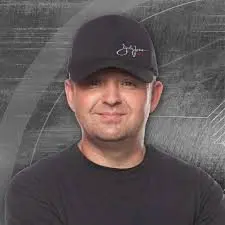

Tami Bandimere heads to Ocala, Florida, for a sit-down with Josh Hart—owner of Burnyzz (often said as “Bernie’s”) Speed Shop and longtime drag racing competitor. Josh walks through how he and his wife Brittany arrived with almost nothing, started detailing cars, and steadily built a full-city-block operation focused on “quality over quantity,” calm culture, and treating customers and employees like family.
Along the way, Josh shares what it takes to run a shop that can tackle just about anything—from high-end restorations to wild one-off builds—plus how new tools like CNC and metal printing are changing what’s possible. The conversation also
SPEAKER 09 :
From the day we’re born, we are scarred and torn We’ve been scared to sing out loud But we don’t care no more, cause we know life is short
SPEAKER 04 :
Hey, everybody. It’s Tami Bandimere. And on this episode of Living It Loud, I am in Ocala, Florida. I am at Bernie’s Speed Shop, which is owned by Josh and Brittany Hart. And Josh Hart is… I met him through drag racing at NHRA. He was racing top fuel cars. And then, Josh, as I started looking, digging around, you’ve been involved in drag racing for a long time, haven’t you?
SPEAKER 05 :
Absolutely. Started in the sportsman ranks. And my first win was dialed for dollars. I think it was like a $300 check. And I never looked back. Just kept on progressing.
SPEAKER 04 :
Well, and we’re here in one of your big showrooms that you have had right before the Gainesville race. You’ve had like a big car show here with a lot of the professional racers here doing autograph session and that kind of thing. And so we’re actually in the break room in one of your big showrooms here. And I haven’t even had a chance to walk around, but sitting right outside the door here. is a Mopar. And we’ll talk about that whole Mopar connection because I’ve got some things I want to ask you about. But how does a boy who didn’t grow up in Florida, you grew up in Ohio. Fort Wayne, Indiana. Indiana. Thank you. And now you have this big place here in Ocala, Florida. How did that happen?
SPEAKER 05 :
Well, I started with a dream of cars. I’ve always done cars. Never thought it would amount to what it did. But we didn’t really know what we were going to do. So my wife and I had like $300 to our name, and we had a 65 Mustang Fastback. And we called a place down here, which actually was our original building, called American Classic Motorcars. And we thought, okay, we’re going to start something that has to do with, you know, detailing, hot rod restoration, modification, that kind of thing. And so we sold them that car. And when we got here, we took everything that we could get to get the car actually on site. Long story short, if he wouldn’t have written that check, we didn’t know how we were going to get home. But he did write the check, so we started detailing cars. Later on, about a year later, Brittany took over the detailing side, and I started doing superchargers. About a year after that, we bought the building from the people that we sold that car to, And then later bought that business. That was in 2011. And it just kept growing and growing. You know, word of mouth is something. And we’ve never had to do any marketing. It’s been all word of mouth. And, you know, so-and-so doing just as good a work as, you know, the big boy shops at the time. And it spread like fire. So just super fortunate. Met some great people along the way. And now it’s 100,000 square feet under one roof. And anything you can imagine, automotive.
SPEAKER 04 :
You know, it’s interesting. It reminds me, I was in church one Sunday. This was many years ago. And they had a special speaker that was there. And he was talking about a good name is better than silver. A good name is better than gold. And you cannot earn it. You cannot buy a good name. You have to earn it. So what the story that you just shared with me falls right in line with that, doesn’t it? Oh, 100%. Yeah.
SPEAKER 05 :
I mean, it’s everywhere that you look in the building is quality over quantity. And, you know, we’ve got a philosophy with our staff, you know, you can be nice or leave. You know, there’s nothing here that is so important that you’ve got to be all bent out of shape or stressed out. And we put that same care into our buildings, you know, so we want the car to be as perfect as possible. We don’t apologize for the build and we don’t apologize for the price. It comes out just as we planned.
SPEAKER 04 :
Where did that come from? Were you a very…
SPEAKER 05 :
clean meticulous young man when you were young where did that where did that come from yeah i mean absolutely so when you’re working with cars it’s almost like a surgical procedure around here so you know they lay everything out all the puzzle pieces have to be orchestrated a to z and you’ll see that our technicians conduct themselves the same as me so You know, a lot of painstaking process and the training, but some of these guys have been here just as long as we’ve been in business. You know, they started with me. And we just, we treat everybody like family. We all grow together. We win together. We fail together. Not perfect by any means, but we try and we stand behind it. So it’s paid dividends.
SPEAKER 04 :
And you pretty much have a full city block here now. Did it start as a full city block or were you able to just acquire property here and there as you grew? Yeah, so it was actually one bay.
SPEAKER 05 :
And the one day is where I did the detailing. Then we added the service department, which was equivalent to about five cars you could get in there. And then later on, we added what we thought was going to be the final showroom, which is about 10,000 square feet on the same building. And I remember when we signed the note on that, it was like a million dollars and I was kind of shaking a little bit. My wife was crying. She was like, are we really going a million dollars in debt? And we didn’t have any cars, you know, so we had to get consignments, but, um, no, exactly. Right. So we, we acquired it piece by piece. We slowly built up building by building and now you’re correct. It’s a full city block. We have our restoration department. We have our quick in and out service department. We have two 10,000 square foot. storage buildings at the back those are what we consider to be either high-end sales on deck or like a full concierge service where you can call us 24 hours a day seven days a week we’ll wash it wax it take care of it deliver it to your doorstep you have a great evening call us when you’re done we’ll put it back in storage and then we also have our on deck for restoration so right now we’re booked for the next two years when it comes to restoration
SPEAKER 04 :
Wow. And do you find the cars or do the cars find you?
SPEAKER 05 :
I would say a little bit of both. Some of these cars have sentimental value. So to some people, money is no object. It’s that car and that engine because that’s the one that they took their wife out when they were 16. Other ones, we try to find the best donor car that we can so that we can get a jump start on the build process. But nothing’s off the table. If you can dream it, we’ll build it.
SPEAKER 04 :
And I think that’s really important because I know that, you know, even I always laugh that my dad had racetrack operators mentality, promoters mentality. And that mentality is never a hard no. It’s always a well, let’s talk about it. You know, don’t you don’t ever really shut the door on stuff like that. And it sounds like. You recognize that early in this process that, hey, let’s talk about it. We might not be able to do it ultimately, but let’s not just shut the door right from the get-go, right?
SPEAKER 05 :
Yeah, we have some crazy projects. Or sometimes we’ll have to recover a project where another shop couldn’t do it, didn’t fulfill the obligation, whatever. And that’s like bringing a million-piece puzzle together. So we needed the space. So long story short, yeah, we will do whatever it takes to make sure the project is finished timely, on budget, and to your little heart’s desire.
SPEAKER 04 :
Yeah, yeah. Have you ever had to turn a project down for whatever reason, just because you’re just like, oh, this is way over our head, or…
SPEAKER 05 :
So the answer is no. The right response would be, I should have. But no, no, we’ve done some crazy stuff from a 49 Curtis, which most people don’t even know what that is, clear to taking a Bentley body and putting it on a 99 Ford Mustang carcass. So I mean, no, it’s pretty crazy and very intense.
SPEAKER 04 :
And I’m sure that some of your some of your rebuilds have built have won some incredible awards. I mean, I’m thinking that you’ve got some it wasn’t it was because of you, but it wasn’t your vehicle. Correct. So, yeah. So talk about that. What what’s some of the cool things that. your babies or these cars have moved on to do.
SPEAKER 05 :
Yeah, I mean, a lot of national recognition for the client, not for us. We kind of stay behind the scenes. We actually do some private label stuff. We build cars for other known builders. But yeah, that’s actually the secret to success is staying out of the spotlight. But as far as prestigious awards go, I mean, countless good guys, performance, Tri-Five and Bowling Green, a lot of stuff in Chicago, a lot of stuff at the Festival of Speed. So yeah, we’ve been there, you just didn’t know it.
SPEAKER 04 :
And I’m sure that you’ve learned some incredible lessons over the years as far as, you know, Building things and the technology has probably come a long way. I mean, you know, this whole I don’t know how much you use a 3D printer, but I still don’t understand a 3D printer. But, you know, it’s those kinds of things where stuff that used to take forever. can happen, you know, sometimes overnight, sometimes within hours.
SPEAKER 05 :
Yeah, we are very old school and probably a little slow when it comes to adapting to the current technology. But I will tell you that, you know, we just incorporated a CNC machine into our interior department. So double stitching, embossing, all that kind of stuff is cake now, you know, whereas we used to literally do it by hand. And this morning I did a quick demo on a actual 3D metal CNC printer, I guess you would call it, that can roll a fender and produce parts that you just normally can’t find. So yeah, I mean that would have helped us so much back in the day when you’re trying to make a new window gear for 1954 Buick Roadmaster convertible. You know, that stuff doesn’t exist. So yeah, if we can catch up, we’ll be just fine, but we’re getting there slowly but surely.
SPEAKER 04 :
And then that brings me to ask you, when you hire employees, is it better to hire the younger ones that have this all techno-savvy business, or is it better to hire the ones that have been around that are a little more detail-oriented and old-school?
SPEAKER 05 :
So right now we have what we call the veterans. Those are the ones that have been with me 10 plus years. And then we have the rookies. The rookies are all specialized in one division or another where the veterans are a little bit more well-rounded. They’re very versatile. So I would say for us, it’s been just seeking out the talent and the willingness to learn. And it’s paid dividends for us. If we take them under our wing, they mess stuff up, we mess stuff up, but we grow together. And it’s worked for me.
SPEAKER 04 :
Yeah, because I think that a lot of times, you know, there’s, in fact, I just got done with an interview with Don Garlitz. And he was late to my interview because he said he was here at your place dropping off a truck. And I was thinking, well, of course he was, you know, I mean, you’re both in Ocala and, and that kind of thing. But do you get a lot of, do you get a lot of, does a lot of your stuff come from Florida or is it come from all over?
SPEAKER 05 :
No, we’re actually worldwide. We do a lot of stuff in Australia, Brazil, Switzerland. And I would say Florida maybe for the quick projects, the 30 days or less in and out service stuff. But it’s not uncommon for us to service a car that’s based out of Cape Cod or New York. were pretty untouchable, in my opinion, when it comes to service. We had a guy who used a different company to build a car. The harmonic balancer came off in his drive to New York. I went and got it for free, brought it here, fixed it, re-pinned the crank, sent it back to him for free, and I said, hey, just don’t do that again. You know, so we have built loyalty with our clients over the last 16 years. And I don’t think they will step outside the box very often because, you know, again, we’re not perfect. But when we mess up, they know I’ll go across the country to bring it back and take it and make it right.
SPEAKER 04 :
Yeah. Hold that thought. We’ll be right back with more with Josh Hart.
SPEAKER 09 :
I’ve got some famous friends you probably never heard of. But back in Rutherford County, our crowd is second to none.
SPEAKER 01 :
Okay, family meeting. Everybody sit down.
SPEAKER 07 :
I didn’t do it, Dad. She did. I did not. He did it. Okay, you two, we have some good news. I’m getting a dirt bike. You’re getting a sister.
SPEAKER 03 :
A sister?
SPEAKER 07 :
Mom, aren’t you too old? Another sister?
SPEAKER 03 :
From Cairo.
SPEAKER 07 :
A foreign exchange student is going to come live with our family. Yeah, let’s send Billy to Cairo. We’re going to learn about her culture, and she’s going to learn about ours.
SPEAKER 01 :
Open up your life. Find out how to have a foreign exchange student live with you. Every family has something special to share. Go to hoststudents.org.
SPEAKER 04 :
So we’re back with Josh Hart and we’re sitting in the break room here at Bernie’s Speed Shop. And when we left, you were telling us a story when we took the break about a guy that you actually he had a problem with a car and you went and picked it up and didn’t charge him. You took care of it, didn’t charge him. That really shows not only integrity, but it shows that your desire for relationships. And relationships are really important, aren’t they? It’s everything.
SPEAKER 05 :
I mean, the people that work here, you know, we know… you know, what they’re going through in their life and where they live and how they’re, how they’re living. I mean, so that’s important, but same thing with our clients. I mean, we treat everybody like family and it’s hard, you know, because a lot of people, um, you know, they think at the first sign of trouble, they’re just going to cut them out. And I’ve had that happen to me so many times in my life that maybe that’s why I desire that connection so bad because I know that real partnership is not when champagne’s falling off the ceiling. The real partnership is when everybody’s got their knives out and they want to hurt everybody and you find out who’s going to stay in the room and work through it. And I’ve learned that even harder just recently in drag racing. A couple complicated conversations didn’t go the way that it should have went and all of a sudden life changes. That’s not a real partner.
SPEAKER 04 :
Well, and moving into the drag racing thing, you know, the thing about drag racing is that there’s so much competition and there’s so there’s emotions or so much passion. There’s so much emotion that happens to that. And and stuff happens in seconds. We know that. You know that. And being the driver of a top fuel dragster, you know, and And then you have to, I guess you think to yourself, is it easier just not to say it or would I rather have to apologize?
SPEAKER 03 :
And there’s times when I’m thinking,
SPEAKER 04 :
Be quiet.
SPEAKER 03 :
Don’t say it. Don’t say it.
SPEAKER 05 :
Yeah, I mean, I’m kind of, I tell people that really try to figure me out. I said, I think I’m just misunderstood. You know, I have more passion and more fire in there than I could ever put into words. So I just keep my mouth shut. You know, so some of the interviews that I did early on in my career, I’m just like, man, did you really say that? What were you thinking? And then now that I’ve been severely humbled for the last three years of my drag racing career, you’re like, wow. I mean, I’ve been beat down and beat down and beat down. Um, I’m excited for the new chapter. I feel like I’ve learned so much about the industry, um, both as far as the race car goes, the team, uh, sponsors and fan interaction that now I know kind of, uh, I got my bearings, you know, so I think I’ll do a much better job. And I know I have a long ways to go in earning the respect of like the John force.
SPEAKER 04 :
fan base but I hope to achieve that and I’ll keep working until I do well and what Josh is talking about is the fact that for those of you who aren’t drag racing followers and fans Josh has now is part of the team with John Force Racing starting in 2026 and And we always talk about the silly season and it typically happens maybe after the Las Vegas race, for sure after the Pomona race. But the silly season started early with your announcement and all that. We all kind of went, oh, here it comes. And that happened early. So when did that happen and how did that all go together? Yeah.
SPEAKER 05 :
yeah so i mean i’m loyal to a fault and you know i loved what we had built my wife and i and we put our heart and soul into our own program i had always owned my own program for the last 13 years so i talked to john force in arizona and it was kind of a hit or miss didn’t know if it was really going to be even an option and i kept saying you know no i think i think the team’s going to turn around we’re going to be fine you know stick with my guy and it just didn’t happen you know and it kept progressively getting worse you know and for those of you that are not self-employed I’ve always been self-employed so I felt like I wasn’t doing either one, both Bernie’s and my racing career at a hundred percent. And I’m not that guy. I I’m I’ve always been self-employed. I know that you have to give it 110%. Otherwise it just won’t make it. So I get up there and I’m trying to be a driver and I’m thinking about invoices and payroll and this team members upset with this one. And that one wants a raise. And I’m like, I can’t keep doing this. Like, and the performance just compounded those same emotions. So, In Brainerd, we started talking a little bit more, John and I. And then in Indianapolis, we really struggled. My team did. And John came up to us in the staging lanes with everybody present and said, that contract will be on your desk on Monday. And I just put my head down and I thought, okay, I really need to pay attention to this, you know. And I was excited and kind of, you know, nervous at the same time. But I knew that if I wanted to do something from my drag racing career, this had to be it. And over the next couple of months, you got to see what happened. Now, other things popped up along the way, but I couldn’t have predicted that in a million years.
SPEAKER 04 :
well and it’s going to be again it’s going to be hard not to see you in the car that you’ve raced for the last how many years but it’s going to be fun to see see you in something new too so you know it’s always those first few races out of the box that you kind of go who is that huh wait a minute you know so yeah yeah and i’m sure that’s going to be much the same for you too yeah i mean
SPEAKER 05 :
So many different variables. I’ve always thought, who didn’t think Brittany Force was awesome? She’s setting records every single event. Grubnick is amazing. John Collins is amazing. The team just had this chemistry about it. So you knew Friday night on those hero runs, she was going to do something awesome. So to think that I’m now gonna be piloting that same car is pretty off the charts epic. And then to even walk into John Force Racing, I mean, again, I was proud of what I had done. I had never been inside what he had done. And that was just something that blew my mind. I mean, literally deserves a lifetime achievement award. Anything you can imagine is at your fingertips inside that shop. And the scale of it is just uncomprehendable. So honored to be a part of it. Super excited. I’ve never driven a canopy car, so excited about that. And I think the most professional experience I’ve ever had is with John Force Racing. I walked in the doors, everybody greets you with a smile. There’s no drama. It’s all business. They want to win races. They want to win championships. And they act that way. They dress that way. They are… They’re a championship contender. So I’m excited to be a part of it and not have to worry about invoices and payroll and all the shenanigans that goes along with owning your own program.
SPEAKER 04 :
Yeah. And you’re going to be part of a team. So that’s a whole nother level of, you know. Getting used to that because it used to be Josh Hart. Now it’s Josh and Alexis and Jack and Jordan. And yeah. So now you’re going to be part of a team at John Force Rising.
SPEAKER 05 :
I love it. I love it. I mean, those people are equally exciting. Yeah. And I can learn from them, which excites me even more. So I think that Alexis is a great addition to the program. Jack was the first person to say welcome to the team. And Jordan and I actually, for a very short time, were team members a long time ago. So it’s kind of a full circle experience, and I’m very, very blessed to be a part of it.
SPEAKER 04 :
Josh, you didn’t start in top fuel. We talked about that. You started doing some sportsman bracket racing, actually super gas, super comp, then went into top alcohol dragster and then went into top fuel. So when you started doing sportsman bracket racing, did you see your end game as being top fuel or was that just something as a typical racers always want to go faster, right? So, you know, how did that work?
SPEAKER 05 :
Yeah, so the first couple of times I went down the drag strip, I was in my Ford Lightning pickup, the same one that I started Bernie’s speed shop with. And I’ll never forget it. I had an employee with me. His name was Jerry Cox. And I said, I think I could drive a top fuel dragster. I want to drive for John Force. And he started laughing at me hysterically. Like, good luck. And I remember being so offended by it that I looked at him and I said, I’m going to make this happen. So when I got my very first time slip in a top fuel dragster, I sent a copy of it to him. He no longer works here. And I just hope that he’s still out there watching right now. But to answer your question, I’ve always wanted to drive the top fuel car. I mean, again, when you walk through the staging lanes as any type of race car driver, and you’re up close with the biggest, baddest, fastest thing on the planet, it’s hard not to naturally gravitate towards it if you really want to do it. And I was obsessed. So I’m still obsessed. And never interested in funny cars? I can’t say that. I like them. I just never did it. I followed the dragster path and not saying I wouldn’t do it, but always been a long car fan.
SPEAKER 04 :
Well, speaking of fans, yes, as a top fuel driver and in the professional ranks, you would you’re going to have a lot of fans and you have had a lot of fans and a lot of them are children and you have two young kids. So how does that affect how you how you relate to kids when they come up to you as opposed to adults? It’s everything.
SPEAKER 05 :
It’s everything. We owe it to them. You know, we wouldn’t be there without them. And for me, it’s even deeper than that because it’s cultivating a car culture. You know, so many kids now think that, you know, these electric cars and that’s it. They’re just a tool to get from A to B. Well, my whole livelihood is built off of the passion of cars. So if I can get even one kid to get excited about the sound of a V8 engine and gasoline, I did a good job that day. But, you know, I live at the ropes. You cannot be in this position and hide in your lounge. You know, you are there for them and the sooner you accept that, the more receptive you are to it, the better off you’ll be. So I love doing that. I love signing autographs, talking to the kids about, you know, tech school. You know, something that isn’t offered anymore. I support a lot of tech schools through our own donations around here. Just to try to get somebody interested in combustion engines.
SPEAKER 04 :
Well, and it’s probably safe to say that at some point you will be somebody that those young people will remember. You will be, let’s say, a hero, so to speak, you know, because I remember when I was four years old or when I was five years old, Josh Hart signed this for me or whatever. Did Josh Hart have somebody that was in his life like that, that you’re like, someday I’m going to be just like that? Sure.
SPEAKER 05 :
Not in the racing world. I always liked all of them. I followed Brittany Force. I followed John Force. I followed Don Garlitz after I got into drag racing. But I’ve got several mentors in the business world that… taught me the hard way you know like they forced me to look at things from every angle not just my my direction and I think that’s what made me as humble as I am and as well-rounded as I am because there was no there was no excuses you know if you’re making excuses you’ve already lost you know they taught me the hard way and I try to implement that with all of our team here at Bernie’s I I I tell them frequently, think of it as if you’re in the court of law. There’s a yes and a no. Nobody cares about the explanation. Did you do it? Yes. Did you do it? No. And it works. So, no, I did not have somebody that, you know, in the racing world that I really looked up to. I appreciated all their accomplishments. But in the business world, absolutely.
SPEAKER 04 :
Well, that thought will be right back.
SPEAKER 02 :
God’s wisdom produces behavior that is morally pure, chaste, and modest. God’s wisdom produces relationship, not estrangement. God’s wisdom does not demand its own way, but rather functions by influence. God’s wisdom is not rooted in pride, but rather in service. God’s wisdom is marked by kindness, generosity, and helpfulness. The wisdom that is from above is first pure, then peaceable, gentle, willing to yield, full of mercy, and good fruits, without partiality and without hypocrisy. James 3.17 This is taken from God’s Way Day by Day by Charles Stanley.
SPEAKER 04 :
We’re back with Josh Hart, and I had made reference to something in the first section of our interview, is that right outside this door is a Mopar. And as you know, our racetrack was a Mopar track, a Dodge, Chrysler, whatever, you know, for almost 40 years. And so we were diehard Mopar people, and I know that you have kind of a bit of a Mopar background, but… I read that recently that you have loaded up a bunch of Mopars and are taking them to an auction in support of Chevrolet, which is now who you’re racing with, John Force Racing. So talk about that decision. And do you typically load up big bunches like that and take them to auctions? How does that work?
SPEAKER 05 :
Oh, yeah. I mean, we have a standard operating procedure around here where we try to turn our inventory every 90 days, no matter what. So there’s about 100 cars on the floor at all times. And on the 89th day, it’s got a number. It’s going somewhere. But my personal collection, I’ve held onto for many, many years, some of them over 10 years. And it was like a tug of war with myself. I’ve never had a manufacturer sponsor. know i think we had hemi on the valve covers and you know we just we didn’t get any support on that side for whatever reason and when chevy came over they said they were excited to be a part of it so i thought well if they’re going to invest in me i need to invest in them you know so that’s pretty much as simple as it gets i i am a loyal bird to a fault sometimes So I agonized over it, because these cars, they are personal. I designed them, the build sheets have my name on them, some of them have my initials from the factory on the dashboard. So I talked to my wife about it, and she said, you know what, I’ve never even ridden in that one, and you don’t even come down here to look at that one. We just kind of thinned the herd per se and I feel really good about it. I’m going through like a weird phase right now where less is more. You know, in 2024, you know, we sold a small piece of Bernie’s to get, you know, to be able to scale nationally. In 2025, I sold the race team. You know, in 2026, we’re selling some of our real estate holdings and we’re selling the Dodge collection and I’m selling my interests in the Coney Island hot dog chain that nobody even knows that I’m involved in. But we do that all the time. With private equity, you invest for a certain period of time and then you get rid of the portfolio. But yeah, I mean, we’ve done so many other things that people don’t know about, like investing in a sign company, investing in a pharmacy, investing in all these little businesses that have left. But that was before I was, you know, known in any capacity. So it’s pretty much normal for us, aside from the Dodge collection. And I’m excited to watch them go. I hope that they bring the numbers. Otherwise, we’ll just take them back where they came from.
SPEAKER 04 :
Yeah. Well, and listening to you talk about, you know, investing in other things, that’s part of it, part of a deeper probably thing. And that is, you know, helping other people succeed too, you know, and giving back and doing that. And I read… I read something that Bobby Bennett wrote a story about you and Brittany in 2024. And one of the things that he put in there was making a life of giving back. And that story was mostly about how you give back. And I think that a lot of people don’t understand that giving back is so much better than, you know, getting all the time and um and by the smile on your face i know that you understand that so explain what that means to you making a life of giving back yeah i um i i didn’t have a whole lot when i was growing up right so and i’m not my parents my biological parents were very very young
SPEAKER 05 :
So I held on to some of the gifts that I got when I was five or six, and I still have them today. And you just look at things differently when you’re on that side of the fence. So when we started to get where we are, you realize very quickly, especially pre-kids, you can only have a couple of houses or 10 cars. That stuff doesn’t mean anything. So we really did scale everything down and focus on what was important, especially when my daughter was born. And it just puts it into a different perspective. It’s no longer about us and our accomplishments. Now it’s about how do you give back properly? So like I mentioned earlier in the vocational tech school, if I would have had somebody guiding me mechanically, wow, how fast could I have got a jump start? So we donated to a local, from where I was born, vocational tech school. And I did a couple of speeches and hopefully made a positive impact on those people. My wife has a soft spot for animals and all sorts of local charities. And her reach has been much more than local. She goes to endometriosis funds, which that’s a whole other story about our struggle with, conceiving you know naturally so just all the life experiences so what I guess to sum it up is just it feels so much better to be able to give to somebody than it ever would be to receive you know and It could be something as simple as, you know, giving them a Bible. It changes people’s lives. You know, it’s just totally different.
SPEAKER 04 :
Yeah, I think that, you know, a lot of times we think that it has to be money, but it doesn’t have to be money. And it can be time. It can be investing time in people, you know. And really, and while you are… We’ve done this interview in three different segments because you’ve had phone calls and that kind of thing. And when you walked out of this room during a break, your employees, a couple of them, have come in here and we’ve had a conversation. And there’s just a calmness and a… One of them has been here seven years. One has been here four years. They speak very highly. And you can just tell that they just feel like they’re just content here. It’s a very comfortable place. So you’ve invested time in them as well. You’ve invested, you know, the opportunity for them to be a part of this. And I think that’s… That’s great. I know that you’ve also done fundraisers here at Bernie’s, and so that takes it even to another level, doesn’t it, where you actually don’t just write a check and put it in the mail and send it on the road, but your boot’s on the ground, correct?
SPEAKER 1 :
100%.
SPEAKER 05 :
Brittany led a march for endometriosis clear to Washington, D.C., and sold these t-shirts and she raised the funds for people that were affected by that and donated it all back to those girls so that they could go and handle the trip. Priceless charities, you know, Ronald McDonald House, just so much stuff that we’ve been involved in over the years. And those experiences really put things in perspective, you know, when you raise the money. Or just recently, you know, make our kids go to a halfway home to serve people Thanksgiving dinner. Mm-hmm. Our kids are questioning, like, well, wait a minute, why don’t they have less of that? And so my daughter, now she’s starting to get it pretty good, and she’ll just say, we need to make money for other people. We need to show them kindness. So it’s just changing the perspective and the mindset.
SPEAKER 04 :
And I think you’re right, what you said about, you know, once you have kids, things just change in your brain because, you know, you want to have more time with them. So you kind of want to offload some of the stuff that, let’s be honest, doesn’t really mean anything. You’ve got the memories, you know, and that kind of thing. But, you know, I mean… Let somebody else enjoy that. And so that you can have, you know, extra time with them. And so Helen, how old is Helen? Just turned six. Six. And Banks is?
SPEAKER 05 :
He turns three in three weeks.
SPEAKER 1 :
Oh.
SPEAKER 04 :
so you’ve got you’ve got a very young family and um and yet you’re doing some really great things and and i know that they come to the races with you a lot so they’re seeing a lot of that you know as far as how you treat people and how how to be treated and that kind of thing and and the racing community i mean i grew up in the racing community so And I think I turned out pretty good. So I’m sure that you’re excited to continue that. Cause I’m sure that Helen’s got some friends that are there.
SPEAKER 05 :
Yeah. Yeah. She, she thinks that, you know, Steve Torrance’s daughter, Charlie is probably one of her best friends. They, they, they talked on the phone for a little while there and then that kind of faded away. But yeah, it’s kind of like the friends that just pick up as soon as they see each other again, it’s great where they left off.
SPEAKER 04 :
And you and Brittany have been married how many years?
SPEAKER 05 :
So together, 23 years, married 16.
SPEAKER 1 :
16.
SPEAKER 04 :
And so you talked a little bit about having fertility issues or whatever that had Helen. And then you adopted Banks.
SPEAKER 05 :
Believe it or not, my daughter is adopted as well. Oh, is she? Really? She’s just cursed with my fat cheeks and blue eyes.
SPEAKER 03 :
I was going to say, she looks identical to you. When the two of you are riding on your little golf cart, I’m like, hi, Helen.
SPEAKER 04 :
Yeah, she does. She really does. Oh, wow. That’s really, okay. I learned something, too. So that’s great.
SPEAKER 05 :
Yep. So I was racing in Vegas, and we did try everything in vitro and IUI and all the shots and just everything you can imagine. It just didn’t work. My wife was in a severe endometriosis case where it was in her lungs and her diaphragm. It was just very, very bad. So I think in the first 13 years of Brittany and I’s life together, she probably had 13 or 14 surgeries. And they were all very invasive. A lot of people think endometriosis is probably laparoscopic. They’re going to treat it with hormones and stuff like that. That was not the case with her. So very severe chest tubes and the whole gamut. But long story short. I was racing in Vegas, and when you submit your application, and that’s exactly what it is, it’s like a resume that you submit for adoption, you don’t think that you’re going to hear anything, you know, for a long time. Yeah, I’ve heard that that’s quite the process. Oh yeah, FBI background checks, and home studies, and just, it’s pretty intense, and extremely expensive. And I’m getting ready to get in the car, and I remember my car crew chief coming up going, your wife is screaming at me and she never raises her voice, like she wants to talk to you right now. So I answer the phone, full dress, in the car, and she goes, I’m on my way to Pennsylvania. I’m like, what? So I make the pass. make the corner, get out of the car. She’s on the plane. I can’t communicate. I have no idea what’s going on. So finally she lands in Pennsylvania, and she said, look, we’ve been selected to adopt this baby that’s going to be born at such and such time. You need to get here. So it was like this weird flight transition. Two weeks later, we were cutting an umbilical cord, and my daughter was born. And, you know, we thought one and done. She was the miracle baby. You know, I named her after my adopted mom. And… Brittany said, I think we need to try again. So I thought, okay, whatever. This was easy. We submit this portfolio now and we’re thinking, okay, we’re probably not going to hear anything for a year. That’s kind of standard operating procedure. It was two days for banks. And they’re like, you need to be at West Palm at such and such date, such and such time. He’s about to be born. And so we weren’t there to cut his umbilical cord. It took us four hours to get there. And there you go, there’s a little baby boy. It’s an unbelievable process. It’s in the top five scariest moments of my life because when the baby’s born, no matter whether you’ve went through this or not.
SPEAKER 04 :
Hold that thought because I want to hear the story in full when we come back.
SPEAKER 09 :
But a good time, and it don’t get better than this. Dynamite!
SPEAKER 08 :
The music that makes you move. On our sister station, 95.3 FM and 810 AM. Legends of the 60s and 70s. Dynamite!
SPEAKER 04 :
We’re back with Josh Hart, and we’re going to finish up this interview, but when we left, you were talking about how you and your wife Brittany kind of became parents of two children in a very short amount of time through adoption, which typically doesn’t happen. So, I mean, usually it’s a very long process, very long drawn out. So that was just God’s hand in all of that, wasn’t it?
SPEAKER 1 :
100%.
SPEAKER 05 :
Yeah, life-changing, flipped our world upside down, and change it for or anything. I mean, the kids are awesome and they’re good kids and that’s our duty, right? To raise good humans. So that’s the goal.
SPEAKER 04 :
Yeah. And so now is Brittany still involved with the business or is she pretty much enjoying staying home with the kids and being a mom?
SPEAKER 05 :
She’s very much involved in the day-to-day actions. So we call her the filter. So, you know, there’s a… restoration department, sales department, trailer sales department, all the rents from all the properties. And then you’ve got in and out service and other things. It all funnels to her. So she’s basically CFO of everything that you see that we’ve created.
SPEAKER 04 :
So then do you get to see her pretty much every day? She comes into the office with you as well, so that’s really awesome.
SPEAKER 05 :
Yeah, every single day, and banks in London have their own safe place on site. So it’s a pretty good environment for everybody.
SPEAKER 03 :
We had that at the racetrack too, but it wasn’t so much a safe place. You know, when you have minibikes and you’re riding up and down the side of the mountain. I understand.
SPEAKER 04 :
But it was still fun, and we all survived, so…
SPEAKER 05 :
You know, my daughter will be in the interior department, just coming up with crazy ideas, or she actually can weld, which is pretty cool. At six years old. Yeah, and my son, he is not very interested, I don’t think, in cars, per se. He’s interested in one of my other passions, which is big equipment. He loves it. He can operate a mini excavator, begs for me to take him out on the skid loader, So he’s into machinery, which is cool because I feel like we build porcelain dolls around here. Everything is so precise and perfect. So it’s only natural that I would gravitate towards things that I can tear stuff up with.
SPEAKER 04 :
Well, and that, you know, again, and that brings me to… What did life look like for you when you were five years old? Did you like cars well enough to know you wanted to be working on cars the rest of your life? And you’re shaking your head, yes, like, yes.
SPEAKER 05 :
Yeah, I mean, it was deep from like three or four years old. And I know a lot of people would say I’m bluffing, but I’m not, right? I remember the little wooden cars and I would, you know, do water paint on them and make them custom. And then it graduated to like the Pinewood Derby cars. And then from Pinewood Derby cars, it turned into model cars. And then model cars turned into slot car racing. Slot car racing turned into remote control car racing. Everything racing constantly and just never really knew anything else. The only thing I’ve ever been passionate about other than cars was the drums. And that’s just something I picked up in, you know, elementary, middle school. But I figured the ship that sailed on the drums, you know, the chances of making it big in that is like winning the lottery. But I guess some people would probably say the same thing on the race car side. But cars was just a little bit better fit, you know.
SPEAKER 04 :
So my next question to ask you was anything about you that would surprise people? And maybe the drums thing would be a surprise, but is there anything else that you would say, people don’t really know this about me or I like to do this when I’m down time or whatever?
SPEAKER 05 :
So super quiet, conservative, methodical, keep to myself. But when I do cut loose, it’s usually like the drums and heavy metal, like the worst of the worst. Not that I like all the lyrics and stuff, but I appreciate the drummer and the work that goes into stuff like that. So a lot of heavy metal. Yeah.
SPEAKER 04 :
So there’s a loud side to you, not just in the race car, but you know. It’s there. How did Brittany feel about you getting into a top-field car? Or was it just a gradual process and it was just kind of the next thing? Yeah, it was definitely a gradual process.
SPEAKER 05 :
I hit the wall in Valdosta, Georgia in 2000, let’s call it, 16. And she was standing on the starting line. And I remember, you know, you hit the wall and, you know, I think I broke my wrist and a rib and a collarbone. And I remember the fire truck and everybody coming and I was totally fine. I was the most calm person there until I saw her. You know, so I remember her going, you know, are you okay? I said, yes. She didn’t talk to me for like two weeks. You know, that was it. And she didn’t go down to the starting line for a lot of, like a couple of years. So she knows what it is. And she politely reminds me that I’m only allowed one, like really deadly thing, which is this. You know, I had a sponsor for a very short period of time that gave me a Ducati motorcycle. And I took off out of here, out of Bernie’s one day, and I was heading home, and I didn’t know she was behind me. And this bike had, like, wheelie control and launch control, so I was trying to see. Push it. 180 mile an hour. And I pull into our home at the time, and I didn’t realize she was literally right behind me. And she goes, you ever do that again, there’ll be divorce papers on your desk. She goes, I’m not cleaning it up.
SPEAKER 06 :
Yeah.
SPEAKER 05 :
So… I think that we all know that if you make a mistake at 340 mile an hour, all bets are off. So you need to focus, but she’s been very supportive of all of it, both in business and racing.
SPEAKER 04 :
Where did the name Bernie’s come from?
SPEAKER 05 :
So we were trying to think of something car related, right? So we were looking at like a speedometer, rev limiter. I was drawing all these logos sitting next to our fireplace and I thought, you know, like, what about a burnout? You know, and the two Z’s were like positraction. And then I, I’ll never forget it, the movie Weekend at Bernie’s came on. And I thought, Bernie’s, everybody will know what that means. So that’s what it was. It was just Bernie’s. And it’s been pronounced so many different ways, like Burnsy, Burnas. I mean, but, you know, the bottom line is it’s Bernie’s and it’s pretty popular here local. Yeah, yeah.
SPEAKER 04 :
What is the most challenging part of your day?
SPEAKER 05 :
Does getting my daughter out of bed count?
SPEAKER 04 :
Possibly. It’s that character-building experience, isn’t it?
SPEAKER 05 :
I would say separating the divisions is hard. I try to be the best husband I can. I try to be the best father that I can. But when I’m at work, they know that I’m going to do everything I can do to make this place as good as I can for the day. And most people have learned that when I’m racing, I’m trying to do the best I can at that. So that’s probably the hardest thing to do. And I think that by selling the team and lessening the burden here at Bernie’s as well, it should alleviate some of that pressure, I hope, and make me better all around at each one of those that I just listed. yeah and along those lines talk about your team here how many employees do you have and what what are all the different areas that that you’ve got yeah so we’re pushing 50 people um the majority of them have been with me since the first year or two and anything you can dream of automotive means We have a frame specialist. We have a fabrication department. We have body and paint. We have the interior department, parts division. Clerical isn’t just clerical. I mean, they have to talk the talk and walk the walk when they’re selling a project. So that’s a tough sell. Anything automotive when it comes to the quick in and out services. So we live in Florida, but we build plows and snow trucks. We build dump trucks. We have a heavy duty department. And then trailers. So everybody’s specialized in their own way and I try not to step on them. I mean, I tried to hire the smartest people that I could find. Way more knowledgeable than I am. I’ve got a Corvette specialist that I won’t even engage in conversation when it comes to a Corvette because he knows more than I’ll ever want to know. So just a really versatile, jam-up team that do a fabulous job.
SPEAKER 04 :
And I know you’ve talked about offloading some stuff, but is there anything in the future that you’re like, someday I want to add that or I want to do that or I want to, you know, I’m still that’s still on my bucket list.
SPEAKER 05 :
Yeah, I’ve always been a fan of stadium trucks. And I think it’s just because it’s the vast opposite of drag racing. Like you’re sliding around and it’s back in the hands of the driver and you can crash them up and bang them up and you’re jumping and you’re slinging dirt. That just sounds like a whole lot of fun to me. So maybe that’s my retirement gig.
SPEAKER 04 :
What would you be doing if you weren’t doing this? I mean, you’ve liked cars ever since you were little. I mean, and now you’re racing and you’re actually… rebuilding cars and that kind of thing is there is there something that you know you think i could have been doing that i went to school to be an accountant i was talking to don garlitz and he said there’s my accounting degree right there i went to school to be an accountant i’m like oh okay
SPEAKER 05 :
I don’t know I mean I designed all the buildings and I and I drew all the blueprints and I always thought I was gonna be an architect but I didn’t get along very good in school I’m an eighth grade dropout a lot of people don’t know that so what would I be doing I would probably just be operating machinery like jump on a d5 bulldozer and go you know just try to make the most perfect cut and the most perfect grade to me that’s like my heaven you know just this huge machine and you’re just doing your thing playing in the dirt like a little boy in the sandbox what’s the what is the um when helen and bank say daddy let’s go do this what’s their favorite thing to do with you So my daughter is cursed with my saying need for speed. She loves to ride in the side by side. She loves to race me on her bicycle, race me with remote control cars, like it’s gonna be,
SPEAKER 03 :
She’s walking. You’re creating that, aren’t you?
SPEAKER 05 :
And my son is the opposite. Every night before he goes to bed, he’s like, thank you for our mini excavator. Thank you for, like, he just wants to mess with the machines. And I’m being very literal. I have a video on my phone I’ll show you that he can teach his daughter, he can teach my daughter how to operate the excavator. He’s giving her instructions. He’s only three years old, which sounds crazy. But he’s right. He’s telling her what to do. And, you know, like my daughter’s in school now, but we did not send her to a normal school where it’s all computer. This school has no computers. It’s all about working with your hands. And I think he’s going to walk that same path because if history repeats itself, there’s going to be plenty of people that can design it. Right. My kids are going to be the ones that actually build it. Yeah.
SPEAKER 04 :
Well, we’re finishing this up, and thank you so much for taking the time. I know you’ve got a lot going on and a lot on your plate, and the NHRA drag racing season is just around the corner, isn’t it? So be watching, and watch for Josh Hart racing for John Force Racing in 2026. Awesome. Thank you. Thank you.