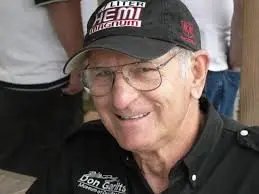

Part one of a two-part sit-down with drag racing icon Don “Big Daddy” Garlits—record-setter, inventor, and the man behind the Swamp Rat legacy. Tami Bandimere joins him inside the Don Garlits Museum of Drag Racing in Ocala, Florida, where Don traces his story from a childhood obsession with speed to the early days of legal “run what you brung” racing, and the moment he walked away from a stable accounting path to work with cars full-time.
Along the way, Don explains how the museum idea was born after seeing car museums overseas, why he left Tampa after a property-tax clash,
SPEAKER 07 :
This week’s interview is part one of a two-part interview.
SPEAKER 03 :
All right. Here we go. From the day we’re born, we are scarred and torn. We’ve been scared to sing out loud. But we don’t care no more, because we know life is short.
SPEAKER 07 :
Hey everybody, it’s Tami Bandimere. And on this episode of Living It Loud, I am sitting in the office of Big Daddy Don Garlits in Ocala, Florida at the Don Garlits Museum of Drag Racing. And I walked around a little bit before you got here, Don, and what an amazing place this is. It’s just, it’s unbelievable. And we’ll talk about the museum here in a minute, but your whole racing career led up to opening this museum, didn’t it?
SPEAKER 06 :
That’s right.
SPEAKER 07 :
Yeah. And you were actually not from Ocala, Florida. You were born in Tampa, correct? Is that right?
SPEAKER 06 :
3711 Bayshore Boulevard.
SPEAKER 07 :
And so what brought you to Ocala, Florida?
SPEAKER 06 :
They raised the taxes. We actually had this museum on the Seffner property. That was the homestead. My dad left it to me in the will. We were actually in Detroit at the time, and we didn’t like it up here, and then he got killed in an automobile accident, and we got the homestead, and so we just moved back to there and built a home and a shop there, a race there. That was 1967. And in 76, we went to England and visited. We were over there two weeks, and they took us around to the car museums. And I just casually said at one of the exhibits, gosh, we ought to have a drag racing museum. And my guide there, Les Brooks, he’s gone now. He says, why don’t you build one? Just like, you know, let’s go have a cup of coffee. And my wife and I talked about it on the flight back. It’s about a nine-hour flight. And we had this property that’s on Sefner, a big piece of land there. We had bought the neighbor’s property after, you know, his husband died. And… We put a building up there, and that’s where it was. We didn’t have visitors to speak of, but we had a lot of journalists, and people came by. And I’ll never forget the Greek come out. It’s the Dengar Museum. It was for my cars. I wouldn’t think about anybody else’s. I had a lot of my cars. And the Greek saw the cars, and he says… They just put my car out of the museum in Chicago. Would you like to have it? I said, sure. He says, have you got a trailer here I can borrow? I said, sure. He says, I’m going to go right and get it right now. And he drove to Chicago and he was the first car. Now we had the 204 car in there and it was for years. But then later he gave it to his daughter when he got older and she immediately took it out and sold it and got the money. So it’s out there somewhere. I don’t know where. But the people, the commissioners in Tampa raised the property taxes dramatically, like double in one year. And it made my taxes go up quite a bit, and I went to the meeting, and I said, You shouldn’t raise taxes like that on everybody. And the county commissioner looked. The chairman says, Mr. Garlits, you have lots of money. Shut up. Sit down and pay your taxes. I said, I’m moving out of here. And they just all laughed, you know. And I did. I moved out.
SPEAKER 07 :
Mm-hmm. Well, you have been called by Wikipedia, the godfather of drag racing. How does that make you feel?
SPEAKER 06 :
I don’t know. I don’t think I’m the godfather. I may be the goat. There you go. There you go. I mean, I did make a lot of changes to it over the years. I always thought outside the box. My dad did. My dad was one of the engineers at Westinghouse that invented the electric iron and electric fan. And I guess I got some of that in me. I like to make things. I like to make new things. And I’ve got a very inquisitive mind, not just about drag racing. I study lots of stuff, all the archaeology. I know all about economy and banking and money. And I know about human origins. I know about the aliens. There’s lots of them here. And you can snicker if you want to, but they’re here. Trust me.
SPEAKER 07 :
Mm hmm. Mm hmm. So let’s see. You started racing when? How did I mean, how did you have you always liked cars? Did your I mean, I know you like to tinker and that kind of thing. So I’m assuming that that because of your dad and that kind of thing, that cars were a fun thing to tinker with. Right. And you probably like to go fast, like any young man.
SPEAKER 06 :
My first fast experience is in my mom’s car. She bought a new 35 Ford. It wasn’t really new. She got it in 36, so it was out of a year old, but it was new to us. And my dad was driving it, and we were going down the highway from the Seffner home. And everybody drove about 35 miles an hour then. That was about the speed. Sometimes you would hit 40. But the roads were real narrow, and… two-way, and that was a safe speed. And so there was this wide open section here, and my dad says, Helen, my mother’s name, I’m going to show you 60 miles an hour. And I always stood, it was a two-door sedan, I always stood between the two seats in the back seat, watching all the gauges and looking out the windshield. And I watched that speedometer go up there and it just go right up to 60, and as it hit 60, my mother was screaming bloody murder. Slow this thing down, you’re going to kill us all. And I wanted that speedometer to drop right down there to that 100 if it would do that. And, of course, I thought because it was on there, it would do that. But, you know, they wouldn’t. They’d only go about 90. And… But that was my first experience with going fast. I loved to go fast. I mean, my bicycle, my brand new bicycle, I destroyed it. I made jumps like Evel Knievel, jumping from one ramp to the other until I broke the fork. And I was just like that. And then my mom divorced my father, and at 17, I was allowed to have my own car if I could buy it. So I did buy my own car. My stepfather took me down to the car lot, and I picked it out. And on the way home, on Florida Avenue, it was two-way then, I stopped. This is 1949, August. I stopped at the Buffalo Light on Florida Avenue, and I’m northbound. There’s two lanes. And G.P. Robinson pulled up beside me. That was one of my classmates. And his dad had just bought him a brand new 49 Chevy Coupe. Stick shift. And, of course, the windows are down because there’s no air conditioning, nothing then. And he says, let’s race. And I says, what? He says, when the light turns green, step on it. And the light turned green. We stepped on it. And I jumped out there, but it wasn’t. It was a war out forward from World War II, you know, never had no war change. And the Chevrolet, actually, it was so exciting. I couldn’t believe it. But I didn’t go to any drag races anywhere. A car wasn’t really fast enough for anything like that. Plus, I was still working at the dairy every day, morning and night. We milked 50 head every day. But I got out of school in June, and it was a whole bunch of us had these cars. And we drove up to Zephyr Hills, and we met the city fathers, and we asked them to let us use the old abandoned Army Air Corps field. And we, all about 18 of us, we took shovels and scraped the grass off of the seams and stuff, you know. And we set up our… stop and go and we had we all raced till dark that day it totally legal and that was the actually beginning of my dry racing career and we raced there for several years there’s some pictures on the wall later here that my girlfriend took that i didn’t find until we moved from down there to here, and I was going through the boxes, and it was just a little pack of pictures that was taken by my girlfriend, Murphy. I couldn’t believe it. That’s pictures right over there. But that was no trophies, no clocks. We had a stopwatch. I still have the stopwatch in the case back there. It was pretty accurate. The guy would be at the end, and when he pulled the flag, he’d start to watch. And when the first car come by, stop it. It was pretty accurate. We knew what we were doing. And…
SPEAKER 07 :
And that began the need for speed.
SPEAKER 06 :
Yeah, I just, I was, I knew I was, but I was, I’m an accountant. There’s my diploma right up on the wall up there. And I was three months into my job and my stepfather over breakfast coming in for milking the cows and I’m all cleaned up going to work. big department store in tampa moss brothers and i i i graduated top of my class i had to pick a job in tampa and i took the big department store wonderful people and my stepfather says i can see you’re not happy in your job i said why do you say that he says I worked with you for eight years. I worked with him on that area from 1942 to 1950 when I got out of high school and my brother took my place and I went to work. He says, are you there 15, 20 minutes before they open the door? No, sir. I said, I’ll get there right about time. He says, about 4.30 in the afternoon, are you looking up at the clock, and do you kind of wish it would be 5? I said, yes, sir. He says, you’re not happy in your job. He said, you’re happy in your job if you’re there before it’s time to go to work. You go right to your station. You go to work, and they come at closing time or maybe 5 or 10 minutes afterwards, and they say, you were trying to close up. Can you please finish up your job here? And that’s the way it was. I went to work in a radiator shop, believe it or not. And Mr. Williams, he was a really nice guy. And he would come by to be 5’15 or something like that. And he’d say, Donnie, just put the tools up. We’re all done for the day. My wife’s got the dinner on the table. I have to go. And… So your stepdad was a smart man. I took a 50% cut in my pay, and I never looked back. My girlfriend that worked at Moss Brothers with me, she was a clerk. We were going to get married. We didn’t have a ring on her finger yet, but we agreed we were going to get married. When I told her I was going to give Moss Brothers my two weeks notice, she says, what are you going to do? I said, I’m going to work on cars. My stepfather thinks I should be into cars. I’m going over to Williams Radiator Shop. She was a cute little redheaded thing, and the color just drained out of her face. It went ashen. And she said, you would quit your job at Moss Brothers to work in a stinking radiator shop? I said, Alex thinks I ought to be in the cars. He says, Alex, he’s not going to run your life. You don’t have to worry about taking me home. I’ll find a ride this afternoon.
SPEAKER 05 :
And I never saw her again until the 53 Union. And I was sure glad that’s the way that turned out.
SPEAKER 06 :
Because I met this little gal that she loved cars. And, I mean, she was 100% behind me her whole life. You know, we were married 61 years.
SPEAKER 07 :
And that was Pat.
SPEAKER 06 :
Uh-huh.
SPEAKER 05 :
There’s pictures of her all over the room here. You’ll see them.
SPEAKER 07 :
Mm-hmm. Yep. So your dad was a smart man, or your stepdad was a smart man. He saw it. And that was kind of a pivotal moment for you, wasn’t it?
SPEAKER 06 :
Yeah, that was my stepdad. My real father was real smart, too. At six years old, I went next door to the neighbor. The neighbors on each side of us were well-to-do. The one was the Eislers, and he was the head guy at the Tampa Tribune on the presses. And next door on the other side was Mr. Thomas. He was… Very rich. I mean, I don’t know what they did, but they had a big, fancy Spanish house. Anyway, Mr. Eisner asked me to clean the horse stall out. I was six years old in 1938. He said, I’ll give you 10 cents if you clean the stall out. And I said, yes, sir. And he said, put all the straw out there on that pile outside and then put fresh straw.
SPEAKER 07 :
Hold that thought, Don. We’ll be right back.
SPEAKER 02 :
I’ve got some famous friends you’ve probably never heard of.
SPEAKER 01 :
Back in Rutherford County, our crowd is second to none.
SPEAKER 09 :
Um, where are the cereals? Aisle 2. Oh, thanks. What on earth are you cleaning up? Uh, can’t tell. Either someone’s love handles or their belly. Excuse me? Yep, more people are losing weight and getting healthy thanks to small step number 121. Eat before grocery shopping. Makes you less tempted to buy junk food.
SPEAKER 08 :
Please don’t let it be someone’s thunder thighs. Take a small step to get healthy at smallstep.gov, a public service announcement brought to you by the U.S. Department of Health and Human Services and the Ad Council.
SPEAKER 07 :
Guys, we’re back with Big Daddy Don Garlits, and he was talking about his pivotal change in career from being an accountant to working at a radiator shop. So that was the beginning of your need for speed, wasn’t it?
SPEAKER 06 :
Yes, it was. Yeah. I went from there to Furman Chevrolet downtown. Mr. Williams’ boy came back from Korea, and he got my job, but he called up Jimmy Furman at Furman Chevrolet. He knew him personally. He said, I got a nice young man here that you’d be good to him. So I went to work for Furman Chevrolet, and I worked there for quite a while, and there was some confusion about some parts. The body shop… would take the pieces off the cars and then they put it outside in a big pile of scrap. And my buddy and I were fixing up our hot rods and we asked the body man upstairs if it was all right if we took any of the stuff like bumper pieces and all. The bumpers were in three pieces on those 50 Chevys. And they said, oh, take anything you want out of that pile. And we went out there, we got all kind of stuff out of it, and then come to find out one of the body men had put some stuff out there that he wasn’t supposed to put out there that was still okay, but we didn’t know that. And so… they said, we stole the stuff. And the body guy says, well, no, I told him that they could get the stuff, but they should ask about some of it. But it was a scrap pile. Anyway, Jimmy Furman said, you know, to keep peace in the family is best if you boys get a job someplace else. So we went over to Jeannie Ray’s painting body and got a job just like that. But It was hard work, you know.
SPEAKER 07 :
But, okay, so hot rods are door slammers, as we know them, as racing people call them. But how did you go from a door slammer to a dragster? Where was that transition?
SPEAKER 06 :
Well, because the… I met Pat, and drag racers were black leather jacket and hoodlums. And right off the bat, the dad didn’t like my car. It had a Ford with a Cadillac motor in it and, you know, exhaust pipes and lowered and everything. And the first day he walked around that car and he said, have her home by 11, boy. And I knew right then that, you know, he didn’t like the car. So I went down to the Holtsinger motor and traded it in on a 50 Ford. It was from Ocala, by the way. An old lady school teacher turned it in on a 52 Ford. It was real nice, 10,000 miles. And so, no drag racing. Just like that, I cut the drag racing right off. And all we did was just regular stuff, you know, dating and dancing and going to the beach with the 50 Ford. And we got married. And three months after we were married, we were going over to the Bach Tower they’re going to play the bells it’s a it’s a piano keyboard like it but it rings the bells and they don’t do it very often and on the way there on highway 60 we drove by this little sign that said drags today and i said honey let’s go back here and see what this is all about and uh because we i there was no drags here in my day they were all in zephyr hills So we drove down the little road, and the kid there said, that’ll be 50 cents each. Do you want to run it? And I said, yes, I do. He said, that’s 50 cents more. And now I was entered in the bone stock class with my 50 Ford. And I won my class. The trophy is up there in the garage. in the case, the trophy from 1953. And Charlie Hogan was there and we had raced him on the streets back in the day before there was drag races, you know. And Charlie Hogan won the Big Top Eliminator trophy. And that is Charlie Hogan, father of Richard Hogan, the big-time crew chief. And so… I couldn’t believe it. And you won the big trophy. So I made some changes on my 54, but that put me in a modified class, and I couldn’t win anymore. So we got a little 36 Ford and chopped it all down and put a big motor in it. But that still wasn’t—Charlie was still winning because coops don’t beat roadsters. I finally got my 27T. And I got it going good. And the first time out, I didn’t win. But the next time, I raced him. I won top eliminator. And about that time, NHRA, we’re getting into the late 54 now. At 55, they had that big drag safari. They went around the country. And they ended up in Great Bend for the first U.S. Nationals. Well, the last race before that U.S. Nationals was in Lake City up here. Lake City, Florida, and they were going to be there. And I mean, I was in this little club called the Strokers, and everybody was getting excited about this. And I had this little roadster that I’d won a few top eliminators, but I knew there would be dragsters in Lake City. So I converted my roadster to a dragster, moved the motor back, put the seat in the back, changed the frame around. There was a Model T frame, though, still. And there’s the picture up there. I won the class, and then it rained, and it was four cars, you know, for top eliminator. The gas dragster, the fuel dragster, the fuel coupe, and the fuel roadster. And I ran the fuel coupe and beat him, and then the gas dragster beat the roadster, and I run the gas dragster for the final and won the race. And… Had a big meeting at the club. Nobody in the club won anything but me and I won the whole race. And they called me up to the front and the big tall, I wasn’t an officer or nothing like that. I was just one of the strokers. And they called me up to the front of the room. Gene Tinker was the president. He said, we took up a little collection and we have this tea set we bought for you. I don’t have that. It’s something I think the kids got it eventually because it was cute. And commemorating your win, but you could tell they weren’t happy about it because I was a nothing guy, you know. I was small, 120 pounds, black hair, you know. And he said, I guess you’ll retire now. And I said, Gene, why would I do that? He said, because you will never beat the Californians. Two years almost to the date, in August of 1957, they lined me up in the first round with the Cook and Bedwell car that held the world record in the first car over 160. They brought him all the way back from San Diego to Cordova to the World Series. And they lined me up with him. That’s when they picked who you raced. No, you didn’t pick. The event did. And they thought they’d give me to Cook because I’d be easy because I hadn’t made any really good runs. But that night before, I worked all night long converting my carburetors to nitromethane, and those same carburetors were on the car right back there in the museum. We’d come around the corner, and they lined me up with him, and I went $9.96, and he went $10.04, and I got out first. And it stunned everybody. I couldn’t believe it. And Jim Lamona, the president, met us when we returned to the stadium. You went right to the stage, you didn’t go back to the pits and work on your car. You come right up for the next run. And Jim Lamona looked at me and Cook, he said, in all fairness to the world champion, we’ll have to see that run again. And so we ran again and I beat him again. and that that set it and they put me on the cover of drag news they couldn’t believe it’s the first time anybody or outrun cook first time a wheel been put out in front of him and uh they even that they took the drag news and they blocked out all my signs i had don garage i just made a solid black and said and then and when i won the round the first time the announcer was talking about it, you know, and he’s, you know, you could hear all this stuff in those days. It wasn’t as noisy as it is now. And he said, here’s a guy from Florida. I heard he worked all night. Let’s see what he can do. And then he said, my wife said, the PA said, he won the race. The kid from Florida beat the world champion. What’s his name? Does anybody know what his name is? Oh, And they say, oh, here it is, Don Garlits. I bet that’s not the last we’ll hear from him.
SPEAKER 07 :
No doubt. Okay, so speaking of names, now, then you become known as Big Daddy. And you have… the Swamp Rat Dragsters. So talk about some of those fun names. I mean, we’ve got the Snake, we’ve got the Ace, we’ve got Mongoose, the Bounty Hunter. I mean, you all had like these iconic names that really don’t exist much anymore. Where did Big Daddy come from?
SPEAKER 06 :
I think it was kind of cute. Well, the Swamp Rat was hung on me by Seto Pastoian, and that was the deal. I got burned real bad in 1959, and I nearly got killed. And so I was out, I was going to sell all my stuff, and Art Malone come up to the hospital. We were schoolmates. He went to school with me from the fifth grade. And he came up, and he ran round track cars. And he says… Don’t sell your stuff. He says, let me drive the car. And so we went over to Kissimmee, and he made a couple of runs in it, and he was like a duck to water. And so we go up to this big race, and up in the first race is – I just set the record the week before, by the way, 182.54 at Texas. And so – Nobody broke that record in several months that I was out, you know. And so we go up to Sanford, Maine for a big regional meet up there. That’s Art Malone’s first appearance at a drag strip. And Paul Stoian is there and he comes over and he says, what’s the deal here? He says, you’re going to let this green kid drive this top fuel dragster, the fastest dragster in the whole world? I said… Well, he’s not a green kid, Seto. He’s made lots of runs in round track. And we went over to Kissimmee and he made test runs and he did real well. He says, well, I’m going to have to see him make a couple of runs. And he says, you know, it’s no wonder they call you the swamp rat. He says, you’re in this sport for what you can get. You don’t care who you hurt just so you make a buck out of it. And you shoot your mouth off in drag news about safety and different things. And then you put a green kid in a big top fuel dragster like this and you expect everybody to want to race beside him. He says, he’s going to have to make a couple of good runs before I get beside him. I said, well, just stick around because we’re fixing to go make one right now.
SPEAKER 07 :
Hold that thought. We’ll be right back.
SPEAKER 1 :
Thank you.
SPEAKER 01 :
The people of the United States are the most benevolent people in the world. While Americans have been accused of being poor givers to the international community, they have consistently given more to international good causes than any other developed country. Domestic and foreign disasters have been met with record-setting levels of private giving that have far outpaced other countries’ giving.
SPEAKER 07 :
All right, so we’re talking about how you got the Swamp Rat name now, and that happened. So then how’d you get, then you had, you had, your cars were called the Swamp Rats. So, and you had like 34 of them, right?
SPEAKER 1 :
38.
SPEAKER 07 :
38. Wow. So they just kept, that just, that name just stuck.
SPEAKER 04 :
Yeah.
SPEAKER 07 :
Yeah. And, and Swamp, of course, Florida, right? So that’s.
SPEAKER 06 :
Well, that’s why you call it, because there are no rats in swamps. Swamps are wet. Rats don’t like wet swamps.
SPEAKER 07 :
Oh, that’s awesome. But then Big Daddy. Where did Big Daddy come from?
SPEAKER 06 :
That was 1962 at the U.S. Nationals. There was still gasoline then, and that was fuel. But by now, I was working for Chrysler, and they had that new 413 engine. So Frank Wiley, my boss at Chrysler, said, we want you to build a nice, lightweight gas dragster, put that 413 engine, and compete at the nationals it wasn’t a u.s national it was just nationals at indianapolis over labor day so we snapped together this nice little lightweight car and i went up there um Now, I didn’t run gas normally, and I wasn’t really on it. And, you know, nitro is volume, put lots of fuel in, and gas don’t like that. It likes to be just right, you know. And I was having trouble with it, getting it lean and all. And the kids were coming by, the sportsman kids were all in their early 20s, and I’m 30, and so I’m an old man to them. And they’re making fun of me. And, you know, I’d make a run, I’d come back, it wasn’t running good, and the kids would come by and say, You know, Daddy, you should be home watching TV. It’s just a young man’s sport. And, you know, you’re just too old for it. And I said, I’ll get it. I’ll get it. And then they just make more and more fun of me. And my wife says, just don’t pay no attention to them. Just you get the hang of it here in a bit. So. Coletta came over to my pit, and Coletta just had his son, too. But he was Gaius, and he had a Hemi Gaius dragster. I have it back. I bought it, so I have it because of this story. And Coletta says, would you drive my car one time? I want to hear it run from the outside. There’s something about it that’s not right. In those days, you didn’t have driver’s licenses. And it wasn’t about the entry. You just drove anything you wanted. So I got in there, and the announcer says, here comes Big Daddy in Coletta’s car. Let’s see what he’s going to do. No, here comes Daddy in Coletta’s car. Let’s see what he’s going to do now. And it set the world record, 180.36. We took it away from Tommy Ivo at 180.00. And he says… Bernie Partridge. Well, we’re going to have to call him Big Daddy from now on. He just set the world record. Of course, there was no scoreboards. Everybody’s waiting for the time. It was just total silence to see what it was. And he announces the time. And I didn’t pay attention to it. But the following year, it went out on Associated Press. Big Daddy, Don Garlits, set NHRA national gas record. So the following year at my races, a lot of them, instead of saying Swamp Rat, they said Big Daddy’s coming. And so a year or two of that went by, and my boss at Chrysler says, You know, you better register that name so somebody’s going to get it if you don’t. And I says, I don’t know nothing about that. He says, here’s our attorneys over in Chicago that handle all that. Go nowhere to tell them to register the name. So I went over to Chicago and met the guys, and they registered a name for me. And it wasn’t three months that I had it registered, and my smuffler came out with a Big Daddy muffler. And they’re based in Chicago, too. And so it was perfect. My attorneys took up the case. And the Midas muffler belonged to the Pennsylvania Railroad. And when we first approached them, they said, we don’t care whether he’s got it registered or not. We’re the Pennsylvania Railroad. We’ll put whatever we want out there. But the jury didn’t think that way. And I got royalties on that muffler for 30 years. And that’s where the big daddy came from.
SPEAKER 07 :
That’s when you have the right people in your back pocket. Oh, yeah.
SPEAKER 06 :
Those guys do. Uh-huh. It was so funny. My attorney at the firm was named Richard Dick. And his nickname was Dick, Dick, Dick. I mean, it’s the funniest thing I ever heard in my life. I mean, he must have gotten so much teasing at school over that it was unreal. But I’m telling you, he was sharp. He was like a pit bull.
SPEAKER 07 :
Yeah, he did good for you. Oh, my goodness. Okay, so you were just talking about, you know, the first time that you did. You were the first to surpass 170 miles an hour, 180 miles an hour, 200 miles an hour, 240 miles an hour, 250, 260, and 270 miles an hour. And that’s in a quarter mile, not in 1,000 feet like we do now. I never read.
SPEAKER 06 :
I raced 1,000 feet. Okay. When I turned 1,000 feet, I had already quit.
SPEAKER 04 :
Yeah, yeah.
SPEAKER 06 :
Because I came back in 2002 and 2003 and did run a fuel car, and I made several runs over 300. My best was 323.04 in the quarter mile.
SPEAKER 07 :
And that was your Swamp Rat 34. That’s where I got the 34 from. That was in 2004, right? So you pulled that back out of the museum and did a little work on it.
SPEAKER 06 :
Refurbished it, new engine, clutches, and got Richard Hogan. He had worked with me before in the… Well, Richard Hogan got his start with me. He come from his house to Sefner in about 1970, I’m going to say 74, 75, and wanted a job. And I says, there’s a room over there. Get started. And that’s how he got it. And so my crew chief, my nephew, Eddie Garlits, He reports to me. He says, I’m taking my girlfriend on the road with us next year. I says, no, no. I know girlfriends are going out. And he says, well, I’m quitting then. I says, that’s fine. Richard, you’re the new crew chief. And our first race, we went to Dragway 42 and we won the race. And so he got a good start. And he was really smart. He was like his dad. His dad was really smart. And he turned into it. And so he was with me when we did the 323. He was he was the crew chief.
SPEAKER 07 :
So you talk about a lot of these names of people that you’ve been connected with. Talk about talk about some of the other interesting characters that you’ve had an opportunity to work with within the drag racing. I mean, you worked on your car, but you had a crew chief, correct? I mean, you weren’t the crew chief, or were you sometimes?
SPEAKER 06 :
Well, in the early days, there wasn’t really a crew chief. Everybody just kind of worked together. I’d actually tuned my own cars for years and years, but then after we got the computers, I still worked with them, but I had a guy that always we thought, like Richard, was the crew chief. Yeah. But before then, we just called them crew chiefs. They were the head guy on the pit crew, you know, that told the other guys what to do. And it got more compartmentalized. That was… I’ll never forget… I was going to go to the 2001 Indy race to go 300 with Swamp Rat 34, and they faxed me 25 pages from NHRA of changes that had to be made to that car. It was built in 93. And it was three days before time to leave. And I pulled the plug. And about an hour later, the phone rang. It was Gary Clapshaw from Las Vegas and his Spirit of Las Vegas car. He said, I heard what they did. You want to drive my car at Indy, it’ll go 300. I said, that’s really nice of you. I appreciate that. And so I arrive at Indianapolis, and he has the whole car wrapped with the Don Garlits on it, the black and all that stuff. And I couldn’t believe that they had done that. And in other words, he just put the wrap right on his car. And I made a couple of runs, and it wasn’t doing nothing. It wasn’t running 300, and… I never forget this. Gary got me over to the side. He said, Don, this horse isn’t going to come to you. You’re going to have to come to this horse. I said, what are you talking about? He said, it’s the way you drive. He says, you’re driving the cars from the past. He says, tell me if this isn’t true. You got your foot on the clutch and you got your foot on the gas and the light goes green and you kind of ease the clutch out slowly and step down slowly on the gas. I said, that’s right, because then I just drive it out. He said, this car can’t be driven like that. He says, to start off with, before you actually stage, after you turn the first light on, you take your foot completely off the clutch and set it over on that little pad there. You see it’s in there, a little piece of pipe. Brace yourself on that. And then you just let the brake off just a little bit and drag it in to the first light. and then you just give it whatever little bit more fuel if you like but you don’t have to give it anything because we’ve got the rpm set and hold a brake and the light goes yellow green and just stomp it as hard as you can try to push the pedal right out of the car i said i never heard of such a thing he says that’s the way this horse operates And I did that, and it went 303 miles an hour, just like that. And the reason is, that starts to get the clutch warm, so it slips, and it’s a spring clutch, a centrifugal clutch, so it will slip at low RPM, and then the motor, the throttle only moves about that far, and there’s a switch at the bottom of that that starts all the timers operating. If you don’t get that right on, none of the timers operate properly. And that was it. That’s how you drove it.
SPEAKER 07 :
And what a run, right? I mean, 300 miles an hour.
SPEAKER 06 :
303 is the first one. And it was so funny. The Greek is the one that dared me to get one of my old cars out and go 300 before I got too old. And we lined up together for that run, and he went 300, and so did I.
SPEAKER 07 :
So then you eventually went through the 25 pages that NHRA sent you and got Swampert 34, right? Together. Because you ran that at 323. Okay.
SPEAKER 06 :
Well, 34 is back here in the shop. Uh-huh. So I had the NHRA tech guy fly here. Oh. and hold those pages and show me just exactly what was wrong with my car and it come it was one little tube that went around the head thing we had to put in there we could have done in 20 minutes it was just all a bunch of political crap uh-huh and uh sure and then so then 2002 I appear with the car, and I have fuel in the lower frame rails. And Ray Alley, the tech director, didn’t like that. And so I had to go to Tom Compton. He was the president at the time. And I said, Tom, I’ve had fuel in the rails in these cars from the 80s. And I’ve had crashes and have not had any trouble with them. I says, even any car that crashes, the fuel rail, the fuel pipe always breaks anyway. It don’t make any difference whether the fuel’s in the rail or not. So Tom Compton had Ray Alley come up to his office in California. And he says, bring all the stuff up here about the accidents with fuel in the rails. Of course, he didn’t have any.
SPEAKER 07 :
Hold that. We’ll be right back.
SPEAKER 02 :
Music that moves you. Legends of the 60s and 70s on our sister station, 95.3 FM and 810 AM. You are the sunshine.
SPEAKER 07 :
Okay, so we’re back with Don Garlits, and you’re talking to Tom Compton and Ray Alley, and you told them, you know, I’ve run it like this.
SPEAKER 06 :
So Tom Compton had Ray Alley come up to the office to talk about his fuel in the rails, and Tom says, Ray, he says, how many cars have crashed with fuel in the rails, and what was the results? Didn’t say nothing. He says, are you saying that there’s been no crashes with fuel in the rails? Doesn’t say nothing. He says, Ray, it’s personal. Okay, the car. And he did. But Ray really gave me a hard time. Every little thing he was on my back about because he didn’t like the car. But I ran it two years. And at the end of the second year in 2001, of course, I was getting ready to quit anyway. They were just too fast for me. It was starting to give me headaches after the races because it smacked you so hard. You know, those things move hard to start with, and I was getting up in the years. But they told me at the end of the two years, they said, don’t bring this car back here anymore. I said, okay. And Summit was going to, they really liked, they were the sponsor in 2003. And they really liked the publicity I got. And we were going to do a $4 million program. and go full time. And I really wasn’t up to that. And then my wife was getting real sick too with the Parkinson’s and she asked me real nice, she says, I understand that you’re thinking about going with Summit for three years, a big contract. I says, well, they’ve offered it. And she says, please, honey, don’t do that. It scared me so bad. She says, look how I’m shaking. And I said, The Parkinson is really getting to you. And she said, yes, I can’t hardly stand it anymore. She said, I just, from the time you get in that thing, it just scares me to death. I never drove it again. And that’s when I got the stockers. Yeah. She says, why don’t you get you a stocker? That wouldn’t bother me. So I had two stockers. And then after she passed away, I got the electric car and played with that. Mm-hmm.
SPEAKER 07 :
So speaking of Pat, you know, she was she was like the force behind you, wasn’t she? And not only that, but she encouraged you and she let you go through some pretty horrific crashes. and let you go back and do it again. So she, a lot like your stepfather, she saw that this brought you joy, that racing and going fast brought you joy. And she allowed that to happen, but I’m sure there were conversations.
SPEAKER 06 :
Oh yeah. She didn’t want me to race anymore after the big fire because I was going to take my hands off on that one. Because I wouldn’t sign the papers and she wouldn’t sign. They run us out of the Chester Hospital and we come to Tampa, to Tampa Municipal. She called down there and said, my husband, they have to take his hands off. He’s going to die with blood poisoning, but he don’t want to lose his hands. He’d rather die. They were really nice. They said, you know, Ms. Scarlett’s, We always adhere to what the patient’s wishes are. Here, you bring him here, and we’ll keep him comfortable while he passes. And they brought me down there, and this doctor come into the ER.
SPEAKER 05 :
I weighed 80 pounds, and my hands were all bundled up, and the doctor took them off, and they were just black and gross, and they stung. And he just took this little finger light, and he just straightened it out like that, and the blood popped out of it, and the blood popped out of it. And he said, get this man up to surgery. He’s got good circulation.
SPEAKER 07 :
And they saved your hands.
SPEAKER 05 :
Yeah.
SPEAKER 07 :
Yeah.
SPEAKER 05 :
It’s very emotional.
SPEAKER 07 :
Wow. Wow. And so then you went on to race how many years after?
SPEAKER 06 :
I got Art Malone to drive, you know, and then we’re out on the road and we have contracts and Malone announces, I’m not going to the next race with you. I’ve ordered a new car for myself. I’m going to drive for myself. He says, you’re healed up good enough. You can drive your own cars now. And what was I going to do? Pat says, what are you going to do? I said, I’m going to get in and drive it. I said, we can’t tell these trips. We’re not coming. They’ve got advertising out. And so I picked it back up and I set a new world record that’s taking me in the old swamp rat. And I’ll never forget that Malone says, He wanted a brand-new car, see, and we didn’t have enough money. He was getting 40% of the gross. And he says, you have to drive the old box. And I met him in the second round at the AHRA Nationals at Kansas City, and the old box outran him.
SPEAKER 07 :
Proved him wrong. Yeah.
SPEAKER 06 :
But we stayed good friends right to the end. He’s the one come up here in 84, you know, and I hadn’t raced very much in 84 because I had moved the museum here and I had built my house that year. Malone come up here in the summer, and he said, let’s go to Indy. I said, sounds like a winner. I’ll call up and get us some tickets. He says, I don’t want any tickets. He says, I want a race. I said, race? What would I use? He said, go back and get the best car you got. It was a car built in 1980, Swamp Rat 26. And he gave me $20,000, and I bought a new engine and a clutch assembly, all the modern stuff. And… We went to Indiana. We left just out of the track. They said a couple old dinosaurs up here. And we didn’t even have a place on the pavement. We had it out in the grass. And we won the race and had top speed of the meet. And Malone says, let’s go to the finals. I says, all right, the motors wore out. We ain’t got enough stuff for the finals. He says, I’ll just buy you another one. Here’s another $20,000. And we went to Pomona and won the race and beat Beck in the final. And Malone said, you ain’t got any business being retired. Let’s get a sponsor and go full time. So I built a brand new car. We got super shops. And we won the championship in 1985 and won Indy again. and set a new world record, won 268, and then I got the idea for the streamlined car, small print 30, won the championship again, set the record at over 270.
SPEAKER 07 :
You’re now starting to create a real name for yourself, aren’t you?
SPEAKER 1 :
Yeah.
SPEAKER 06 :
That’s for sure. We were the first one to win Indy three in a row, and two world championships back-to-back. Wow.
SPEAKER 07 :
And winning is awesome, isn’t it?
SPEAKER 06 :
It is. It is.
SPEAKER 07 :
I mean, and you never went out there thinking you weren’t going to win, did you? Knowing who you are.
SPEAKER 06 :
Dallas is a real good example of that. This is the beginning of the ridge in cars. And we had little aluminum bell housings on them and a tiny little hole in the back where all you did was stick a thing in there and turn the springs back. You know, that was your adjustment. And I got there, and they said, we’ve got to have a cover over that little hole. A hole about that big, you know. I said, don’t need a cover. Nothing’s coming out of there. We’ve got a rule we’re going to have to have a cover. Now, if you don’t put that cover on there, we’re not going to approve this car. They didn’t like the car anyway, you know, because it was pretty fast. Rear engine, it was changing everything. And I told the tech director, I said, if I wasn’t here to win this race, I would just go home now. But I came to win the race, so I’m going to put the cover on there. And I put the cover on there and won the race. Oh, they hated that kind of stuff.
SPEAKER 07 :
Yeah, I’ll bet. I’ll bet. So you talk about this accident with your hands, but you also had an accident with your feet. And then after that, you ended up putting together the first rear engine dragster.
SPEAKER 06 :
Yeah, the slingshots had gotten pretty dangerous. About six guys had been killed in them in just a few short years before my accident at Long Beach. And the transmission exploded, cut off the front half of my right foot. And there had been merengue cars. I actually sat in a couple of them. They were very comfortable cars with the good visibility, but they didn’t go fast. And the minute you went fast with them, they darted at the end. That was the trouble with them. If you ran them mild and didn’t win anything, you could actually have them. And… So I got on this deal. I decided I’d come out of the hospital. I’m going to make those rear-engine cars. And Goodyear called me. I put Goodyear in drag racing, you know. I can’t buy a Goodyear car to this day. If I want a tire, they just send it to me. They said, Don, don’t you know that every engine car ever built turned right or left in the lights? I said, yes, sir. I said, but they make it around the Indianapolis track at 200 miles an hour in traffic. Surely we can go a quarter of a mile. I said, well, Don, we know nothing happening to you. We got a lot of money in you. I said, I’m going to be careful. And then at Chrysler, they were having a seminar over in Clearwater, what they saw going on. I was testing for three months and never got down the track. And the kid in the audience asked Tom Hoover, the father of the 426 Hemi, he says, What do you think about this deal that Garlits is doing over in Seffner with a ranging car? And Tom Hoover said, at Chrysler, we have always had the utmost confidence in the innovations that Mr. Garlits has come up with. But this time, he’s bit off more than he can chew. I mean, that’s how the industry felt about it. And we tested and tested, and finally at three months, it’s getting about second week in December, it’s going to be time to go to Long Beach to the first race. We set it over in the corner and threw a tarp over it, and we snapped together, swapped around 15. It only took about three days in those days. We had everything. We built 331 of those cars. I don’t know whether you knew that or not. That was the last serial number, 331. Wow. And we had all the parts, and I’m putting the last little body panels on it, you know, and my wife comes out into the shop. She says, what is that? I said, well, honey, that’s my car for 1971. She said, you would get back. in one of those things after it’s mutilated you like this? I said, honey, this is what I do. I said, it don’t have a transmission. And she says, transmission? She says, not one of your friends has been killed in these cars had a transmission. There’s a hundred things back there to kill you. Now, if there’s anybody on this planet can make it work, it’s you. Get back on it. The tart came off the car. I mean, she was like, I mean, just a little wildcat. And the two guys, Tommy and Swingle, were hid behind the swamp rat 15 like this. And so we go to the track that afternoon. It runs off the track again, just like always. And we’re coming back from the track, and I’m sitting over in the passenger seat. Swingle’s driving. TC’s right here. It’s Ben’s seat. And I’m sitting right now like this, and I said, If I didn’t know better, I’d think it was a steering. I says, I just barely touch that steering and thing runs right off the track. But it can’t be the steering because we got the steering on there off the slingshot. Everything’s perfect. It’s exactly the same. And Swingle says, but this ain’t a slingshot. This is a front driver. If you think the steering’s too fast, let’s slow it down. So we went back to the shop, worked all night. shortened the arm on the steering box, no rack and pinion yet, see, lengthened the arms on the two spindles, went back the next day. I never forget it. I’m underweight. The thing really ran good because it was only 1,250 pounds. It ran like a rocket, you know. and it but it starts to move out of the groove and you just touch it and it run right off the track and so I’m underway it’s on a good run and you just you instinctively move the steering wheel when it does that you don’t you don’t think about it it’s all in your mind you know and there it started out of the groove a little bit and I turned the wheel it come right back in the groove went on down oh my god it corrected correctly we got it we got it it worked
SPEAKER 07 :
And hold that thought. And Don has graciously agreed to do part two. So we’re going to come back and do a second hour with Don Garland.