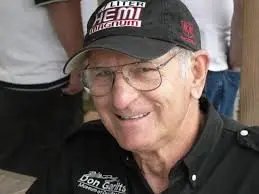

Tami Bandimere sits down for round two with “Big Daddy” Don Garlits—and this one goes everywhere. Don breaks down how rear-engine dragsters (and wings) changed the sport, why safety improved even as speeds exploded, and what it took to stay competitive. He also talks about stepping away from racing, eye issues and innovation, and how the Don Garlits Museum of Drag Racing grew into a major destination—including the International Drag Racing Hall of Fame and the events that keep it moving year-round.
You’ll hear Don’s take on sponsors and the long arc of racing history, plus the electric dragster chapter:
SPEAKER 09 :
From the day we’re born We are scarred and torn We’ve been scared to sing out loud But we don’t care no more Cause we know life is short We don’t care who you
SPEAKER 03 :
Hey everybody, it’s Tami Bandimere and last week we interviewed Don Garlitz and spent an hour with him and we had such a great time and we didn’t even hardly like scratch the surface on who you are and all the things that you’ve accomplished. So thank you for your willingness to do another hour with me. I really appreciate it. Or 52 minutes if you want to get exact with it. But anyway, when we left last week, you were talking about this rear engine dragster and how how it was quite the, Pat is the one that said, you’re gonna do this, you’re gonna race this car. It’s gonna happen.
SPEAKER 06 :
Pull the tarp on. Yeah, she said, I should be able to do it, and she says, think of all your friends that have passed away. It’ll be for them and the ones that are not gonna pass away. And we had killed six men in these cars in the few years prior to my accident, and the 50-something years since the rear-engine car, they haven’t only killed a couple. And look at the difference in the speed. Our speed then was 228 miles an hour, and now they go 340 miles an hour. I mean, it’s just incredible. But on that run, when they got down to the end, they were just crazy. The first time we’d seen one go straight hard, and it had went crazy. 6.86 seconds. And the track record was 6.85 by the Ram Chargers. They were the baddest in the land on low ET. I never thought it would be competitive. I thought I’d just be able to run, you know, with the group. But I had a winner here for sure. And we won the Winter Nationals, and we won the U.S. Fuel and Gas Championships in Bakersfield, but we still have a wing on it. And then… I ran a match race with Tommy Ivo at Shuffle Town, and it was just all over the place, and he beat me because the track was slick. And then we decided to put the wing on it, and the wing, that was it. That was the crowning glory. It was now 10 miles an hour faster than any slingshot. The slingshots run about 228, and that put us right up into the high 230s, and it was also a quarter of a second quicker. At Indy that year, I went 621, and the field was 660s. There was no way they could run those cars anymore. They had to get rid of them. They had to get rear-engine cars. And now, today, every class at NHRA, down to the little bitty… Junior dragsters. Junior all-rear engine. I mean, what an honor, what a compliment… A legacy. To me, that they did that, you know. Yep.
SPEAKER 03 :
Okay, so you retire, or you decide you’re not going to run cars anymore because it’s really starting to affect your… It was your eyesight, wasn’t it? It was a lot of the…
SPEAKER 06 :
There was a period of time in the year when I built the first mono-wing car that I hurt my eyes. It had a special parachute, and it jerked me too hard, and it detached the retinas. And I couldn’t drive then for a while. I had Bruce Larson drive my car for a couple of years. But then when I came back, by the time I come back in 2001 to go 300, I had some laser work done on my eyes, and they fixed them. And plus now the chutes all have a big hole in the center and I was the one that had that first chute made like that that made it smooth so that it didn’t give you that terrible jerk. But now the car is jerky so hard to start with because it hits you with eight G’s and the doctor said I really shouldn’t drive them anymore and my wife didn’t want me to either. So I put the fuel car up and I got a super stock, one of those drag pack cars. I ran that for a long time, the 2009 one and then I got a 2011 and ran that. But then my wife got sicker and sicker and I didn’t want to go on the road and I stayed here and did different projects here. And then she passed in 2014.
SPEAKER 03 :
And you built the Dawn Garlitz Museum of Drag Racing.
SPEAKER 06 :
I had plenty to do right here. She stayed right up at the house. I had a nurse in the daytime, and I took care of her at night.
SPEAKER 03 :
And if you’ve never been to Ocala, Florida, you cannot miss— the Don Garlitz Museum of Drive Racing because you can put the address in, but you start seeing billboards as you’re coming in and it’s right here on the side of the highway. It virtually is right here. And how much acreage do you have here? Because you do car shows here too. You do fundraisers, you do all kinds of things besides the museum that is just incredible.
SPEAKER 06 :
Yeah, we sat on about 32 acres, and we have 65,000 square feet of buildings. And this whole originally started with a 15,000-square-foot building, and we got all these buildings just jammed full of cars. And we have a lot of cars loaned out to—we have five or six loaned to the museum in Daytona. We have NHRA as one. We have a car in the Eastern Museum. We have one in Bill Smith’s museum in Lincoln. And— They’re all just loaners, and we just loaned one to the British, the car that set the British land speed record in 1976. We loaned them that car for 10 years. We do about 50,000 people a year here. It generally depends on it. Whether they have any rain at Daytona or Gainesville, that always steps us up. And it’s just kind of a fun thing. And, you know, we got started at the right time. We formed this thing in 1976 when none of this was popular. These cars were just dogs on the market. I bought three really nice cars from the Snake for $20,000. And he was tickled to death to get the money. It was just something in his way, you know. He wanted more car shows he could do with them. but of course everything changed since then you know these cars are really valuable we wouldn’t sell any of them for anything these are here this is a non-profit organization run by a board of directors when I’m gone it won’t make any difference they just keep right on going and we don’t have any notes on the property everything’s free and clear we have money in the bank and so you can enjoy it Yeah, I love coming here. I have my own shop, private shop, across the walkway there that nobody goes into. I’m owning one of the keys, and I have projects in there that I’m working on, and sometimes I’m on them several years. I just like them to be there, so when I work on them when I want to. I do private tiers. I do at least one a month, and it starts in the morning at 10 a.m. And I take you all through the shops and through the back buildings, and it takes about two hours. And when we post that tour that day, we’re going to do it in 30 minutes. It’s sold out. I’m tired at the end. I start talking at the beginning of the thing, and I don’t stop for two hours. And I don’t take questions because, well, I’ve been deaf up to just a couple of weeks ago, so I couldn’t hear what anybody says anyway. But now I will be able to hear people, which is such a blessing. I can’t. I can’t put into words the feeling when that lady at the Mayo Clinic pushed the key on the computer that turned the thing on for the first time. And she says to me, she said, Mr. Garland says, you know, most people don’t really hear well until about a week, because the sound is not coming in the way it used to be. It’s vibrating against your skull, and your brain is picking that up and transmitting that into the signal. And she said, it’ll just be garbage at first, but eventually you begin to hear the words. And she flipped the switch, and it was a little beep, beep, beep, beep, beep, and the next thing I heard was her voice perfect.
SPEAKER 03 :
Unbelievable.
SPEAKER 06 :
I just started crying. I couldn’t believe it. I mean, all this, 14 years of silence and not hearing people’s voice properly. I had an hearing aid, but it was just noise is all it was. I could hear horns and stuff like that. Or somebody screamed at me, you know, stop or something like that. But I couldn’t hear it. No, no voice. I couldn’t know. Nothing come through clear. And all of a sudden there it was, it was just right. And I picked up the phone and I called my daughter and their voice sounded just like it’s supposed to, which was another thing. Most of these cochlear implants The voice is kind of like the animated characters in the cartoons. I don’t know whether you heard that or not. It’s not really like the real voice, but it wasn’t like that for me. The voices were perfect.
SPEAKER 03 :
That’s awesome. So here at the museum, not only again, not only do you have the museum, but you’ve got quite a bit of space out front. And so what is your schedule during the year? What does that look like for car shows? In fact, today when we pulled up, I noticed that you’re doing an RV sale out here. And we used to do that at our racetrack, too, because when you have the property for it, you can do that kind of stuff. And you’re right off the highway, so it’s very visible to do stuff like that.
SPEAKER 06 :
Yeah, we do a couple of those RV sales a year. We have lots of car shows here. We have a big Mopar show the first weekend in November. 39 is coming up, so we’ve been doing that a long time. And… It does lend itself. Sometimes we have such a big show, we have to rent the farm south of us here for parking. And I don’t know what’s going to happen if somebody builds over there. We’ve tried to buy it from them, but they don’t want to sell it. I don’t blame them. You can’t hardly lose on property. You may not believe this, but most of my money was made in real estate, not drag racing. I made some in drag racing, but the big money was real estate. When I went to California in 59, I saw all the intersections and how the The land grew up around the intersection. And so that’s why it’s right here. I mean, this is the place for me. When I bought this property here, this intersection was totally undeveloped. And this was a tomato farm. And I went to the county commissioners and I put my own papers in and I put my speech, you know, we’re going to get it changed. And I only got two lines out. And the county commissioner says, we don’t want to hear it. And I thought, oh, my God. Why don’t they want to hear it? I mean, why would they want to leave that at tomato farm? And then the guy says, we’re going to give you the zone. What we want to know is why did you land on that intersection? It’s never going to be nothing. Take a look at it. If you can find a lot of where it’s a million dollars in real estate. And then the same thing in Tampa. I bought a piece of property in Tampa in 1969 and I built High Performance World. And that was a big warehouse, speed shop warehouse. And then they had the gas crunch in the 74. And I actually sold the business, but I kept the property. But in the meantime, I brought all the little properties around. It was right on the interstate, but was in the minority section of town. The homes weren’t nice, you know, just really just dumps. Of course, that’s where they cut it through purposely to get the road cheaper, you know. And all the people around me there, they would come over there. They knew that I had money. And I’d buy a whole house and a lot and all, $6,000, $3,000, $4,000. And my wife says, what are you doing with all this money? Cuban property. I says, well, honey, someday it’s going to be worth a lot of money. She says, I don’t know why it would ever be worth a lot of money. Look around you here. You ought to look around it now. Hold that thought.
SPEAKER 03 :
We’ll be right back.
SPEAKER 02 :
God’s wisdom produces behavior that is morally pure, chaste, and modest. God’s wisdom produces relationship, not estrangement. God’s wisdom does not demand its own way, but rather functions by influence. God’s wisdom is not rooted in pride, but rather in service. God’s wisdom is marked by kindness, generosity, and helpfulness. The wisdom that is from above is first pure, then peaceable, gentle, willing to yield, full of mercy, and good fruits, without partiality and without hypocrisy. James 3.17 This is taken from God’s Way Day by Day by Charles Stanley.
SPEAKER 03 :
Hey, we’re back with Big Daddy Don Garlitz, and he’s talking about how he bought some property in Tampa, and he’s just, you know, real estate is a good thing, isn’t it?
SPEAKER 06 :
Yeah. I end up putting buildings on the whole thing. I own the whole city block. And it’s got all these buildings on it, and that’s my retirement. I don’t have to, I don’t even take a salary out of this place. I just live off my rentals. And the land is, the property is six minutes from downtown Tampa and six minutes from the airport. And it’s just outside of the airport cone. You know, that’s a cone, an imaginary cone that comes up from the airport. and you can’t build into that cone into a building in case the airliner’s coming in. It’s just outside of that cone. So this property, you could have as big a building on it as you want, and it’s right there on the interstate. I’ve been offered $20 million for it, and I ain’t taking $20 million. I like it just like it is. But eventually I’ll be going, you know, and the grandchildren will get it. I guess they’ll sell it probably.
SPEAKER 03 :
You talked about the big Mopar show that you have here. You had some really great sponsors over the years, Chrysler, Mopar. You had Kendall Oil. Then you had Summit. You had Super Shop. Talk about some of those relationships because your Mopar thing was about as long as our Mopar thing that we had out at our racetrack. We had Mopar for almost 40 years. Yeah.
SPEAKER 06 :
I was with Chrysler 60 years, and I was still doing R&D for them, and the Chinese actually got control, whether you know that or not. They bought Fiat. And Fiat, this is a subsidiary of Fiat. So they sent some of their people in to do due diligence, and they looked down and said, what is this? This guy’s 88 years old. What could he possibly be doing? That’s so funny. My boss, I had five or six bosses up there, you know, and they were all so nice. I still have my number to buy a car, you know, like an employee. And then Wynn Oil Company, that was my very first sponsor, and they’re today, they’re still with us. They helped sponsor the Drag Racing Hall of Fame, and of course Kendall, I was with them. till they sold out to Phillips 66. And so funny, Phillips 66 didn’t want the formulas or the Bradford Refinery because all they wanted was the name and put their own oil in the cans. Well, the Bradford Refinery was sold to that real fancy oil company, that’s the name of it, Driven. and they got all the formulas and so we use the driven oil here from the original refinery with all the good zinc and everything in it and Christ. I had Super Stocks. They were only a couple of years. And what’s so funny is my sponsors live on forever. You can go back in the building and you can see the cars and all the signs are still on them. We didn’t take none of them off. The Super Stops is back there. The Wins is back there. Chrysler. And of course, the one car went to the Smithsonian, you know, with Super Shops. And they’re fixing to put that back on display. really yeah this year he’ll be back on display well trump come in you know and he looked at that they had all this bs in there about slavery and trump said that wasn’t one of our good points in this nation i mean let’s forget about slavery let’s talk about some of the things that were good that we did and he went into there and he saw it he says this car we need this car on there and uh So they’re building a nice exhibit for that and a lot of other stuff that’s back there all hidden, you know, some of our good accomplishments. And that’s what we should be showing. We shouldn’t be bringing up the past like that. We know it wasn’t good. But, you know, we didn’t cause it. And so I don’t think that should be drummed into people’s minds the bad points about the country. I think the good points should be drummed into them. It’s a wonderful nation. We’re free here. Amen. I could have never done this under socialism. Right.
SPEAKER 03 :
Yeah.
SPEAKER 06 :
I mean, it’s just a simple thing.
SPEAKER 03 :
Yeah. And and and just just the fact that, you know, the car has been like iconic from years. I mean, it just continues to get better and better and that kind of thing. Talk a little bit about you talked about this electric dragster that you had. So and I watched you and you were the first to go 200 miles an hour in it. And but talk about the electric dragster and then talk about electric cars right now. I mean, because as a guy that grew up with cars that make noise and and that kind of thing, is that something that you kind of go or?
SPEAKER 06 :
Well, the electric, my dad was a really nut about electricity. Like I say, he knew George Westinghouse personally. He was a floor sweep there, and he worked so hard and didn’t keep regular hours that Mr. Westinghouse sent him to engineering school, and he became an engineer. So electric is probably in my blood. But here’s how it all got started. They built an electric dragster for Darryl Gwinn and gave it to him at the 2000 U.S. Nationals. They rolled it up on a starting line with a tarp over it, and they rolled him up in his wheelchair, and the roll cage come off with hose clamps, and they lifted Darryl up, and they set him down in his little dragster. They put the roll cage back on it, and he putts down the dragster at 20 miles an hour, and this little dragster that was… looked like a real one but smaller, and there wasn’t a dry eye in the house. Nobody thought that Darrell Gwynn would ever go down the drag strip ever again in a race car. In a race car, yeah. And so a couple of months later Darrell called me up and he says, you know we could make some real money for the Spinal Cord Injury Foundation if we built two of these cars and raced them at select events. So that’s a good idea. So we put two cars together. One looked like Swamp Rat 30, and these cars would go about 100 miles an hour. But they couldn’t drive at 100 miles an hour with that wobble stick. The steering was too fast, too quick, and it would drive off the track. And so we kept slowing them down, slowing them down, took the batteries out. They just had car batteries in them. They were just golf carts, you know, fast golf carts. Got him down to about 32 miles an hour, and Darryl could handle it. And we actually had two out of three match races at select national events. Raised over a million dollars for the Spinal Cord Injury Foundation. And then we took the two cars to the Barrett-Jacks. He got another quarter of a million, and I got half of that for the museum, and Darryl gave the other half to the Spinal Cord Injury Foundation. So… After that was over, I was talking to Mike Geary. The guy was behind the building of the two cars. And I said, Mike, how fast do you think we could go if we took the gloves off? He said, you know, I think we’d go 200 miles an hour. I said, let’s do it. So we built this car. You boys. And right off the bat, the record was 150-something. I raised it 174, then to 184, then to 185.60. And that car was actually, we had bought an old ex-fuel dragster heavy thing, and this car weighed 2,300 pounds. So… Whatever we did, it didn’t go over 185 anymore. Just everything we did, it was slower. So I said, why do we need all of this car to go 200 miles an hour? I said, I went 200 miles an hour with little nothing cars. So I built a rear engine car, Swap Rat 38, that was kind of like the first rear engine car, lightweight, small. And I went down to West Palm Beach And I made a little warm-up run on, we always make just a little run of 80% on the batteries. And it set a new world record right off the bat, 189 miles an hour. So we turned up the wick to go 200. and it broke a hub coming off the starting line. We had a lot of fabricated stuff. I couldn’t believe that because it should not have broke that. We build that kind of stuff here in the shop all the time. And we use a special rod. It’s called a Tektik 680. And I mean, it’s an unbelievable rod when you’re not real sure about the steel composition of the two pieces. And we’ve made these two pieces to make these hubs, two hubs. And fortunately, it broke right off the starting line. Otherwise, if it broke down course, I’d have probably crashed. And we took it apart. I couldn’t believe it. The metal was perfect and the weld just sheared. And I took a file and I run over the weld. It was just like butter. I said, oh, my God, what have they done? I called a welding supply. They called the factory. The factory apologized. They said, we’ve recalled all of that rod. Said that rod was all made in China and they didn’t make it to our specifications and we’re so sorry. And I was so lucky that that thing broke where it did because it would have, and the guardrails, you know, you hit those guardrails hard and it could be bad news. And so then I got COVID. and I got real sick and I was sick for about a month, really bad. In the meantime, I did not go 200 first, it was Steve Huff from Spokane He went down to Tucson with his electric car. It went 202. And he’s dead now. God rest his soul. He died with cancer. But he did get to go 200 miles an hour before he got credit for that. And then that slowed me down, too. After the 200 had been broken, I didn’t worry about it too much. And I had so much more going on. But then we were also using chain drives and all that kind of stuff. And it was giving lots of trouble. So I rebuilt the whole back of the car with one big single motor and a nice strange rear end and everything. And I’m ready to go around 215. That’s my goal sometime this year, go 215. But I can’t do it on a sprayed track. I have to have a track that’s not got the VHT spray because I’ve got to spin the tires because there’s no clutch stage, just a motor to the rear. Mm-hmm. The tires have got to spin, just like we used to do in the old days, and then that catches it up. And it’ll run real good like that. It doesn’t have to have a spray track. When you put it on a spray track, though, it pulls it down and the motor jerks you. I’ve tried it several times. You see the marks in the driveway. Testing, it works just fine out there, see. But there’s no place to go.
SPEAKER 03 :
Oh, I just think it’s so funny that, you know, you and Daryl get together and you’re like, we’ve got to build two of these so that they can race each other. Because, you know, if there’s two vehicles anywhere in the world, you’ve got to drag race, right? Yeah.
SPEAKER 06 :
Well, you know, they always say the first actual drag race took place five minutes after the second car was built.
SPEAKER 04 :
Correct. Hold that thought. We’ll be right back.
SPEAKER 01 :
Thank you. Thank you. Call the Foreclosure Prevention Hotline, 1-877-601-HOPE. Sponsored by Brothers Redevelopment, Inc., and aired in cooperation with the Colorado Broadcasters Association and this station.
SPEAKER 03 :
We’re back with Don, or Big Daddy Don Garlitz, and we were talking about the electric dragsters. So how do you feel about electric cars now? And would you ever own one?
SPEAKER 06 :
Electric cars are okay. I think for a city commuter where you go into the city and you work just outside the city, that’d be fine. And they would have the charging station while you’re at work. It could charge, you know. I think that’s good. I can’t see the internal combustion engine going away. There is a couple of serious problems with the electric car on the highway. And those two problems are, number one, is the infrastructure. We don’t have the infrastructure to charge them, nor do we have the generating power to make the electricity. Excuse me. So that can be fixed. The batteries in the electric car make the electric car 10 times more dirty than the internal combustion engine car. And until the technology gets rid of the lithium battery, We’re kidding ourselves. We’ll destroy our own planet thinking we’re doing better. The people who make the laws have not really looked into it all this deep. The car going down the highway is cleaner than an internal combustion engine car. But the manufacturing of the battery and the recycling of the battery changes the whole toxic picture. There’s no way that everybody can have electric cars. It would just poison the whole planet, building the batteries. Now, there are batteries. But we don’t know how to build them. They’re almost like magic. The power plant in that thing right there, the power plant in that thing is the size of a basketball. And that thing makes enough electricity to power up New York City and you put your hand on it and it don’t even get warm and it never gets refueled. It’s got an element inside there that runs it that does all this and we have no idea of how that all works. And that comes right out of the mouth. of Professor Lazar, who I know personally, who worked on these things with the federal government way back in the 80s. That was all from the 80s. He had that drawn from his memory. He couldn’t take any pictures when he was at work. But that’s what he remembered it all. He was on the power plant. He knows all about the power on it. And it’s an element that’s not here on this planet. And… They had nine of these vehicles at Area 51 when he was working there. And one of them was over 5,000 years old because it had been dug up out of the ground. But every one of them had the same power plant, a sealed power plant. And so the government wanted to know what was inside of this vehicle. little thing about the size of a basketball. And Dr. Lazar says, I would not open that if I were you under any circumstances. It’s sealed for a reason. Well, they got three scientists that volunteered to go down to the underground Nevada facilities. the test facilities and open it. Well of course there was a nuclear explosion and everybody was killed and they still didn’t find out what was inside of it. So Dr. Lazar was right, it’s a protected piece and it’s been around for a long time because here was a 5,000 year crashed saucer with a unit in it still able to run, still making power.
SPEAKER 03 :
And, of course, that fascinates you because you’re such an innovator and that kind of thing.
SPEAKER 06 :
So until we get something like that, we’re not going to have a fleet of electric cars.
SPEAKER 03 :
Yeah, I understand that. Well, I just thought it was interesting that you had an electric dragster because, you know, a lot of real diehard drag racers are like, no, not really into the electric stuff. I want the smell. I want the sound. I want the, you know. That kind of thing, but you know, that’s fine.
SPEAKER 06 :
Well, I’m for that 100%. I did it because you can’t hardly do anything to have top fuel dragster anymore, you know. It’s a spec car. And this was a car I could do anything I wanted to, make anything I wanted. There was no rules to speak of. And I really liked that. It was a fun thing for me.
SPEAKER 03 :
Okay, so I want to talk about the International Drag Racing Hall of Fame because that kind of came out of the museum, correct? It kind of grew out of that. And my grandfather was actually inducted in 1993, so thank you for that because I remember our whole family came to Florida, and it was after my grandfather had passed, and my whole family, we accepted the award on his behalf, and that was really quite an honor. But what started the Hall of Fame and how did that happen?
SPEAKER 06 :
Well, you know, my wife and I talked about all of that and we said, you know, it’s just such a shame that we don’t have some way to honor all the people that have done so much for the sport. They gave them their all and never really got any publicity out of it. There really should be a Hall of Fame for them. And we call it the International. We didn’t want to call it the National Hall of Fame because we felt there were people all over the world that should be honored. And we do put people in every year from other countries. So we got together and we put a board of selectors together and everybody was really for it. And we put a lot of people in the first couple of years to take up the back slack. And you look at that monument out there, almost 100% of those early years all got black stars now, you know. They’re all gone. Tommy Ivo was one of the few that’s still alive that was in there initially. And it just grew. And we didn’t have much help to start with because it was so new. But now, you know, in the years of going by, we have sponsors. And NHRA just contacted us recently, and they would like to take over the major sponsorship of it.
SPEAKER 03 :
Very nice.
SPEAKER 06 :
To make sure that it goes on and we really appreciate that. Of course, you know, I had a lot of years with, you know, Wally Parks and I had a lot of problems together and a lot of it was over rules and purses and stuff and I put that big race on in 1972 on Labor Day weekend and paid $25,000 Top Fuel Funny Car and Pro Stock and they were paying $3,000 at Indy. We had everybody there and he never forgot that. You know, I went right for the throat. Yeah. Would you do that again? It’s different now. The new management there, I get along real well with them. I’m going to do four events for them in 26. I’m going to do Gainesville, that new southern deal at Cecil, Dallas and Indy for their 75th anniversary. I think I can do that many for them without stretching my health too bad. I don’t get around real good. I got my knees are a little, of course, a bad foot, naturally.
SPEAKER 03 :
Well, isn’t somebody having a big car show for your birthday coming up here?
SPEAKER 06 :
Well, it’s not a real big thing. We’re going down. There’s a little eighth-mile drag strip in Brooksville that’s called Lead City, and we’re going to have a party down there on the 17th.
SPEAKER 03 :
Of January.
SPEAKER 06 :
Yes.
SPEAKER 03 :
In honor of your what birthday? Ninety-four. Ninety-four. That’s awesome. That’s great.
SPEAKER 06 :
You know, I would like to mention something here while we’re on the subject of the old guys. You know… The grandfather, Bandimere, I don’t know whether you know this or not, but he, you know, because they’re up on that mountain, he built a supercharger kit to go on top of the motor. And he had a buddy that he raced with. I think his name was Peterson, if I’m not mistaken.
SPEAKER 03 :
Frank Peterson. Frank Peterson.
SPEAKER 06 :
And he had a dragster, and he built his blower come off the front of the engine. Your grandfather sold his… patterns at all to crager And the Peterson guy sold his patterns to Potvin. Did you know that? I did not know that. And we have the dragster. We got it out of the Thorny Museum in Denver. Really? They wanted to sell it, and we bought it. And it’s back there in the back. And he was big buddies with your grandfather, because they were the blower guys. They were actually blower pioneers of this country.
SPEAKER 03 :
Isn’t that amazing?
SPEAKER 06 :
One put the blower on top, you had to put the blower in the front.
SPEAKER 03 :
You know, it it’s sitting here talking to you. I feel kind of like I’m talking to my grandfather because he was never the kind of guy that said, no, can’t do that. He’d be like, well, you know, give me some time. Let me think about that. We could probably figure something out. And he was just that’s that’s what he was like. Yeah. Yeah. Did you ever race the Pikes Peak Hill Climb? Were you ever part of the hill climb at all?
SPEAKER 06 :
At Pikes Peak? Yeah. Never did that.
SPEAKER 03 :
I didn’t know. Because a lot of people sometimes do a little bit of that. And then did you ever race at our racetrack?
SPEAKER 06 :
At your race? Yes. Oh, lots of times.
SPEAKER 03 :
Okay. So talk about that.
SPEAKER 06 :
Yeah, well, we always had to have a different tune-up.
SPEAKER 03 :
Of course, because we’re 5,800 feet above sea level. And I knew you had raced, but I mean, talk about your racing that you did.
SPEAKER 06 :
When we would go to Denver, we would usually have a different motor. with higher compression for one thing and a lower speed. But also when we got to the wings, we had to put the wing angle up more because there wasn’t as much air to push against. You had to have more wing angle. And it was really a strange tune-up and you had to get used to that. And then you have to get all that off of it as soon as you got back to sea level because it would all burn up. You had to have an old special setup up there. I never forget, I did the big wheel stand at English Town, and the next race on the schedule was Denver. Well, we came home and put… a new front half on the car. And then I said, well, I need some wheelie bars. I don’t want to do that anymore. So we put some wheelie bars on it. And the very first run down the Bantam Air track, the chute got tangled up in the darn wheelie bars. And it goes down to the end of the joint. You could crash there. And I just got that thing stopped as it was heading down that end. And boy, I tell you, it made me nervous. I took them wheelie bars right off of it. I didn’t need them things. Because the wheel stand at English Town was very unusual. I was held at the line too long, and it was already on full fuel, and I had burned up too much of my fuel. It was never going to get to the end anyway. It was going to run out of fuel. And There was a tiny little drip on one of the nozzles and they were trying to fix it. It wouldn’t be nothing if it was those aerated nozzles. And they held me there and Coletta had the hand up in front of me, just a second, just a second. And I should have just cut the thing off and did it again, but Daryl Gwynn was in the other lane, you know, and I wanted to outrun him. And he was giving me the big challenge then. And my car was really fast. And… That was a good car, Swap Rat 30.
SPEAKER 03 :
The fact that you can remember, out of 38 cars, you can remember which one you were racing where, on what day, that just blows me away. So hold that thought, and we’re going to be right back with our last segment with Don Big Daddy, Don Garlitz.
SPEAKER 10 :
How can I resist? Ain’t looking for nothing but a good time and it don’t get better.
SPEAKER 02 :
When you think of your potential, don’t limit yourself to thinking of ways in which you might expand your personal resume to include more and greater accomplishments. Think in terms of spiritual depth. God has planned unlimited growth for you in your inner person. He has boundless love for you and therefore a fullness of relationship with Him that only a few will experience. Not because God desires to limit His availability, presence, or power to only a few, but because but because only a few will commit themselves to knowing God in more spiritually intimate ways. Taken from God’s Way Day by Day by Charles Stanley.
SPEAKER 03 :
We talked about your International Hall of Fame, but you’ve been honored in so many ways. Is there one that’s most memorable to you, or a couple that are most memorable to you?
SPEAKER 06 :
Well, the actual most memorable honor is for the Smithsonian to come here. They sent the curator here, and they looked at me, I was building a car, and they couldn’t believe I was building this car, and it was so different than everything else. And Dr. Post says, When you’re done with this car, this is a national treasure. We would like to have it for the Smithsonian. I don’t think there’s anything that I’ve ever been given or honored by that would be better than that. There’s only Dragster up there and Bruce Larson’s got his funny car up there and that is a big honor. I just recently got the Peterson Lifetime Achievement Award. That’s the big steering wheel up there. That was nice. And then I think the NHRA Lifetime Achievement Award’s here somewhere, too.
SPEAKER 03 :
And that was a big one.
SPEAKER 06 :
I don’t know where it’s at. It may be down at my house. I have some of them at my home, you know, so I can look at them.
SPEAKER 03 :
Well, and just so you know, he’s looking around his office, and I… The office itself is a museum.
SPEAKER 06 :
Well, yeah, this is my mini-museum. There’s lots of artifacts in here.
SPEAKER 03 :
Uh-huh, uh-huh. So now a lot of these races, IHRA is now talking about doing eighth-mile racing.
SPEAKER 06 :
Well, they got a different philosophy, and they’re appealing to a group of racers that don’t have much money. There’s a lot of people like to race, but the NHRA racing has definitely put it out of the reach of a lot of people. Well, you know, when you shut it down to eighth mile, a couple things happen. Most of the damage is done to the engines at the very last moment. Well, eventually, I guess they could make them blow up by the eighth mile. Right now, they’re all still running pretty good at the eighth, so this allows the fuel cars, especially, to compete at not such a high level of cost. And, of course, then the… The eighth mile racing for all the cars is a lot less expensive. So they think, and it’s safer because you’re not reaching these high speeds. And then they claim that there’s no grandstands way down there anyway, not like the NHRA tracks. They got grandstands all the way because they have so many more people. But they don’t have that kind of spectator turnout, so their spectators aren’t down there anyway. I’ve talked to the president and the guy that’s in charge of it all. He likes it like that. He says, of course, I’m a quarter mile guy. You know, I like, I don’t even like thousand foot, but you know, it’s a different approach. He’s appealing to a totally different group. He’s not really trying to get a lot of spectators. He’s, he’s getting, he says he’s getting enough spectators to do just what he wants to do, pays the bills and he has a good time with it. And he’s, putting he’s getting lots of tracks and so he’s he’s putting racing at a level that normal people can do it so in other words there’s going to be like they they just got you know he bought Maple Grove and then the guy says well you know NHRA you can still have your race here I don’t care I’ll rent you a track just like this of course they didn’t want that and they went to Martin 131, I guess. But he’s going to have the race. And he says the whole East Coast over there is just like no place to race. And I’m just hiding and watching.
SPEAKER 03 :
All right, so speaking of speeding, do you ever get pulled over for speeding?
SPEAKER 06 :
Oh, yeah. I got one speeding story that’s really cute. Chrysler built, or Dodge, built 10 of these special trucks in 2000. They were the little Dakota with the big Magnum motor, but the 10 had special computers that you had to run high-test gasoline. That’s all you could run in them. And I got one of them. And about 500 miles on, maybe 1,000. And I was using that truck to go to the airport. I worked for television for 27 years, you know, after I got hurt when I had the bad crash in Spokane in 87. I broke my back, and I did television for a long time. And anyway, I’m driving this car. I’m coming back with this truck. It’s 2 o’clock in the morning. I come off of the… turnpike, and I’m on I-75, come across the Wildwood Bridge. There is no car headlights coming toward me, and I look in the mirror, there’s no headlights behind me. I own the interstate, and I’m running about 80 miles an hour, which you can do out there. They won’t bother you at 80 miles an hour. So I just stepped down on it, and that speedometer, I mean, it just dropped just like that. I mean, it was, I mean, this thing was hauling the mail. And I kept glancing down. Just as it went past the 115, I glanced up and in the mirror, way back in the back was the blue lights blinkin’. And I said, oh my God. So I pulled off, slowed down, pulled off way off the edge of the road because this was before you had to move over a lane. So I gave the officer plenty of room to be at my driver’s window, but not be by the interstate. I had time to go into the glove compartment, get the registration out, pull my wallet out, get my license all out before he ever got there. That’s how far ahead I was. And he come down in that ditch on the passenger side and drifted that car on the grass so that the headlights shined right into my windshield. I knew I was going to jail. I mean, this guy was upset. And he ran out of the car over to the passenger window. And I had the window down. And he stuck his head in the window and he said, this son of a bitch. He walks.
SPEAKER 05 :
And I handed him my stuff. He’s looking at it. He’s got his lights, you know.
SPEAKER 06 :
I pray to God when I’m 70 years old, I want to get out on this interstate and run 120 miles an hour.
SPEAKER 05 :
Big Daddy, take this thing home and put it up. I don’t want nothing happening to you on my watch.
SPEAKER 03 :
And he let you go.
SPEAKER 06 :
Yeah, but that ain’t the end of the story. Right here in this office. A lady highway patrol, Sue Barge, which was good friends with my daughter, would come here and take her to lunch. They’d go to lunch every once in a while. So one time Donna was doing something and she couldn’t go right that minute. So Sue came in here and looking around and she says, you got any highway patrol stories to tell? No. I said, I do. And I told her just what I got to tell you. She said, that is the biggest shaggy dog story I’ve ever heard. No highway patrol would let you go 120 miles an hour on that interstate. So I said, well, that’s my story. I’m sticking with it. And so she went back to the office. And she had another girlfriend that was a highway patrol, and they were in the office in that afternoon. And she said, I just sat to the Garlits Museum, and this is what he told me happened. She said, now tell me this is a shaggy dog story or not. And he tells her, and he got through, and the old guy way back in the corner at a desk with silvery hair, raised his hand up, said, it was me, girls. I turned him loose.
SPEAKER 03 :
So it was a true story. Oh, that’s awesome. That’s great.
SPEAKER 06 :
Isn’t that funny? Yeah, yeah. But that was, I mean, I couldn’t believe it.
SPEAKER 03 :
And do you speed at all?
SPEAKER 06 :
No, I don’t. I have a Hemi Dakota, and I like to get out there on that inside lane there. They run 90 miles an hour in that lane, you know, a lot. And there was a recent, about three months ago, I guess, there was a line of us, all 90, almost bumper to bumper. And about three cars up was a Florida Highway Patrol in the lane. So he comes off at this exit and goes over to the racetrack, and I follow him in there. And I go over to the pump, and I said, Officer, how did you like that inside lane up there? He said, it was kind of intense, wasn’t it? I said, that’s putting it mild.
SPEAKER 03 :
Oh, my goodness. You have definitely created a name for yourself, that’s for sure. So as we’re winding this down, we’ve got about four minutes left. Would you do anything different? You’re almost 94. And you look back on your life and is there anything that you, I mean, so many things happen and things because of tragedies and stuff changes the trajectory. But would you do anything different?
SPEAKER 06 :
I’ll answer that real simple. I have a funny theory about all that stuff. I would be scared to death to change anything at all because it could make a difference in the time continuum. You might go back and do something and all of a sudden all of this wouldn’t be here. Correct. or somebody wouldn’t be here, or my daughter wouldn’t be here. And everybody’s here. See, I’m a really strong believer in God and heaven and all of this stuff that a lot of people don’t believe. But I’ve had so many experiences and so many things have happened to me that God is as real to me as you sitting here and we’re having this conversation. And so I think that it would be very dangerous to even change some little small thing that you might think would be unimportant. Because everything that happens in the past, I think everything happens for a reason. And so consequently, you go back and change one little thing, you could make a complete big change here And I always refer to that movie, that’s a real good movie, Christmas movie out called It’s a Wonderful Life. And, you know, God showed him what would happen if he hadn’t, because he said, wish he’d never been born. Right. And he said, oh, you shouldn’t think that way. I’ll show you what would happen if you’d never been born. The angel, you know, was just a little old man. And that’s another thing. They walk among us. And I had an experience. I went to get a pizza. And my wife was real sick, you know, she’s in her final days, and I’m over at the Papa John’s picking up a pizza because they didn’t deliver this far. And I come out of the pizza, Papa John’s with the pizza, and this old lady’s coming toward me. This is dark at night, and she’s got a cart with all crap all piled up on it, and she’s in rags, you know.
SPEAKER 03 :
It’s obviously homeless.
SPEAKER 06 :
And she comes up to me, and I said, oh, my God, what’s she going to do? Is she going to want money or something? And she got it out the door there to here and she says, I know you. And I said, you do? She says, oh, we know all about you. I says, what do you know about me? She says, we like what you’re doing. I says, what am I doing? She says, you know what you’re doing. I says, well, help me out here. She says, you got a very sick wife at home, don’t you? I said, yes, ma’am. She says, you won’t put her in a nursing home, will you? I said, no, ma’am. She says, you just keep doing what you’re doing. We love it.
SPEAKER 05 :
Have a nice day. Tell me about what’s going on.
SPEAKER 03 :
Oh, Dawn. And as we end this, thank you so much. Thank you for sharing so much about Pat and so much about your amazing life. I appreciate you. And I appreciate you allowing me to take two hours of your time. Thank you. Thank you.