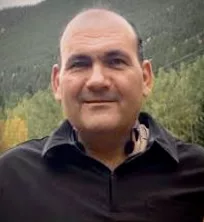

Join Father Andre in this week’s episode as he explores Lebanon’s rich cultural heritage and the enduring spirit of its people in the face of adversity. Listen to the historical accounts of saints like St. Charbel and Santa Barbara as Tom Harb and Father Andre discuss the role of Lebanon in the larger tapestry of Middle Eastern peace. Discover the complexities that shape the coexistence in this region, and what it means to be a beacon of hope for many Christians worldwide today.
SPEAKER 03 :
One day you stole me, nuncia vit Maria,
SPEAKER 02 :
At age 10, Father Andre escaped Christian massacres by living in caves in Mount Lebanon with his family. Today, Father Andre works tirelessly to encourage American leaders to keep God in the public square, defending religious freedom at home and abroad, so that all might live in peace for the glory of God. Founder and President of the Mission of Hope and Mercy, Father Andre has learned the secret to safety, joy, and peace. Love God and one another. Now, let us spend 33 minutes on the Lord’s Day, retuning ourselves to the truth of love in the hands of God.
SPEAKER 01 :
Praise be the most holy name of our Lord and Savior, Jesus Christ, now and forever and ever. Amen. Thank you, my dearly beloved brothers and sisters in our Lord and Savior, Jesus Christ, for joining us on this beautiful day. In Colorado, at least, here in Denver, we have the very first white snow. We have had a beautiful, calm and nice warming, even though very cold, a little bit of a snowstorm. And we have five to six inches outside of snow. It’s been nice. At least it gives us a feel of Christmas. The video we played earlier was done about a year ago when I was in Lebanon, of course, under the… bombing under the and somehow when the people were being removed from their homes and south of Lebanon and when Israel was given a response to a terrorist attack from which Israel suffered and of course at the same time Lebanon is still suffering from the grip of a terrorist group This is not an opinion, this is a matter of fact. And in this context, we see that in the spirit of Christmas, also this year, Pope Louis XIV visited Lebanon. And it seems that one of his most important messages for the people of Lebanon is to understand how important their role is for the promotion of the culture of peace. Peace is not only a culture, peace is a process. Peace is not only a process to bring the Sunni world, the Shia world, the complexity of the ethno-religious realities of the Middle East with Judaism, Christianity and Islam coming together in the Middle East. But peace also requires a reform, requires a restoration of rights. requires in some forgiveness and Christian pardon. Peace also requires that we look at the elements of corruption. Today in our podcast, hopefully we will not exceed the 15 minutes, we are so happy to host a friend, a wonderful voice for the Middle East, the chair of the American Middle East Coalition for Democracy, Mr. Tom Harb, from a neighboring village to my hometown village of Aoura from Tannourine, In the Mount of Lebanon, as we say, we have drank the water from the rocks, which means our advices, our mentality, our principles, our character, our morality and our opinions are well informed and embedded and founded in heritage and tradition and the knowledge of our customs, the deep knowledge for our deep customs, yet also in the critical thinking of what we know what’s happening and of course in service of the truth and to save life. Mr. Tom Harb, I want to wish you a beautiful and wonderful happy feast day of Santa Barbara. And I want to welcome you to this irrevocable podcast show for the mission of Open Mercy that with you today, we consecrate to speak about Lebanon. Good day to you.
SPEAKER 03 :
Thank you. Thank you, Father Andre, for this invitation and to be with you on this podcast and be able to discuss different topics. that pertain in Lebanon or somewhere else as well. In the name of the Father, we will be conducting this opportunity, and thanks again.
SPEAKER 01 :
Thank you so much. Well, let’s start a little bit like with a simple culture to let our people know. Well, today is Halloween in Lebanon. We don’t call it Halloween. It’s not Halloween, actually, but it is like Halloween. Today is Santa Barbara’s feast day, Eid al-Barbara. I know in your… childhood as well as till today and us, Santa Barbara is a major feast for us that leads us directly to Christmas, that leads us directly and somehow into the beautiful season of the Awaiting of Christ. How did you celebrate Santa Barbara by chance? Would you tell our people? We have about 3,100 people now joining us live actually on this podcast. So how about you tell us a little bit about the culture of Lebanon around Santa Barbara and Christmas? What is it that we miss?
SPEAKER 03 :
Well, Santa Barbara, while we were young, I mean, we understood a little bit about it, but we understood how we put the costume on and go from house to house and collect small gifts, mainly chocolate and so on, like what we do over here on Halloween. And it was the beginning of preparation for Christmas because the weather was It started getting rainy, snow up in the mountains in Lebanon, and the feeling while we were kids that in a couple of weeks we were going to be taking a vacation two or three weeks from school, and that was the happiest moment for us. When we came over here, obviously Halloween was in the late part of October, and later on we were introduced to Thanksgiving. And Thanksgiving was a different mindset that we have to learn and understand and that was the preparation to get into the holiday season and the Christmas season. But it was beautiful things, those child memories. We learned about Santa Barbara as well and her efforts. But it was, unfortunately, we left behind us because the tradition here a little bit for Halloween, but for the kids still the same process.
SPEAKER 01 :
Well, let me tell you, my friends who are joining us, to serve a little bit the culture of our religion. As Christians in the Middle East, it is important for us to know that major feast days, especially when it involves younger children who were killed as martyrs, were offered as martyrs, the reality of Santa Barbara’s feast day, and I’d like to read it for you from the Synaxarion of the church. Synaxarion is a Greek word which means basically the of a daughter of a rich pagan named Dioscoros. She was born in Nicomedia and was carefully guarded by her father who kept her shut up in a tower to protect her from the outside world. She secretly became a Christian, however, and asked her maid to destroy all the idol’s statutes that her father, in fact, had left around her. Her father became very angry at her action and brought her before Martinian, the prefect of the province. It’s her father, actually, who hand-delivered his daughter because of her choice to follow Jesus Christ as a young girl. And he took her to the prefect of the province who had her cruelly tortured. Barbara held true to her faith in Jesus Christ. She was thrown in a dark prison. During the night, she was bathed with light and her wounds were miraculously healed. Torches that were to be used to burn her went out as soon as they came near her. This is where the tradition of us as children, as Mr. Harb was talking about in Lebanon. So we have all the children all across Lebanon and in many areas in the Middle East that we wear faces on our face, actually, just like we do in Halloween here, but not bad faces. Sometimes recently with the modern cultures, of course, there were faces of politicians, faces of TV stars, of movie stars, or faces of… whatever people sometimes even wear some scary things, but not to the extent that we experience in the United States during the Halloween festivity that we do culturally here. But when the angels bathed her in light, gave her the face that healed immediately her wounds on the outside and on the inside. And with that, we say Barbara, actually, when she fled in the fields, the Lord was giving her food from the hands of the people. And the angels were accompanying her in a disguised way, actually, that her face changed every time that the soldiers would not get to know her. But in the end, of course, when she was ready for martyrdom, in fact, they came at her and she was condemned to death by beheading. Her father himself carried out the death sentence in the year 235 of our Lord. It is a general belief amongst Lebanese Christians that Santa Barbara disguised herself as various characters to allude to basically the Romans who were persecuting her. And in such a way, all the children do the masquerade during the feast day of Santa Barbara. A child in the year 235, similar to Santa Barbara, Santa Aquilina in the year 294. Similar to Aquilina in Byblos and Jbeil as well, we have Santa Cristina of Tyre, a child of 12 years old, who also was killed and murdered. Similar to those young saints from Lebanon, we have the modern saints of whom Pope Leo XIV visited Saint Charbel Maclouf of Lebanon about 100 and some years ago. After his death, his tomb started giving lights at night and during the day. And at the time of the Ottoman Empire, monasteries and Christian homes were not allowed to light lamps in their homes. because the Ottoman Empire would think that the Christians would be conspiring at night against them. So part of the rule of the Ottoman Empire on the Christian Mount of Lebanon, which includes the villages where Tom and myself came from, we were not allowed to have lights at night by decree from al-Babil Ali, basically the Turkish Sultan. in Istanbul. With that, the tomb started giving light, especially after his death in 1889. But again, that light renewed itself in 1950, 1951, 1952, 1953. but it was the soldiers and the captain of the ottoman empire came and they stormed the monastery and they wanted to see where is this light coming from and then of course to the surprise of everybody the light was coming from the tomb of saint charbel who was who was basically who died on december 24th on christmas eve and immediately under the snow and under the cold and that mountain that you saw was poplio Actually, his tomb was given shining light from mountain to mountain, even to the neighboring villages. Tom, with the story of St. Charbel and the visit of Pope Leo XIV, and the story of Santa Barbara, the story of Santa Aquilina of Byblos, Santa Cristina of Tyre, comes your love and my love and the love of many for Lebanon, the land of freedom, the land of our faith. What is Lebanon for you, and what do you think about the visit of the Holy Father to Lebanon?
SPEAKER 03 :
Well, first, West Lebanon, to me, it’s the land of saints. And up in northern Lebanon, we have a valley called the Valley of Saints as well. And really, when people visit that valley, they could feel the tremendous God’s power in that valley and throughout Lebanon. So why we would care about Lebanon and why Lebanon is still so significant. And I’ll move on to Pope’s visit. We know when Moses wants to cross the Jordan River and he said to God, I want to cross the river. God said to him, no, this land you see in front of you, which Israel land and the land to the North, which is Lebanon land, said, this I kept for me. And you cannot cross the river. So really, it’s been in the Old Testament. In the New Testament, Lebanon has been significant historically. And the power of God played a major role. Now, lately, we see conflicts and fighting and so on. And that’s when it becomes, so where do we need to move from here? And we need to move for peace. So Pope visited Leo XIV, visited Lebanon and spent three days in Lebanon. And in his first message at the presidential palace, in his speech, he spoke about peace 48 times. He said, peace is going to start from within. The individual is going to be within your family, within your community, within your country, and then with your neighbors. That’s mean outside the country. And that’s why his visit was so important, because the prior popes who visited Lebanon spoke about coexistence. between Christians and Muslims and so on. So the Lebanese understand it. The Christians of the Middle East understand that word very well, coexisting. But you could coexist if the others are willing to accept you. But if the others, they are not willing to accept you, so how can you coexist? So the conflicts in the Middle East, people nowadays, they think because of Israel, and the Jews and really it’s not the case. The conflict in the Middle East has been going on for centuries and whenever there is a change in form of governments in the Middle East, in Syria or in Egypt or in Iraq, the entire Middle East goes into panic. And panic because the minorities in the Middle East, they go into panic. The reason, because if a Sunni takes power, the first victims are the Christians. If the Shiites take power, the first victims are the Christians. If the dictators take power, the first victims are the Christians or the minorities. And then the Pope went to talk about peace. What he’s telling not the Lebanese, the people in the Middle East, enough is enough. All what you’ve been doing, fighting with each other because you don’t have the love and peace within. Start from within and spread it forward. And that’s where I found out really the message of Pope Leo XIV coincide. with president trump what he’s trying to do in the middle east both of them they want peace both of them they’re saying enough fighting for four centuries let’s move and let’s adopt a new form today of understanding because the benefit of peace you could build better economy prospers for your generations to come good communications among within your country and abroad throughout the Middle East. And I think his message resonated very well with the Lebanese and non-Lebanese because when he comes, the Pope comes, he has probably, I don’t know, about 80 people from his entourage in the media. They come with him, Arab media and Lebanese media. Probably we had hundreds of media partners personnel, you know, during his trip and the message he gave peace. And that’s why I think it’s very important time to see President Trump trying to push the peace from a different angle and the Pope coming from a spiritual angle as well. And that’s what we are hoping for Lebanon to achieve peace within and with the neighbors and especially Israel.
SPEAKER 01 :
Well, one of his most critical speeches, I believe, was the very first speech that he gave in the presidential palace after he landed on November 30th, the feast day of St. Andrew. And of course, the title of the visit of the Pope, Blessed are the Peacemakers, which is from the Gospel of St. Matthew, chapter 5, verse 9, a part of the Beatitudes, as you said, the Gospel of the Beatitudes that Jesus spoke or the Sermon on the Mountain. So the Pope borrowed this statement from our Lord, blessed are the peacemakers. And the full verse state, blessed are the peacemakers. Amen. Our country chants a lot during the rite of giving each other peace during the mass. And how many times, how many days, and how many masses every time we go to mass, we chant this hymn. Yet at the same time, the Pope said, and I quote, certainly there are millions of Lebanese here and throughout the world who serve peace silently day after day. Tom, you are the chair of the Middle East American Coalition for Democracy. How are you serving peace and our people who do not know anything about Lebanon? Did we succeed making the case for American people why Lebanon is so important, the reason why I am asking you those two questions. One, you know, when I sent a message onto a group in Colorado, one of the responses, and I said, now the Mission of Hope and Mercy is running its end of year and Christmas campaign to assist and help with food, with medicine, with urgent housing, with essential community projects, with Christmas gifts. that we do for many of the children in Lebanon. And if God allows us and we succeed with our goals, which we have asked people to contribute to about $62,000 as a part of our end of year donations that we would like to have. Of course, we have many other plans and programs, including in Africa, including in Congo to do. So one of the responses came from a person who I thought was very educated, said, you know, I’m going to be honest with you. And I quote, if we were to help, we would help Americans. If we were to help, we would help Americans. And Pope Leo and Lebanon can go down. So I responded to that, and I will say it in a little bit. But I felt a failure, of course. I felt like, is she serious, that person? Does she know that St. Jude Hospital is a Lebanese institution? Does she know that C. LeBanai Hospital is a Lebanese foundation that started? Does she know Mike Dabaghi, the first big doctor who started the open-heart surgery, the transplants? I mean, we have contributed a lot as American Lebanese to the local American society. Are we still strangers somehow to the local American society who may not know that how much the American Lebanese community, specifically the Christians and mostly the Maronites, have collaborated, have contributed to an enormous way in this country and, of course, in the life of our country in the medical field and acting field and Hollywood and in singing and in the scientific field. Your comments, if, again, do you feel included in Paul’s message that you have been working for peace? How, through your coalition? And did you succeed making the case for Americans that serving the case of Lebanon is not a foreign option. It’s actually a matter of our own national security, and it’s good for us as Americans to do.
SPEAKER 03 :
The person who responded in that way, I could understand their response. Because we, as foreigners, we come to this great land, we mix, we immerse into the society And the American people who’ve been like four, five, six generations, then they figure they forget about their ancestry, where they come from. Those of us who are first, second generation, we still have contacts with our ancestry and the area we came from. And that’s very understandable. Now, because the whole world is becoming more global, I think it’s upon all of us to understand, even if you are the fifth generation of the United States or new generation or newcomers, we need to understand that the minute we step a foot on the soil, we need to be part of the American system. how to learn English, how to be part of it and not to challenge the American system. Work within the political system and give our thoughts and we don’t want, we don’t expect anything back in return except security and opportunity. The minute we have security and opportunity, we flourish. Now, for those of us who came from certain part of the world and from those of us who’ve been around here for for so long, we need to understand the international dimension, because the international dimension is very complicated, and especially from the Middle East. And it’s upon us to educate the people, the American people over here more and more, that the Middle East, not only Muslims, the Middle East, if you go to the Egyptian Coptics, I mean, Egypt was at one time all Christians. Ethiopia and Eastern Africa, they were all Christians. And the Middle East, I mean, before 400, 500 years, most of the Middle East was Christians. But with the Islam invasion from Mecca into the Middle East and wiping out, wiping the Christianity in a lot of places, and that’s where they do not have the tolerance. Now, how can we all work together to make the Arab world and the Muslim world understand tolerance? I don’t think we have gotten to that point yet because the Islam religion, they have a challenge from within. So I think it’s a duty on the Arab League and the Arab world to start thinking from within what are the issues facing them first and facing the minorities in the Middle East and how they can convey a positive message to the West. So I think the Arab League up till now with all the atrocities been happening in the Middle East against the Christians, the Druze, the Alawites in Syria and the Kurds and different groups. The Arab world, the Arab League, they haven’t said a thing yet. And why they haven’t said a thing yet? Because they don’t want to get involved. And that’s a failure on their part. Now, I see some movement, positive movement, from MBS, the Prince of Saudi Arabia, the Gulf states leaders. They start now moving into an opportunity to have to adopt the modern Islam. And now they are in conflict with the Muslim Brotherhoods in the region. So now you see also our president here, President Trump, trying to put the Muslim Brotherhoods on the terrorist list. So we need to, we with the moderate Muslims in the region, we need to work together to tell them you have to, take actions in the Middle East. Now, some of the Arab world, they already put the Muslim Brotherhoods on the terrorist list. But where we see extreme Muslims now and political Islam spreading out in Europe and start spreading here in the United States. And I appreciate President Trump now taking actions, as I said, against the Muslim Brotherhoods. And I heard Secretary of State Marco Rubio a couple days ago, he made a statement that they’re going to start taking actions in visa applications from countries where Christians are being persecuted, being in Nigeria or any part in the world. So he’s going to start taking actions. So now that’s where you can see they start getting involved in these things, what’s been happening. On the other side, we see, for instance, the bombing of the church in Syria. And we did not see the president of Syria, Ahmad Sharif, who has been adopted here by our administration. We haven’t seen him gone to the church and denouncing those people who committed those atrocities over there. Because if anything happened to any religious place here, we see the politicians run to that place and denounce that act. Ahmad Sharif in Syria, he has not done so. And he tried to justify that some outlaw groups have done so and he washed his hand out of it. Rather than say, what had happened to the church in Syria, that’s completely wrong, I condemn it. We condemned jihadism, we condemned extreme Islamists, and we condemned all of this and we are not going to tolerate these kind of actions. He hasn’t done so. But on the other hand, he’s been invited to the White House and he came to the White House. So we have to act a little bit more with our administrations over here to be more forceful on religious persecutions in the Middle East and in Africa. But I think the president has a good intention and the Secretary of State has good intentions and hope we all keep informing the government on all the oppression going against the Christians in the Middle East and demand some kind of a proper action.
SPEAKER 01 :
Well, you see in the video, as you spoke, unfortunately, from the bombing that killed the 22 Christians during the Holy Service. And in fact, the Pope had just left the Middle East. So I guess not even the Vatican, not even our president, not even anybody had the chance to actually absorb, to digest what is happening. But one of the words of Pope Leo XIV, because I know you work diligently and tirelessly in Washington, D.C., and I wanted to describe what you do as a coalition on our behalf, on behalf of Lebanon. But one of the things the Pope said to the diplomats and the presidential palace and to the religious leaders and also to our president in Lebanon, he said, in this meeting, I would like to reflect with you a little on what it means to be peacemakers in circumstances that are highly complex and conflictual. Well, Tom, we reacted a little bit when the Pope said he is going to Lebanon. We noticed that many people in the world were going like, why is the people going to go? Why is the Pope going to Lebanon? What good is he going to bring? There is a complex situation for the people of Lebanon. and hundreds of thousands, the people of Lebanon and we from overseas followed per minute by minute. I mean, there is nine difference, nine hours difference between us in Denver, let’s say, seven hours in difference between you and Lebanon, 10 hours in difference between the West Coast and Lebanon. Nonetheless, we woke up at night, we followed the visit, we were praying with the Holy Father. But there is a complex situation in Lebanon for corruption, for terrorism, for a police state, it seems. You have a point about Lebanon. You have a vision and you have a description of reality. There is big symptoms in Lebanon. We have about 5,000 people with us. This is your area. What is the syndrome of Lebanon? Why is the peace so complex phenomenon? And can really the Pope help the Beirut explosion, the financial corruption that took all the money from the banking account of every individual Lebanese human being, specifically on the Christian side, this basically bankrupted Christians completely in Lebanon. We live in such danger, right? And describe that for us. What are the complexities for the peace?
SPEAKER 03 :
Complexity because they are forcing, everybody forcing a co-existing. And the ingredient for coexisting cannot be from one side, not all the parties involved. So when modern Lebanon was established in 1920, it was to share power between Christians and Muslims and so on. And the reality of it, Muslims have more kids than Christians. And Christians tend to They want to send their kids to private schools, have the best education, better life. Muslims, they tend to have their kids go and work in government sectors and stuff like that.
SPEAKER 02 :
Thank you for listening to 33 Minutes on the Lord’s Day. To hear previous programs, visit the show page at missionofhopeandmercy.org. Listen to Father Andre every Sunday morning at 7.30 on KLZ as he speaks on the unity of Christians, religious freedom, and the biblical foundation of Judeo-Christian values and traditions. Join him in bringing hope and freedom to people across the globe while also strengthening your own faith, family, and community right here in Colorado. Reawaken the spiritual strength of America. Go to missionofhopeandmercy.org.